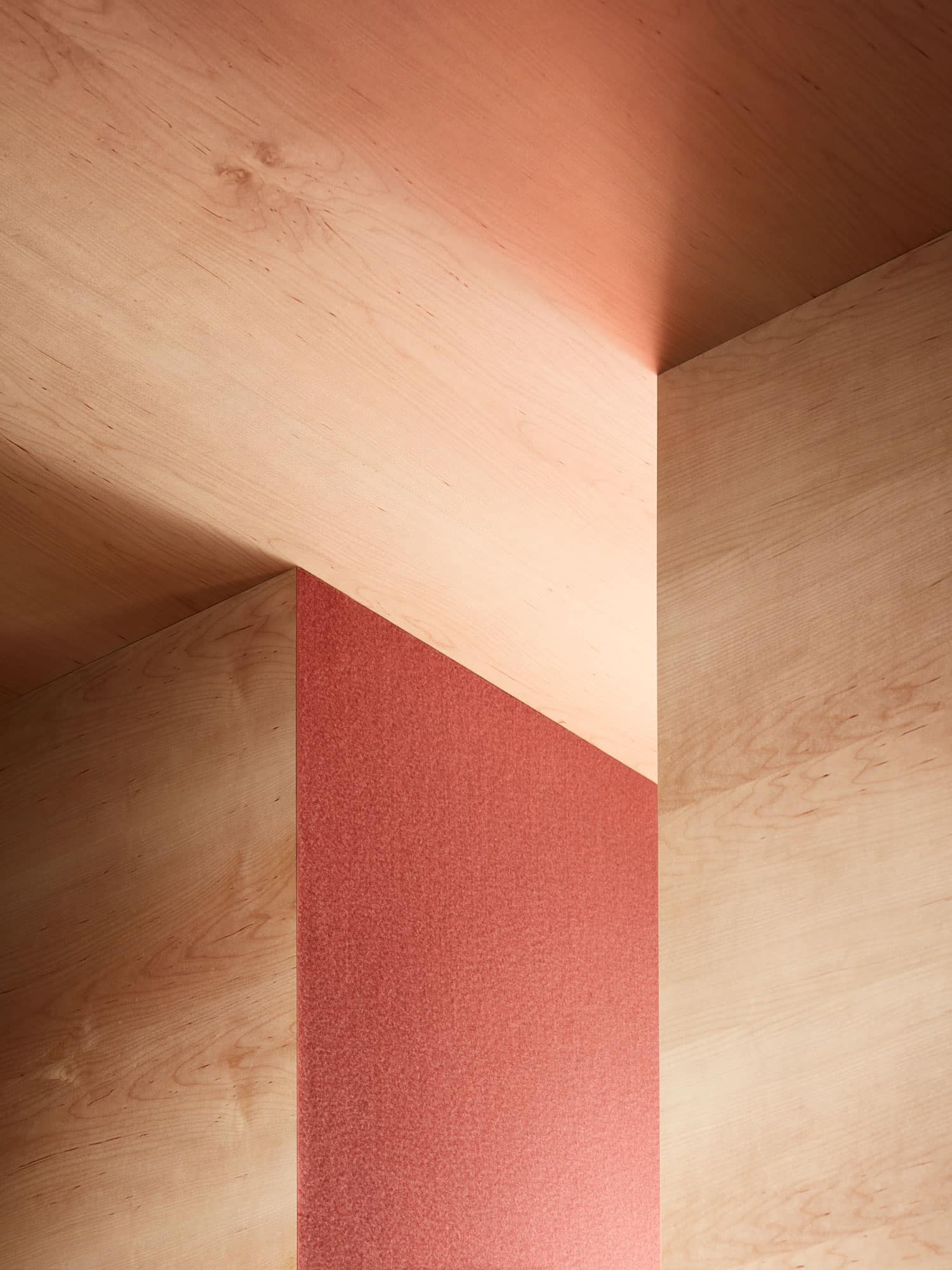
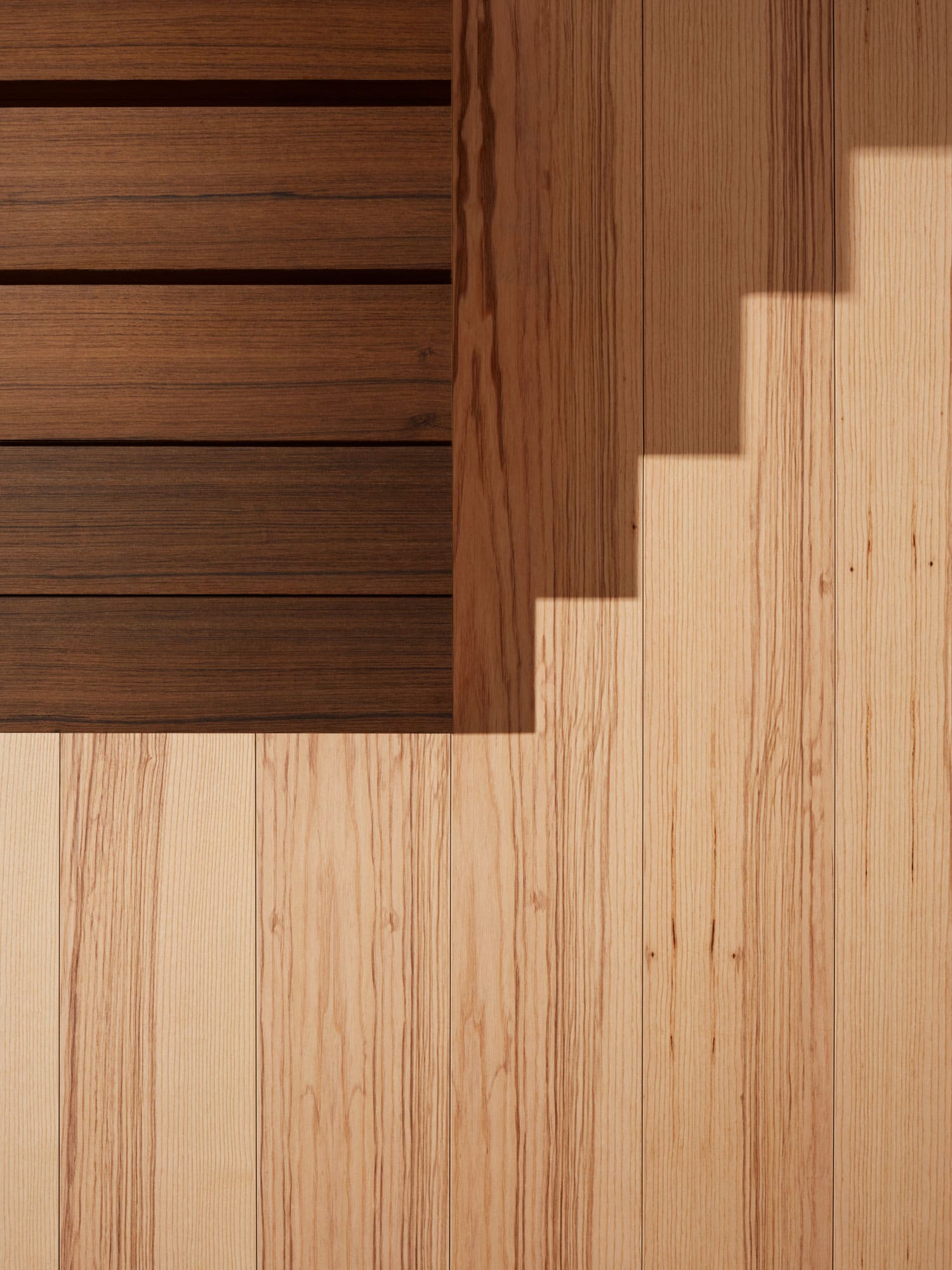
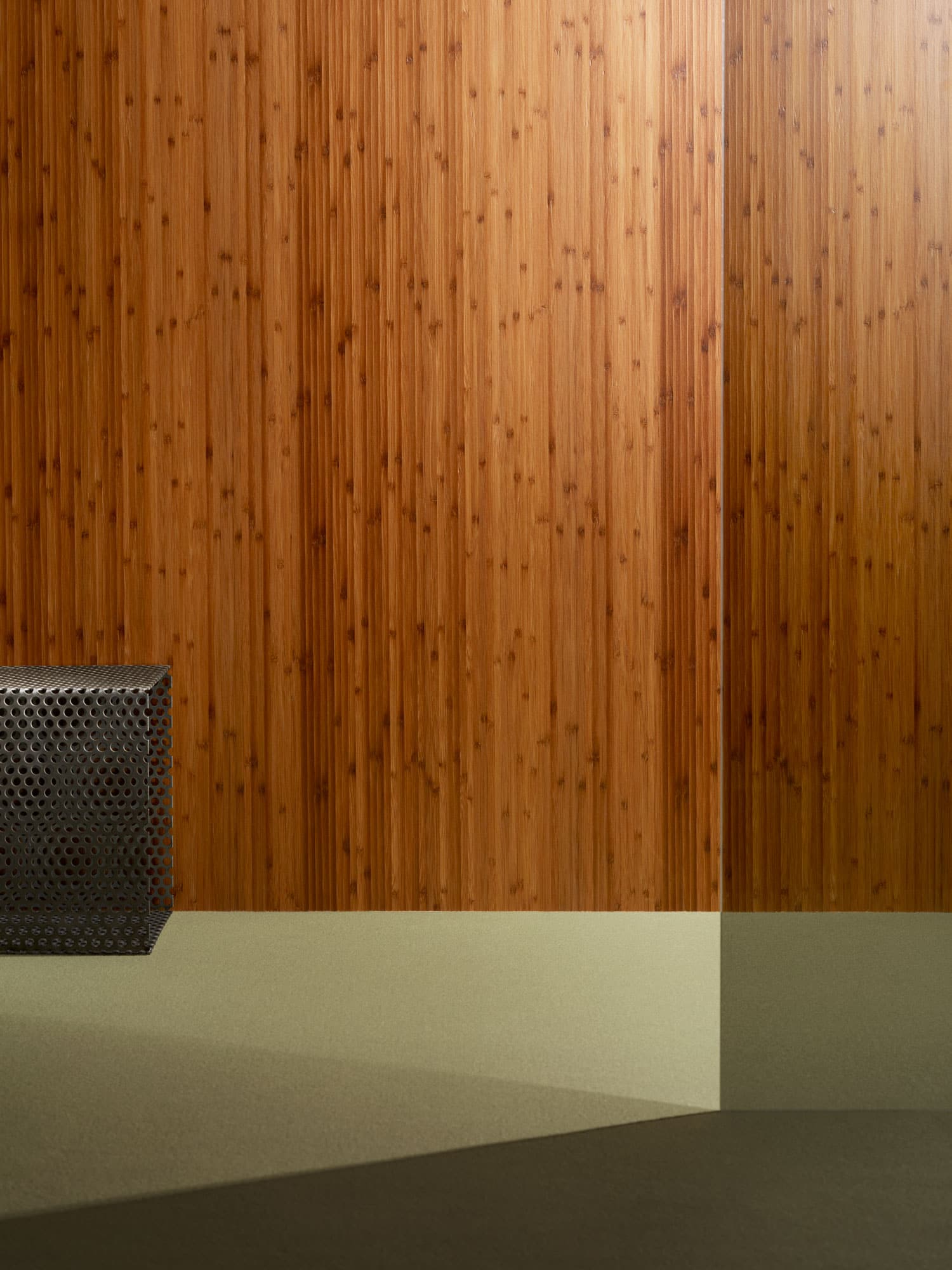
Architectural design with wooden facades transcends mere functionality to become an expressive tool that defines a building’s character and identity. Wood, as a living and versatile material, offers multiple compositional possibilities, enabling the creation of unique architectural languages, from contemporary minimalism to bold expressiveness.
Fundamental Compositional Elements
The use of natural wood in architecture goes beyond material selection, evolving into a system of compositional codes that shape a building’s character and identity. Beyond its technical properties, natural wood cladding provides an architectural language where every decision – from modulation to scale – contributes to creating coherent and memorable spatial experiences.
- Modulation and Rhythm: The arrangement of wooden panels creates rhythmic patterns that articulate the facade and connect the scale of details to the urban context. Modulation can follow structural, functional, or purely compositional criteria. Systems like NATURCLAD-W offer standard dimensions (2440×1220 mm), facilitating the creation of precise organizational grids.
- Orientation and Direction: The horizontal or vertical arrangement of linear elements generates distinct spatial perceptions. Horizontal cladding emphasizes a building’s expanse and horizontality, while vertical arrangements highlight slenderness and verticality. Slatted systems allow for great flexibility in exploring these possibilities.
- Scale and Proportion: The relationship between the dimensions of wooden elements and human scale determines the material’s perceived proximity. Large-format pieces evoke monumentality, while smaller elements create more tactile, intimate textures.
Strategies for Material Expressiveness
Natural wood cladding offers multiple expressive strategies that go beyond facade protection. Every decision regarding continuity, texture, and color contributes to defining the building’s architectural character.
- Continuity and Fragmentation: Wood enables the creation of continuous surfaces that envelop the building or fragmented systems that reveal the construction logic. Material continuity unifies different floors and orientations, while fragmentation can differentiate uses or highlight key access points.
- Texture and Depth: Variations in surface relief create dynamic plays of light and shadow that evolve throughout the day. Overlapping planks, staggered panels, or volumetric elements add three-dimensional depth, contrasting with the flatness of planar facades.
- Color and Tone: While natural wood has characteristic tones depending on the species, technical treatments expand the chromatic palette while preserving the material’s texture and properties. Finishes can either accentuate or minimize natural features like grain and knots, depending on expressive goals.
Integration with Other Materials
Integrating wood with other materials requires design decisions that leverage both contrasts and complementarities. Each material junction offers an opportunity to articulate the building’s architectural language.
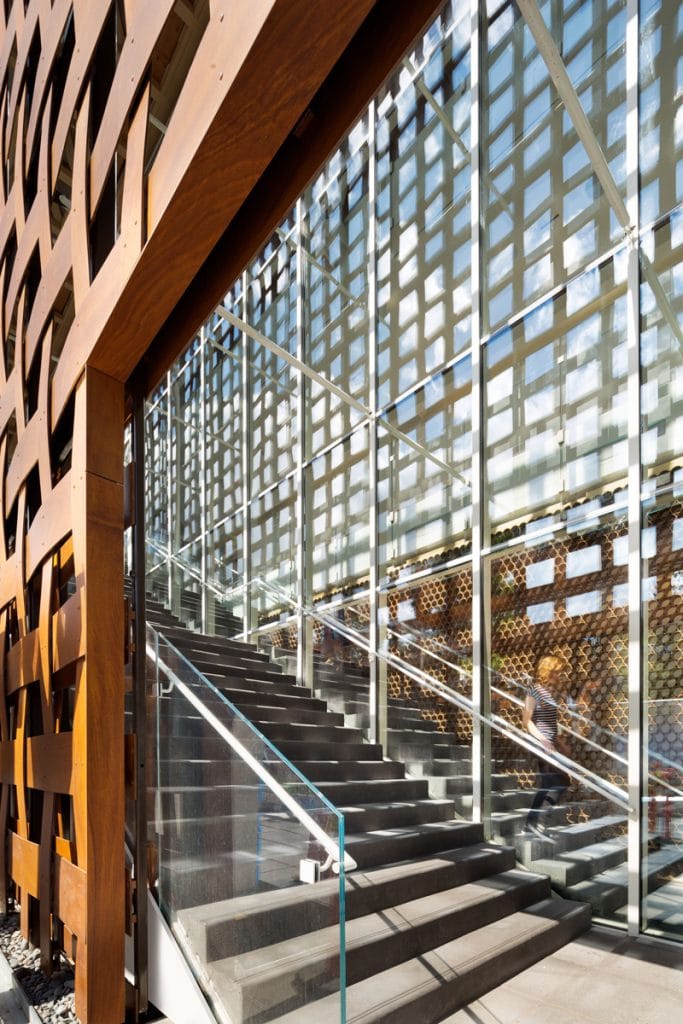
- Material Dialogue: Wood creates specific contrasts and complementarities with other architectural materials. Its natural warmth effectively contrasts with the coldness of glass, concrete, or steel, resulting in balanced compositions that humanize large-scale constructions.
- Transitions and Junctions: Resolving junctions between wood and other materials demands careful compositional attention. Transition details can be subtle, emphasizing continuity, or expressive, highlighting material differences as architectural articulations.
- Expressive Hierarchies: Assigning wood to specific building elements (base, main body, or crown) establishes compositional hierarchies that enhance the overall architectural legibility.
Expressiveness Across Architectural Typologies
- Residential Architecture: In single-family homes, wood can create domestic atmospheres that contrast with harsh urban environments. Its scale and texture facilitate a transition between urban and intimate domestic scales. The Landaburu Borda Rural House exemplifies this strategy through material continuity between exterior and interior
- Educational Architecture: In educational facilities, wood fosters non-institutional environments conducive to learning. Its warmth and acoustic properties are particularly suitable for spaces designed for children and youth.
- Corporate Architecture: In office buildings, wood humanizes large-scale facades, adding warmth and distinguishing the building in corporate environments often dominated by cold materials.
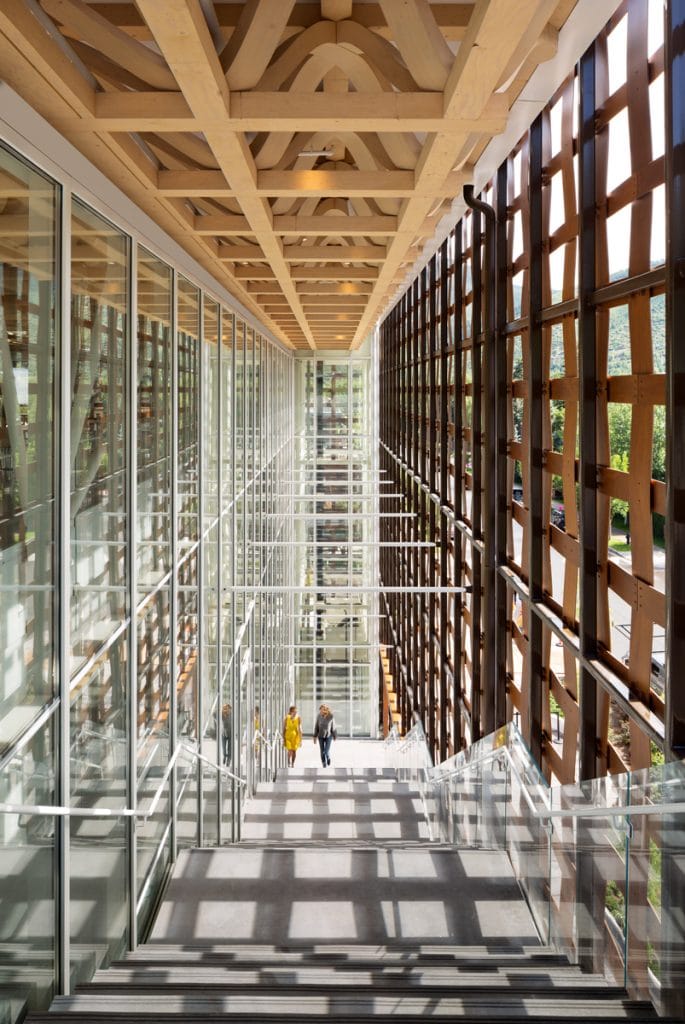
- Cultural Architecture: Museums, libraries, and cultural centers benefit from wood’s cultural resonance, a material traditionally associated with craftsmanship and human creativity. The Aspen Art Museum by Shigeru Ban demonstrates how wood can take center stage in avant-garde cultural institutions.
Paradigm Cases
- Interior-Exterior Continuity: The Moody Center at the University of Texas, designed by Gensler, perfectly illustrates the creation of unified spaces that blur the boundaries between inside and outside.
- Climatic Adaptation: Vernacular architecture in various regions shows how wood can expressively adapt to specific climatic conditions, from Nordic constructions to tropical solutions. Proximity to the Arctic Circle made snowstorms and subzero temperatures key considerations in Sheehan Nagle Hartray Architects’ design for Facebook’s data center in Luleå. The use of Parklex Prodema’s natural wood cladding on the exterior facade was pivotal: the HPL panels offer exceptional resistance to extreme weather while maintaining the vernacular warmth of natural wood.
- Technical Innovation: Contemporary buildings incorporating fire-resistant wood panels demonstrate how traditional material limitations can be overcome without sacrificing expressiveness.
Maintenance and Aging Considerations
- Controlled Aging: Modern technical treatments allow for predictable and controlled aesthetic evolution of wood, preserving the original compositional intent throughout the building’s lifespan.
- Replacement Strategies: Designs should account for the occasional replacement of specific elements, especially in more exposed areas, without compromising the overall compositional unity.
Technology and Expression
Technical natural wood panels significantly expand expressive possibilities by eliminating traditional material limitations in terms of durability, maintenance, and fire resistance, allowing architectural expressiveness to take precedence in design decisions.
Need specific technical advice for your project? Contact our team with no obligation to address technical questions, analyze specific requirements, or develop customized solutions.