In a context where reducing energy consumption has become a priority for architecture, passive design principles are gaining increasing prominence.
Beyond the incorporation of complex technologies or advanced mechanical systems, passive architecture raises a fundamental question: how can a building take advantage of the natural conditions of its environment to improve user comfort and minimize energy demand?
The Harry Parker Community Boathouse, designed by AW-ARCH in Boston, is one of the most compelling examples of this approach. Its design demonstrates that energy efficiency can be naturally integrated into architecture while also serving as a tool for building identity, creating spatial quality, and strengthening the relationship between the building and its landscape.
Passive Architecture: Designing with the Climate, Not Against It
Passive architecture is based on a simple premise: using site characteristics, orientation, the building envelope, and materials to reduce energy requirements. Before relying on active climate-control systems, the design seeks to harness natural ventilation, daylight, thermal mass, and protection from adverse weather conditions.
This approach not only helps reduce energy consumption but also enables the creation of healthier and more comfortable spaces. Indoor environmental quality no longer depends exclusively on mechanical equipment but is supported by architectural strategies capable of performing throughout the building’s entire lifespan.
The challenge for contemporary architects is to integrate these strategies without sacrificing formal expression or the functional requirements of the program. It is precisely in this regard that the Harry Parker Boathouse offers a particularly valuable lesson.
Natural Ventilation as a Driver of Architectural Form
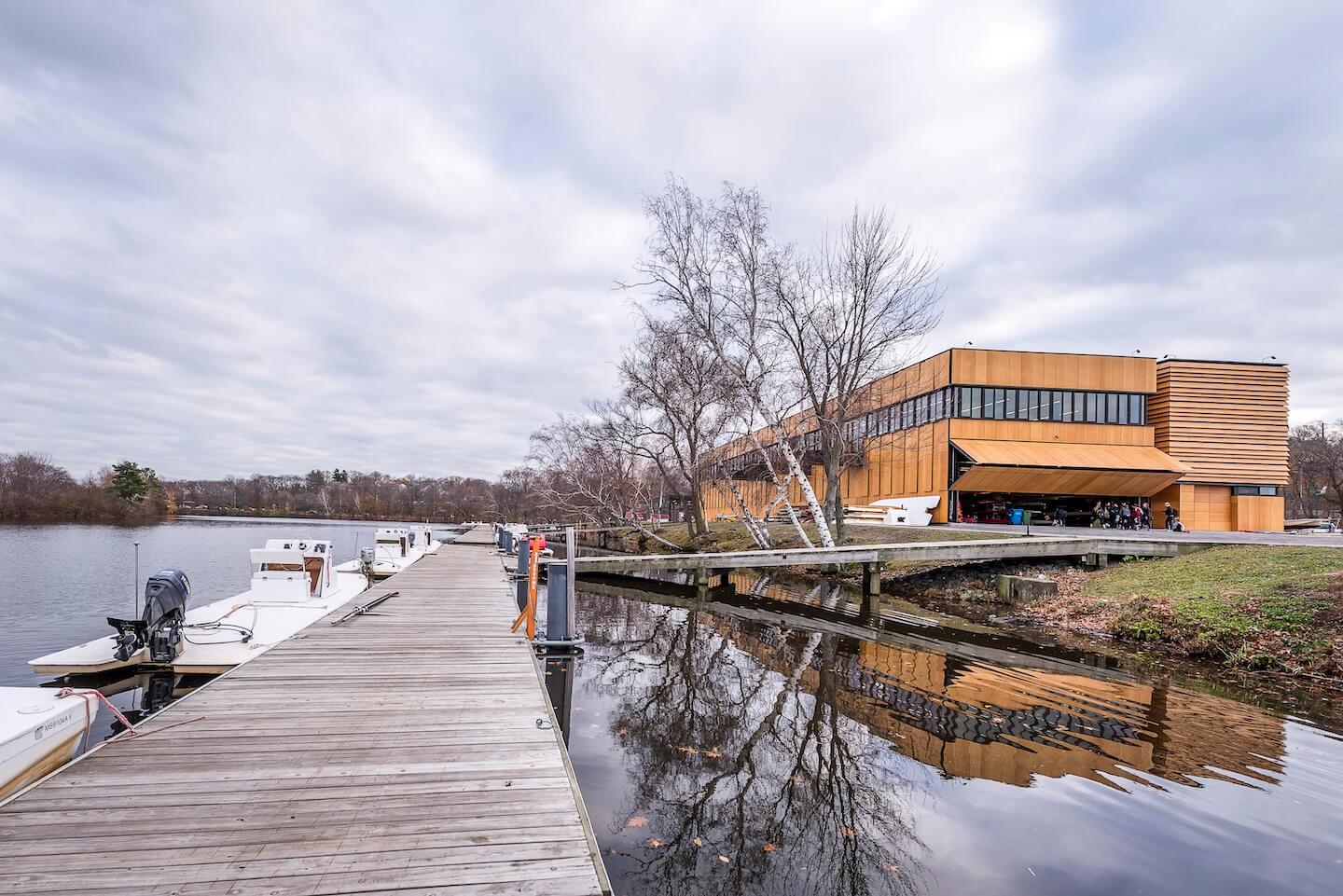
Located along the Charles River, the building was required to accommodate a complex program combining boat storage, training facilities, offices, and community spaces. AW-ARCH took advantage of the site’s environmental conditions to make natural ventilation one of the project’s central elements.
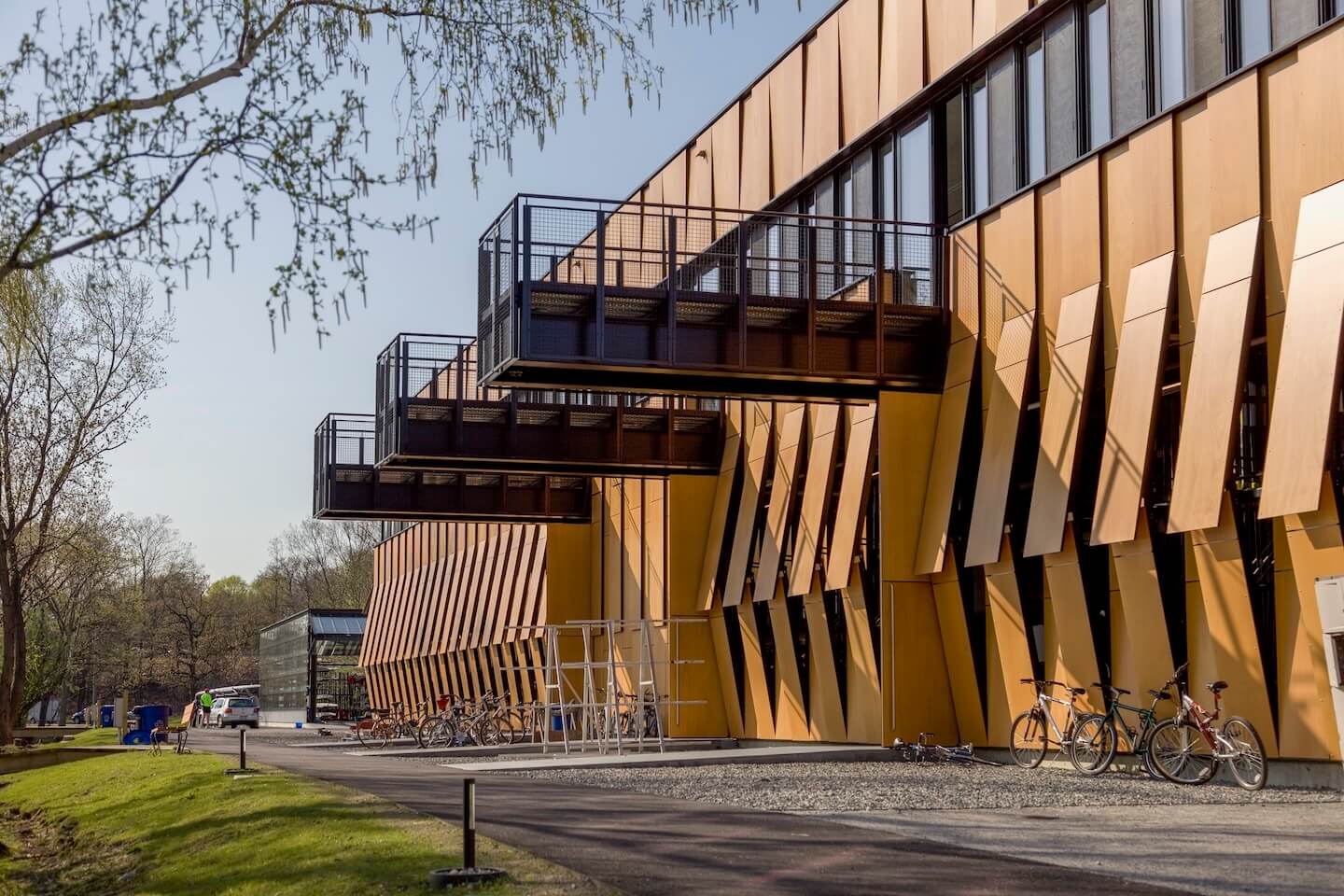
The envelope incorporates a system of movable panels and operable louvers that regulate the intake of fresh air and facilitate the release of accumulated heat. This strategy significantly reduces dependence on mechanical systems while taking advantage of the natural air currents coming from the river environment.
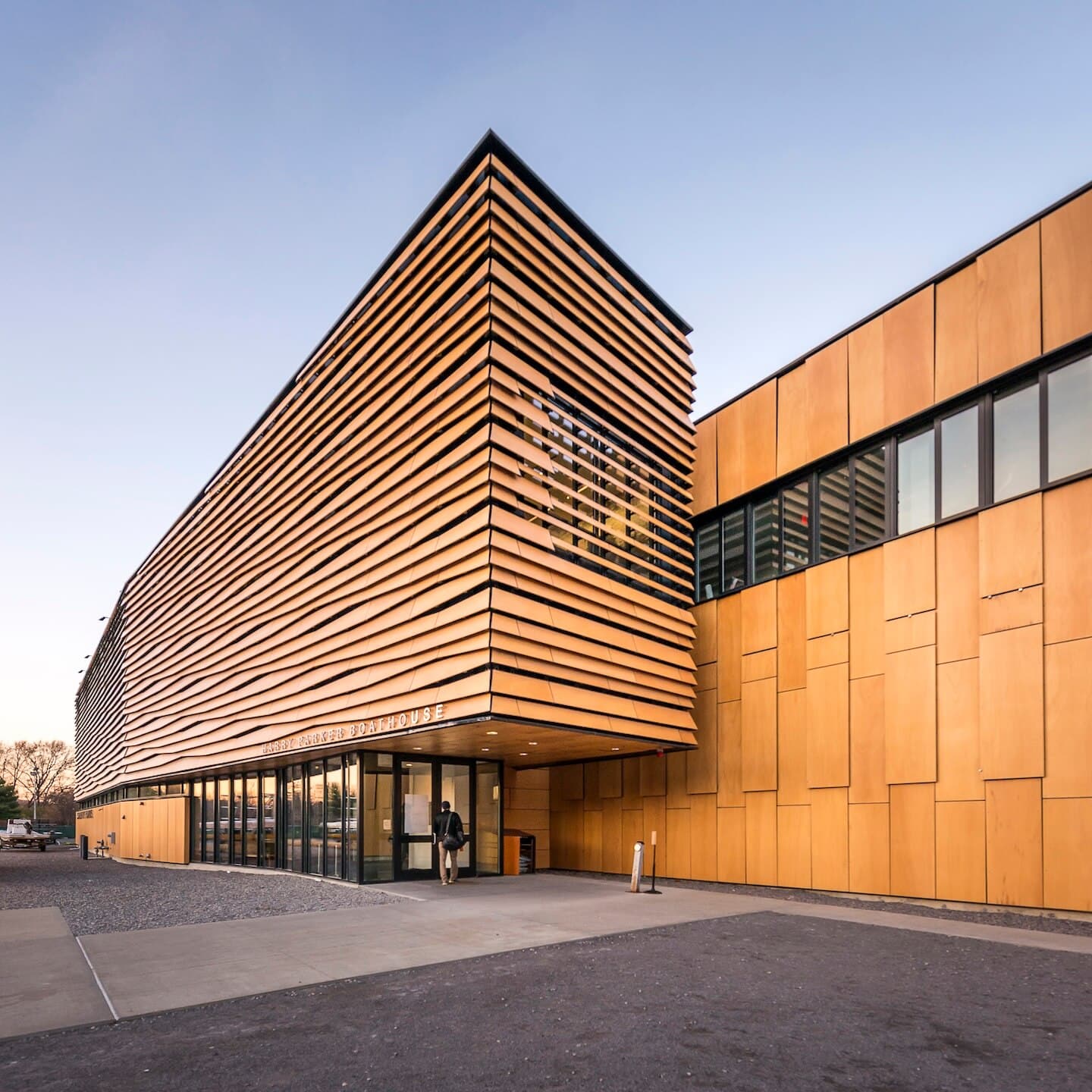
What makes the project particularly interesting is that the technical solution is not concealed. The façade itself visually expresses how it functions, becoming an essential part of the building’s architectural language. The openings change according to ventilation needs, creating a dynamic appearance that evolves with both use and environmental conditions.
This integration of performance and architectural expression represents one of the key principles of contemporary passive design: environmental solutions cease to be added features and instead become an inseparable part of the architecture itself.
Daylighting and Reduced Energy Demand
Natural lighting is another fundamental pillar of the project. Both the lightweight boat pavilion and the main building are designed to maximize the penetration of daylight. Large glazed surfaces and carefully studied solar-control elements illuminate interior spaces while reducing the need for artificial lighting throughout much of the day.
From a passive-design perspective, daylight provides a dual benefit. On the one hand, it reduces the electrical consumption associated with lighting. On the other, it enhances the spatial experience of users by strengthening visual connections with the river and the surrounding landscape.
This direct relationship with the outdoors is one of the project’s most notable features. Interior spaces are conceived not as isolated environments but as extensions of the river landscape. Architecture uses light as a tool to reinforce this continuity and create a richer, healthier experience.
The Building Envelope as an Environmental Control System
In passive architecture, the building envelope plays a decisive role. Rather than being understood merely as a protective layer, it becomes an active climate-regulation system capable of controlling solar radiation, ventilation, and the relationship between interior and exterior spaces.
At the Harry Parker Boathouse, the façade is composed of timber panels that form part of a sophisticated system of louvers and movable elements.
The exterior cladding materials used combine durability, dimensional stability, and low maintenance requirements, characteristics that are essential in an environment subject to significant climatic variations and constant proximity to water.
This solution demonstrates how installation systems and materials can make a significant contribution to a building’s energy performance. Beyond their aesthetic value, properly designed envelopes act as environmental filters, regulating exchanges between inside and outside and improving the overall performance of the building.
A Lesson for the Architecture of the Future
The Harry Parker Community Boathouse demonstrates that passive architecture is not merely a technical matter but a comprehensive way of understanding design. Natural ventilation, daylight utilization, climate control through the envelope, and intelligent material selection work together to create a building that is efficient, comfortable, and deeply connected to its context.
For architects seeking to design more sustainable spaces, the project offers a particularly relevant lesson: passive strategies achieve their greatest potential when they are incorporated from the earliest stages of design. The goal is not to add energy-saving solutions to an already defined architecture, but to allow those strategies to shape the building itself.
The result is a work that continues to serve as an international reference for its ability to combine innovation, environmental sensitivity, and architectural quality. It demonstrates that the path toward more sustainable architecture often begins with simple and intelligent decisions that make the most of the resources nature provides free of charge.