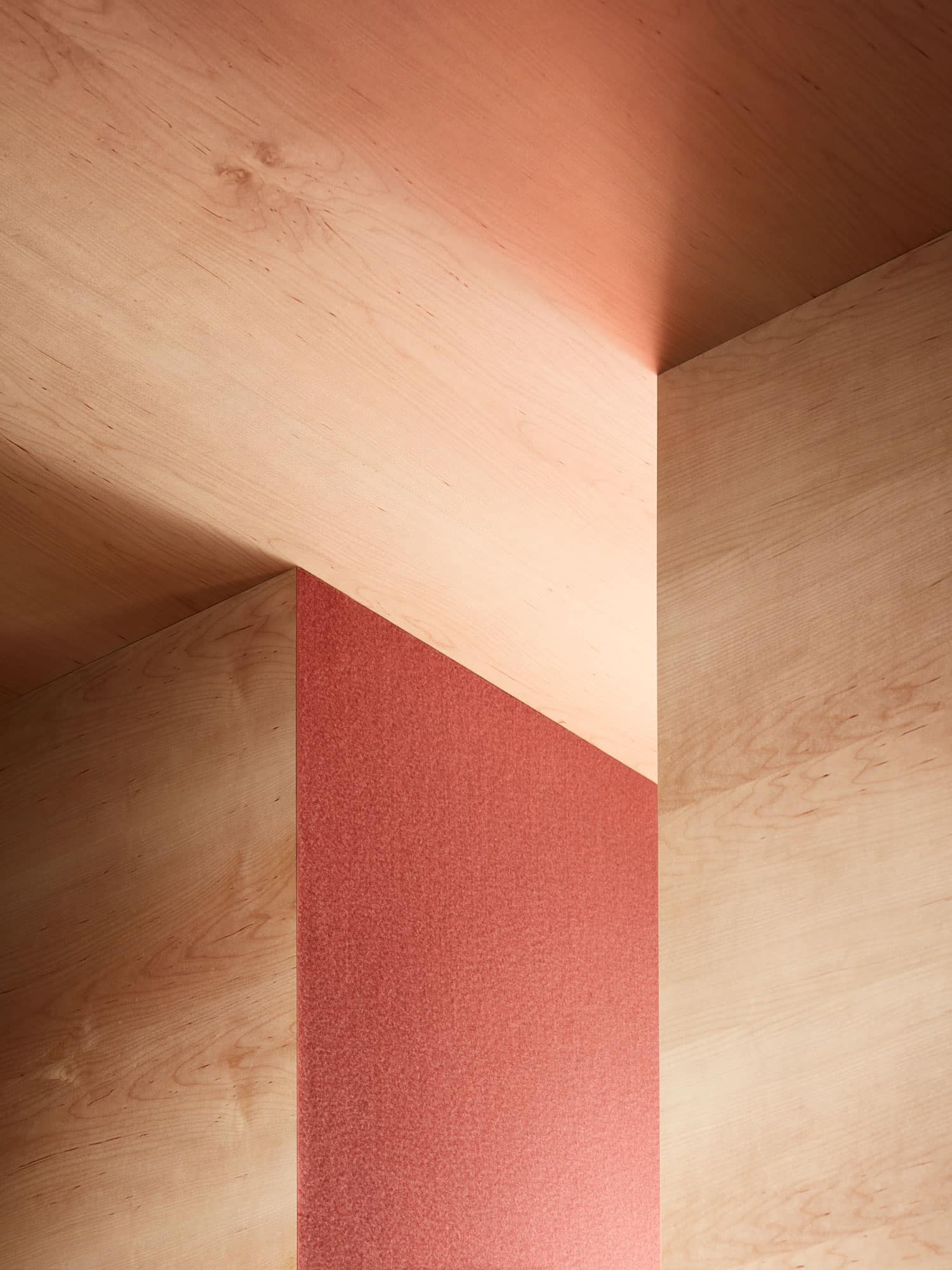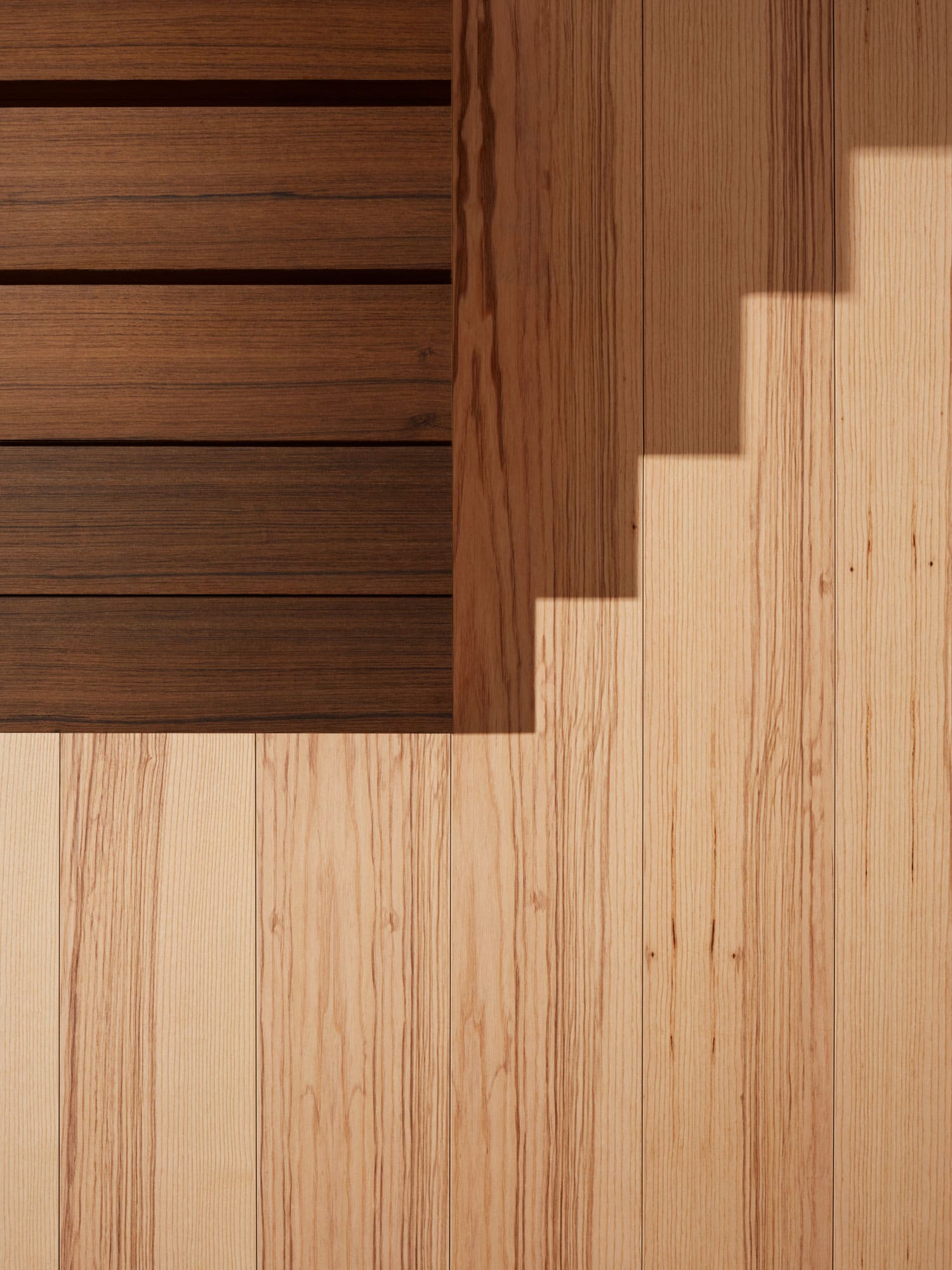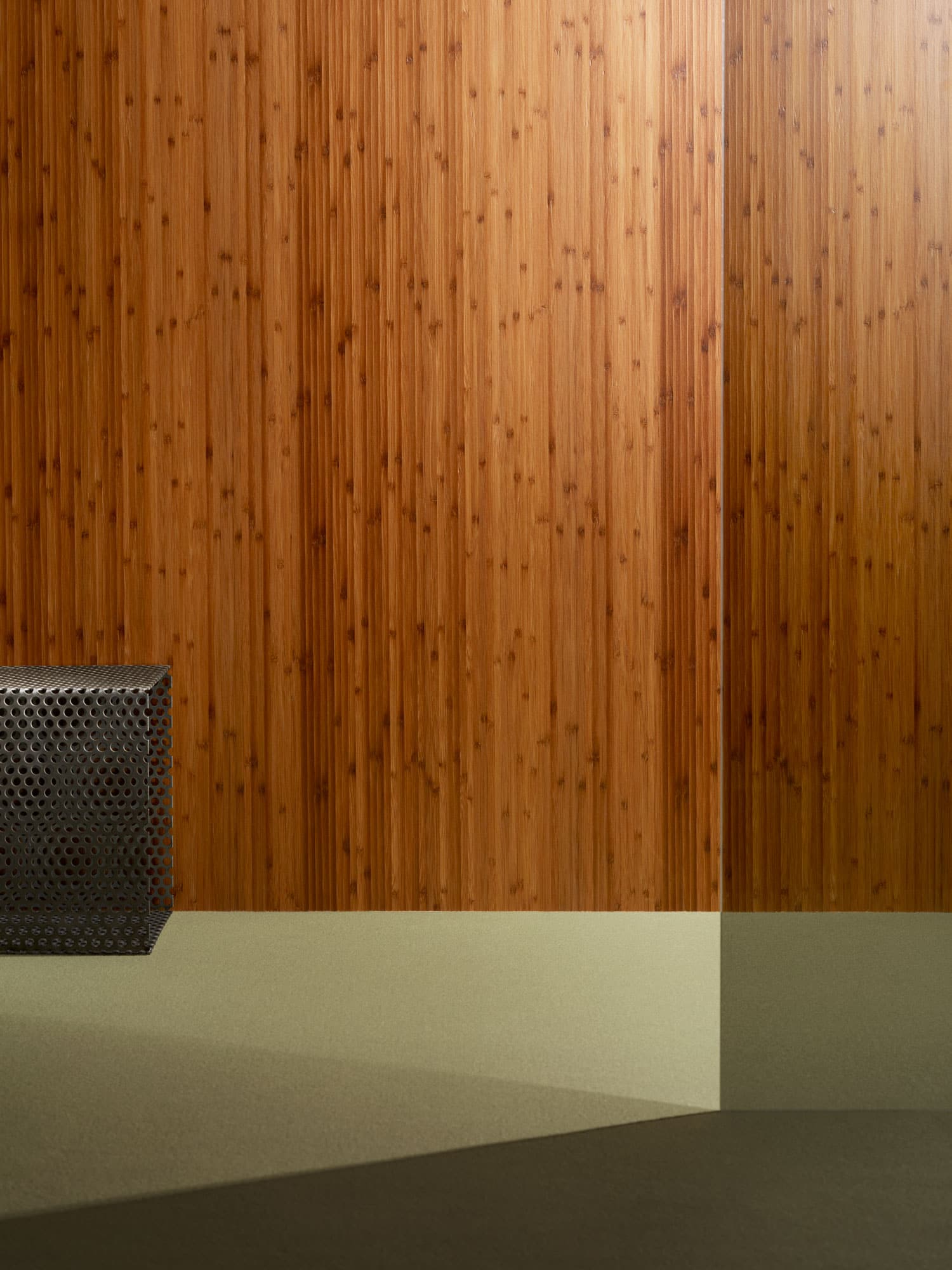
Aesthetic continuity between interior spaces and exterior ceilings is a fundamental principle of contemporary architectural design, where visual integration between environments seeks to create cohesive spatial experiences that transcend traditional physical boundaries. Natural wood panels offer an optimal solution for achieving this continuity, providing the technical versatility needed to adapt to both controlled interior conditions and protected exterior environments without compromising the visual coherence of the architectural ensemble.
Design Principles for Visual Continuity
Successful implementation of interior-exterior aesthetic continuity using wood cladding requires consideration of multiple design factors beyond mere material selection:
Chromatic and Textural Unification: Using the same wood species and finish for both interior spaces and protected exterior ceilings creates a perception of continuity that transcends physical boundaries between environments. Finishes like Rustik, available in NATURPANEL-W for interiors and NATURCLAD-W for exteriors, enable this unification without compromising the specific technical performance of each application, maintaining virtually identical visual and tactile characteristics.
Modulation and Rhythm: Dimensional coordination between interior and exterior panels facilitates the perception of continuity through consistent layouts and proportions. Implementing coherent panel layouts and aligning joints between environments enhances the sense of spatial flow, creating visual patterns that extend naturally and organically from interior to exterior.
Gradual Transitions: In transitional spaces such as glazed galleries, enclosed porches, or double-height areas, wood panels enable visual sequences that smooth the transition from interior to exterior, softening abrupt contrasts between materials and creating richer, more complex spatial experiences.
Dimensional Coordination: Coordinated planning of panel dimensions, joints, and finishing elements between interior and exterior spaces requires technical precision to maintain visual coherence. Manufacturing and installation tolerances must be aligned to avoid misalignments that could compromise the perception of continuity.
Technical Solutions for Different Environmental Conditions
The transition between interior and exterior environmental conditions requires specific technical solutions to maintain aesthetic coherence while addressing distinct technical demands:
Hygrothermal Compatibility: Exterior ceiling panels incorporate specific treatments that enable them to withstand sharp variations in humidity and temperature without deformations that could compromise visual continuity. Fastenersystems must be designed to accommodate differential movements between areas with varying environmental conditions, absorbing stresses without causing visible cracks or misalignments.
Differential UV Protection: While interior spaces do not require specific protection against ultraviolet radiation, exterior ceilings feature PVDF coatings that ensure long-term chromatic stability. This technical differentiation is visually imperceptible, maintaining the aesthetic unity of the ensemble through surface technologies that preserve the original chromatic characteristics throughout their lifespan.
Differential Resistance: Panels for protected exterior applications, such as NATURSOFFIT-W, incorporate higher-density cores and specific surface treatments that enable them to withstand occasional humidity, thermal variations, and exposure to atmospheric pollutants without altering their appearance compared to interior panels.
Coordinated Ventilation Systems: Managing condensation in transitional spaces requires ventilation systems that balance environmental conditions between interior and exterior, preventing sharp differences that could lead to interstitial or surface condensation.
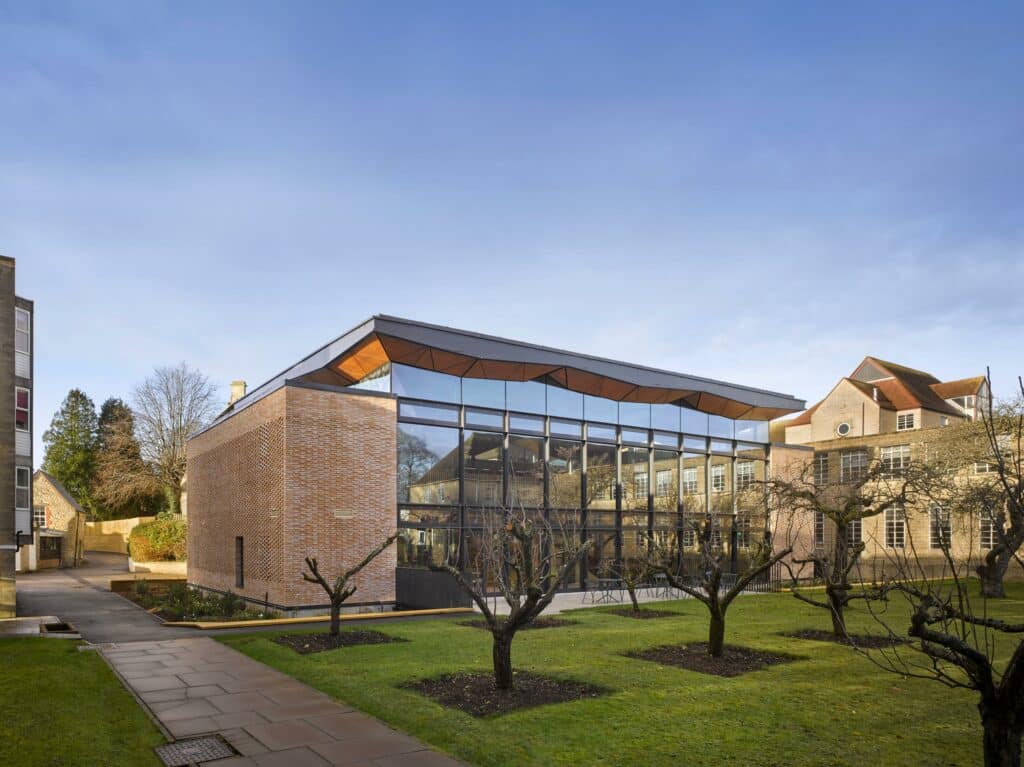
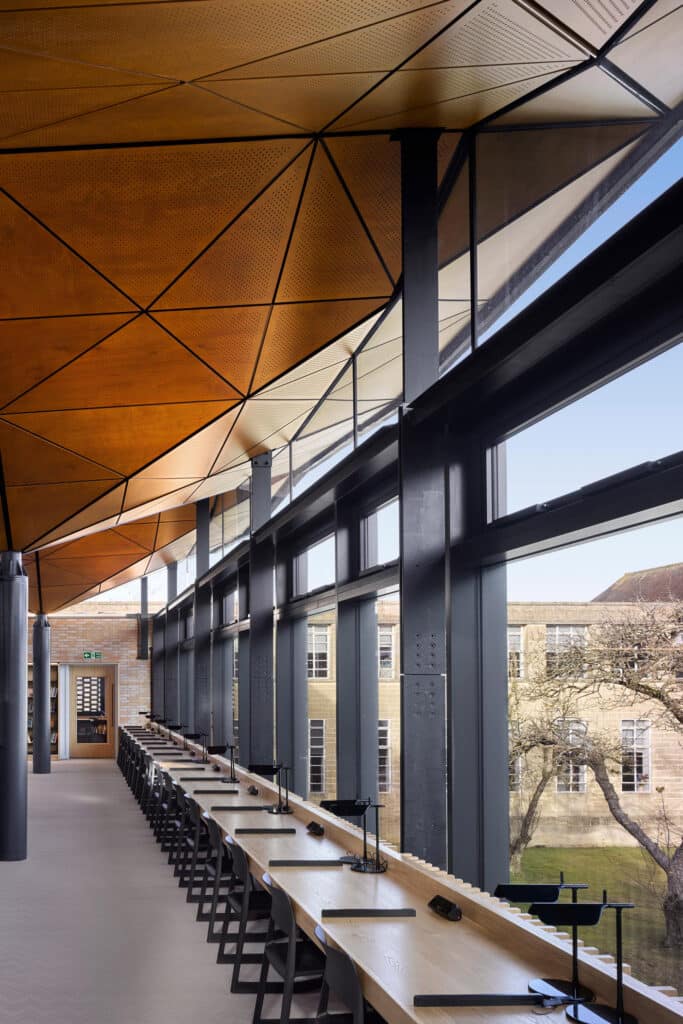
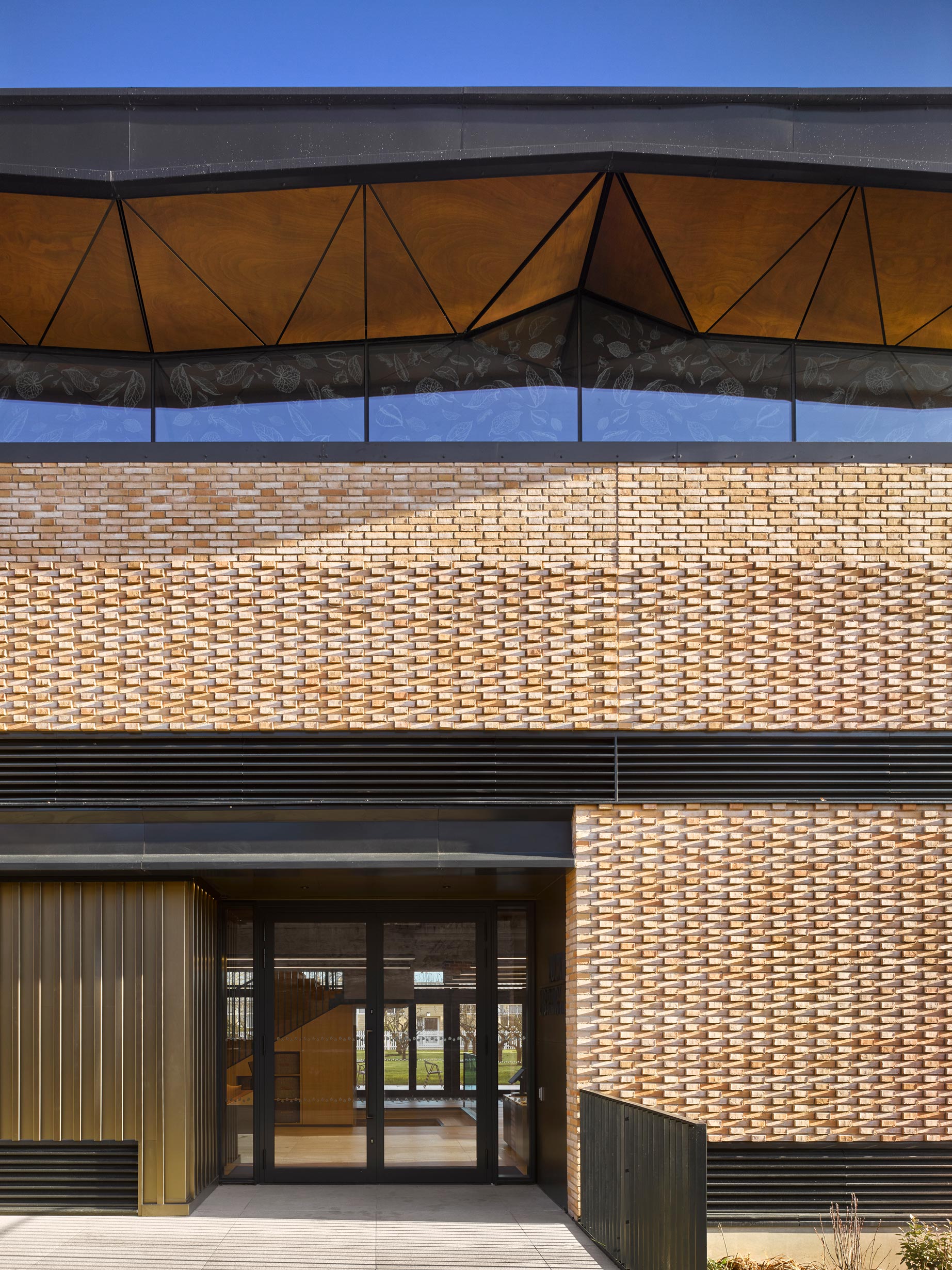
St. Mary’s Calne School Library, Woods Bagot
Specific Architectural Applications
The aesthetic continuity of wood between interior and exterior finds expression in various architectural typologies that demand sophisticated material integration:
Single-Family Homes with Transitional Spaces: Porches, galleries, and semi-covered spaces where natural wood unifies the spatial perception between the domestic interior and the garden or terrace. Coordinated implementation of floors, walls, and ceilings in the same wood species creates highly coherent material environments that enhance the sense of spatial amplitude and continuity.
Institutional and Corporate Buildings: Reception areas, lobbies, and common spaces where material continuity reinforces the project’s architectural identity and contributes to creating atmospheres of well-being. The St.Mary’s Calne School project, designed by Woods Bagot, exemplifies this application through a faceted ceiling that extends from the interior to covered exterior spaces, creating a unified spatial experience.
Commercial and Hospitality Spaces: Covered terraces, transitional spaces, and common areas where material continuity contributes to distinctive and welcoming commercial atmospheres that reinforce brand identity and enhance user experience.
Cultural and Educational Facilities: Libraries, museums, and cultural centers where transitional spaces act as articulators between public and private realms, using material continuity as a tool for social and spatial integration.
Considerations for Unified Maintenance
Long-term aesthetic coherence requires maintenance protocols that preserve visual uniformity between spaces with different usage conditions:
- Synchronized Cleaning: Although natural wood panels do not require periodic maintenance, cleaning operations must be coordinated between interior and exterior spaces to maintain chromatic consistency and avoid differences in appearance that could compromise the perception of continuity.
- Aging Management: Advanced treatments for exterior panels minimize aging differences compared to interior ones.
- Inspection Protocols: Periodic verification of the condition of systems in both environments allows for early detection of situations that could compromise aesthetic continuity, facilitating preventive interventions before visible differences arise.
Need specific technical advice for your project? Contact our team with no obligation to address technical questions, analyze specific requirements, or develop customized solutions.