The behavior of natural wood planks under extreme weather conditions is a critical factor in architectural specifications for projects in challenging environments. Prolonged exposure to intense UV radiation, freeze-thaw cycles, saline coastal winds, or extreme precipitation demands specific technical solutions to ensure durability without compromising aesthetic performance.
Systems such as NATURSIDING-W and NATURCLAD-W have proven their effectiveness in numerous international projects, providing objective data on their performance in extreme conditions.
Resistance to Arctic Conditions
The Arctic Circle presents specific challenges, combining extreme thermal amplitudes and snowfall with freeze-thaw cycles. With a subarctic climate, the region experiences long, cold winters with average temperatures of -2°C and short, mild summers with highs around 20°C.
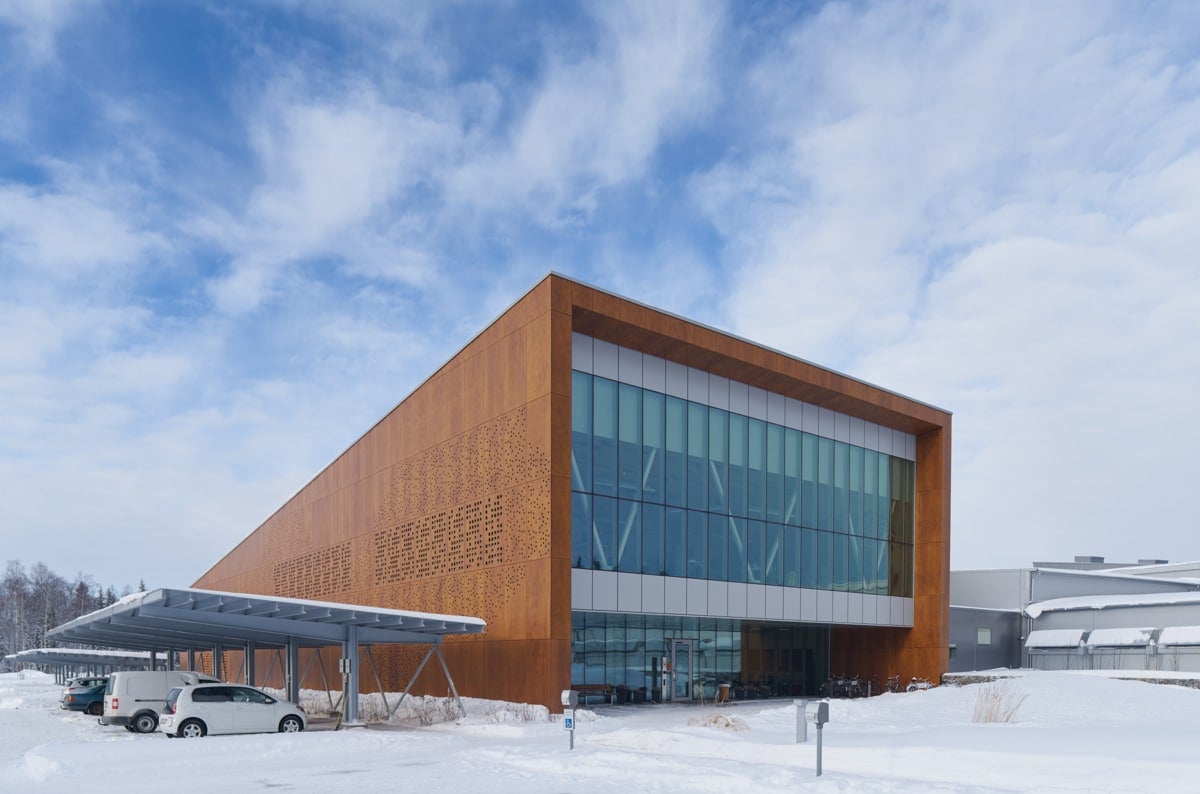
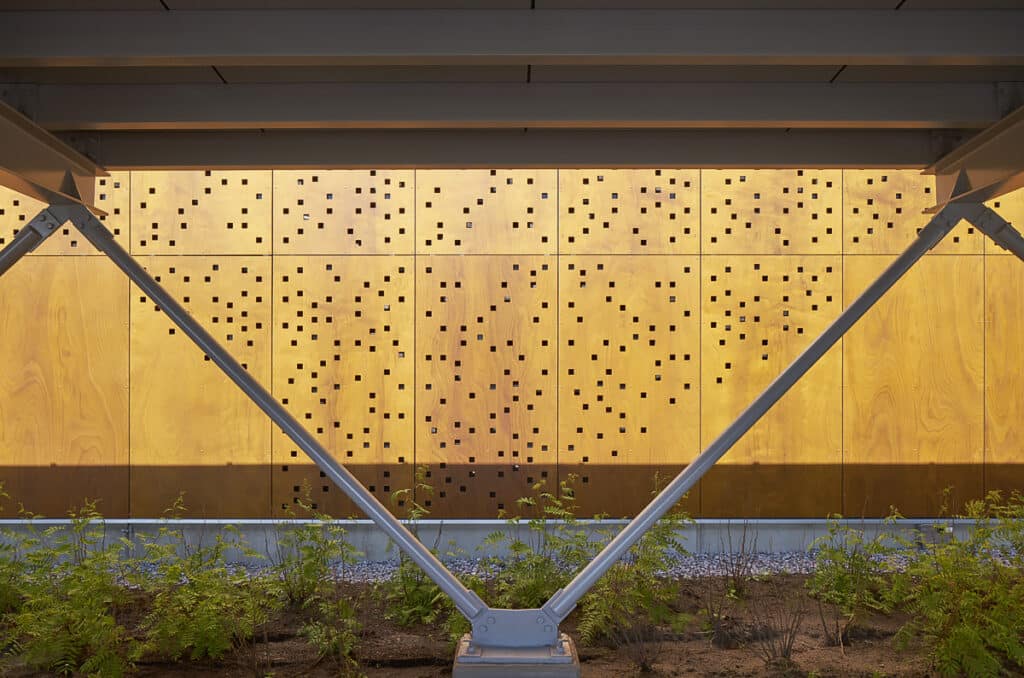
Project: Facebook Data Center in Luleå, Sweden
The Facebook Data Center in Luleå, also known as the Node Pole campus, was partially designed by Sheehan Partners Architects (Chicago), in collaboration with DPR Construction and Alfa Tech. It is Facebook’s first data center outside the U.S., located in a vast technological zone with multiple buildings to handle European traffic.
Situated approximately 60 km south of the Arctic Circle in Luleå, on the coast of the Gulf of Bothnia, it is surrounded by pine forests and numerous hydroelectric plants along the Lule River.
Key Construction Considerations
- Outdoor air cooling: The design leverages cold polar air to cool servers without traditional air conditioning systems, using axial fans and controlled air intake/exhaust ducts.
- Humidification: Due to extremely dry air, an evaporative humidification system (up to 11,700 L/h) is installed to maintain adequate humidity levels, preventing static electricity and health issues.
- Redundant electrical grid: The area has two independent electrical grids, enhancing reliability and reducing the need for backup generators.
- LEED Gold Certification: The design meets standards for energy efficiency, indoor environmental quality, waste management, and water conservation.
Performance in Marine Environments
Marine environments expose wood planks to the combined effects of salinity, constant high humidity, and abrasive saline particles carried by winds. Saline corrosion significantly accelerates the degradation of unprotected metal components and can affect inadequately treated surface finishes.
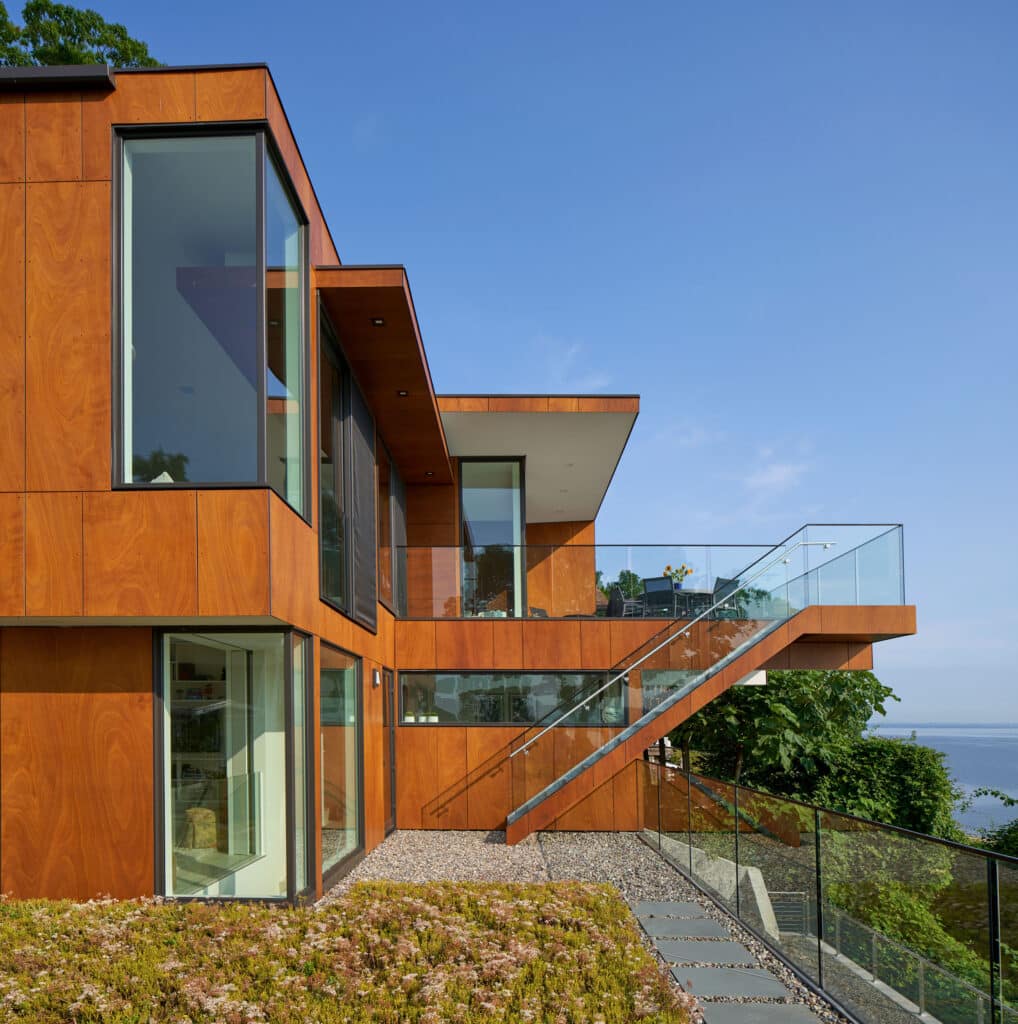
Case Study: Coastal Residence in Maine, USA
The Cliffside Residence in Port Washington has been exposed to direct ocean winds with saline concentrations exceeding 20 mg/m³ for four years. The NATURCLAD-W planks, installed facing the ocean, have maintained full structural integrity with no signs of deformation, peeling, or loss of adhesion.
Comparative analyses with conventionally treated solid woods in the same environment show 60% less degradation in natural wood planks. The absence of surface cracks or fissures prevents saline penetration into inner layers, preserving core stability.
Resistance to Desert Climates
Desert climates combine extreme surface temperatures (above 70°C), maximum UV radiation, severe daily thermal fluctuations, and scarce but intense precipitation. Low ambient humidity can generate desiccation stresses that compromise inadequately stabilized materials.
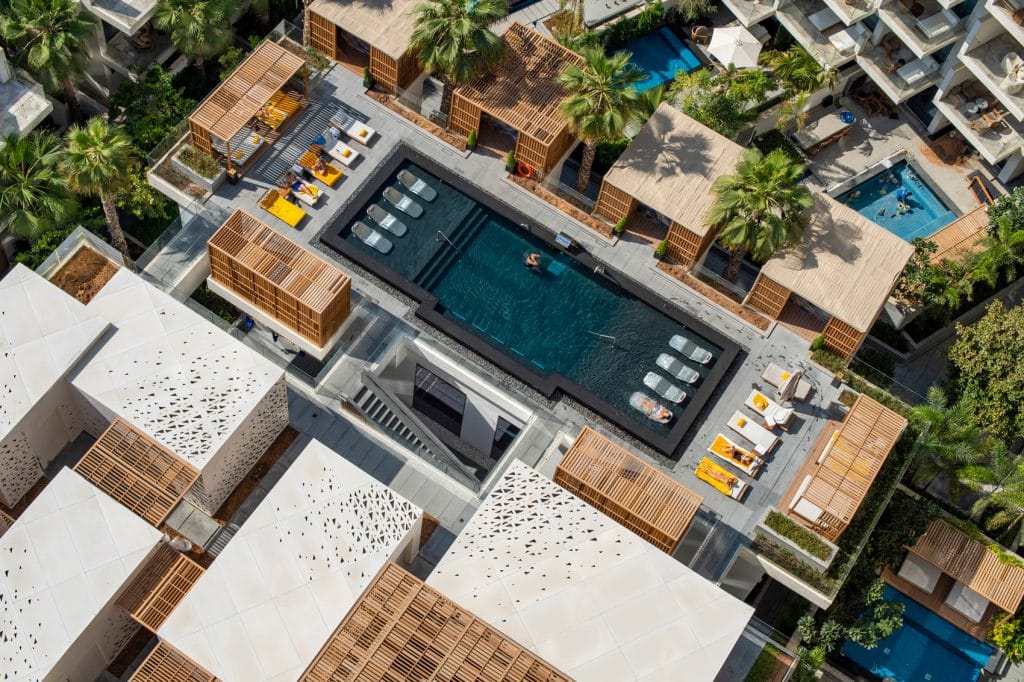
Project: Five Palm Jumeirah Hotel in Dubai
The Five Palm Jumeirah Hotel, located on the western coast of the artificial Palm Jumeirah island, has been exposed to Dubai’s demanding desert climate since 2017. Its 470 rooms, distributed across two identical wings, are clad with NATURCLAD-W panels in a Quartz finish. The distinctive white finish has maintained its aesthetic integrity without requiring maintenance interventions during its operational period.
The multilayer protection system incorporated in the panels includes a specialized outer film that prevents deterioration caused by UV radiation, atmospheric agents, and the accumulation of dirt typical of coastal desert environments.
Effective Features for Arid Climates
Effective features for arid climates include broad-spectrum UV stabilizers that protect against UVA and UVB radiation. Surface resin crosslinking maintains flexibility even at extreme temperatures, preventing microfissures due to thermal fatigue.
Comparative Durability Analysis
Degradation Metrics
Quantitative degradation indicators include chromatic variation (ΔE), surface mass loss, changes in roughness, and modifications in mechanical properties. Longitudinal studies show that natural wood planks retain over 95% of their initial properties after a decade of extreme exposure.
Degradation curves exhibit asymptotic behavior, with minimal initial changes followed by long-term stabilization. This contrasts with the progressive linear degradation of untreated woods.
Accelerating Factors
Climatic acceleration factors vary depending on the specific combination of agents. UV radiation acts as the primary catalyst for surface degradation, while thermal cycles mainly affect dimensional stability. The simultaneous presence of humidity and temperature accelerates hydrolysis processes in susceptible materials.
Predictive modeling based on real data allows for estimating behavior over 25-30 years by extrapolating trends observed in the first five years of exposure.
Specification Recommendations
Selection Based on Climate Zone
Climate zoning for plank specification should consider the combination of environmental factors rather than isolated variables. Köppen-Geiger classifications provide basic guidance but require specific microclimate analyses for projects in extreme conditions.
Differentiated requirements include reinforced UV treatments for high-radiation zones, marine-specific corrosion protection for fastening components in coastal environments, and optimized ventilation systems for desert climates.
Adapted Maintenance Protocols
Preventive maintenance in extreme conditions requires more frequent inspections than in temperate climates. High-altitude areas demand post-thaw checks to detect potential damage from freeze-thaw cycles, while marine environments require periodic cleaning to remove saline buildup.
Specific protocols include biannual inspection of fastening elements in corrosive environments, annual verification of expansion joints in areas with extreme thermal amplitudes, and quarterly cleaning in environments with high atmospheric particle loads.
Emerging Technological Innovations
Advanced Surface Treatments
Current research into surface treatments includes nanotechnologies that provide self-cleaning properties and enhanced resistance to specific agents. Coatings with TiO₂ nanoparticles demonstrate photocatalytic capabilities that degrade organic pollutants, keeping surfaces cleaner in polluted urban environments.
Hybrid systems combining UV protection, hydrophobic properties, and mechanical resistance in a single treatment represent the future direction for applications in extreme conditions.
Comprehensive Monitoring
Monitoring systems with integrated sensors enable real-time tracking of plank behavior in extreme conditions. These systems record surface temperatures, dimensional movements, and humidity levels, providing valuable data for optimizing future projects.
Need specific technical advice for your project? Contact our team with no obligation to address technical questions, analyze specific requirements, or develop customized solutions.