Natural wood acoustic panels offer a comprehensive solution for sound conditioning in architectural spaces, blending the inherent properties of wood with technically advanced designs that optimize sound performance. In the context of interior wood paneling and ceilings, wood stands out due to its fibrous and porous structure, which naturally provides superior acoustic characteristics compared to more rigid and homogeneous materials like concrete or glass.
The acoustic behavior of wood paneling operates in two complementary domains:
- Sound Absorption: The ability to convert sound energy into heat, reducing reflections and reverberation time.
- Sound Diffusion: The property of distributing sound evenly, preventing concentrations and echoes.
Perforated and Slotted Acoustic Panels
Micro-Perforated Systems
Micro-perforated panels combine the aesthetic appeal of natural wood with optimized acoustic performance through small-diameter perforations (typically 1–3 mm). These perforations, paired with an air cavity and absorbent material at the back, create a resonator system that maximizes absorption at specific frequencies.
Typical configurations include:
- Perforation diameters: 1–3 mm
- Perforated area percentage: 5–15%
- Spacing between perforations: 5–16 mm
- Rear air cavities: 20–100 mm
This system achieves sound absorption coefficients (αw) of up to 0.85 per EN ISO 11654, classifying them as Class B absorbers, particularly effective in mid-frequencies (500–2000 Hz), the critical range for speech intelligibility.
Slotted Systems
Slotted panels feature linear incisions on their surface, creating a rhythmic visual effect while functioning as acoustic resonators. Absorption is optimized by combining slots, rear cavities, and absorbent materials.
Common technical characteristics include:
- Slot widths: 2–8 mm
- Variable slot depths based on acoustic requirements
- Slot spacing calculated according to target frequencies
These systems are particularly effective for controlling low and mid-low frequencies, complementing the natural absorption of wood at higher frequencies.
Applications by Space Type
Auditoriums and Concert Halls
In spaces dedicated to musical experiences, natural wood acoustic panels not only contribute to visually warm environments but can also be configured to achieve optimal reverberation times based on the type of performance.
Acoustic design must consider panel orientation, spatial distribution, and the combination of absorbent and reflective zones to create balanced sound experiences.
Corporate Spaces and Offices
In modern work environments, acoustic control has become a key factor for well-being and productivity. Natural wood acoustic panels significantly contribute to:
- Reducing background noise (typically by 5–8 dB)
- Improving conversational privacy
- Decreasing cognitive fatigue associated with reverberant spaces
- Creating acoustic zoning in open-plan spaces
Educational Spaces
In classrooms and learning environments, recommended reverberation times range between 0.6–0.8 seconds to optimize speech intelligibility. Wood acoustic panels create environments that enhance concentration and learning by reducing auditory fatigue.
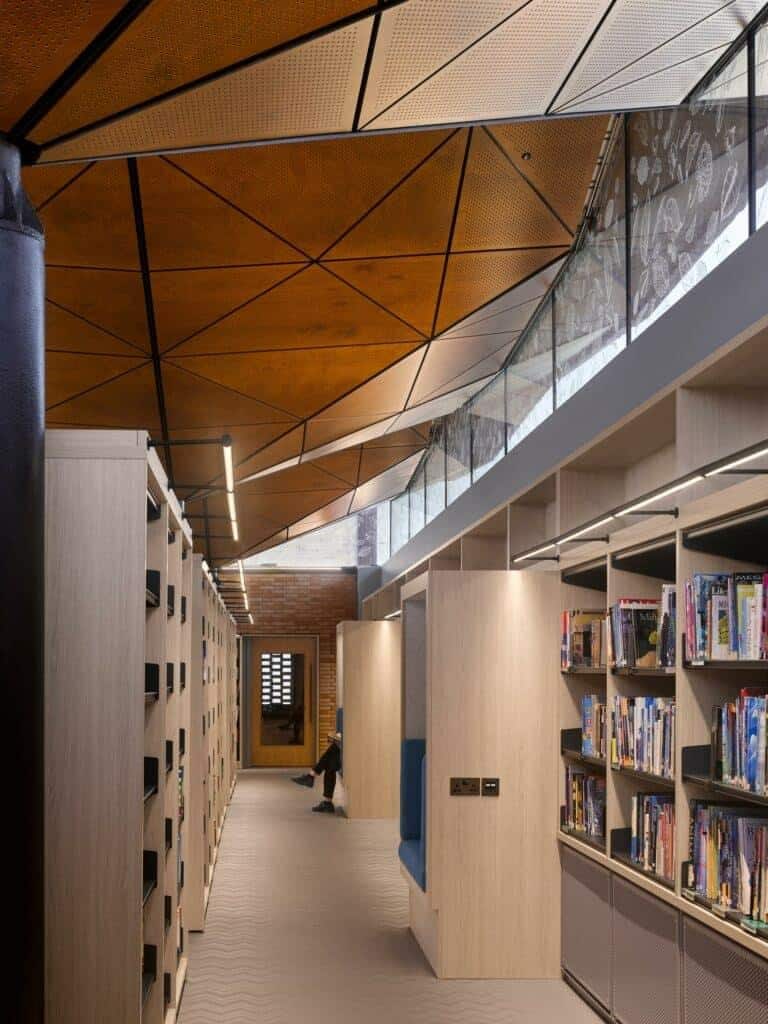
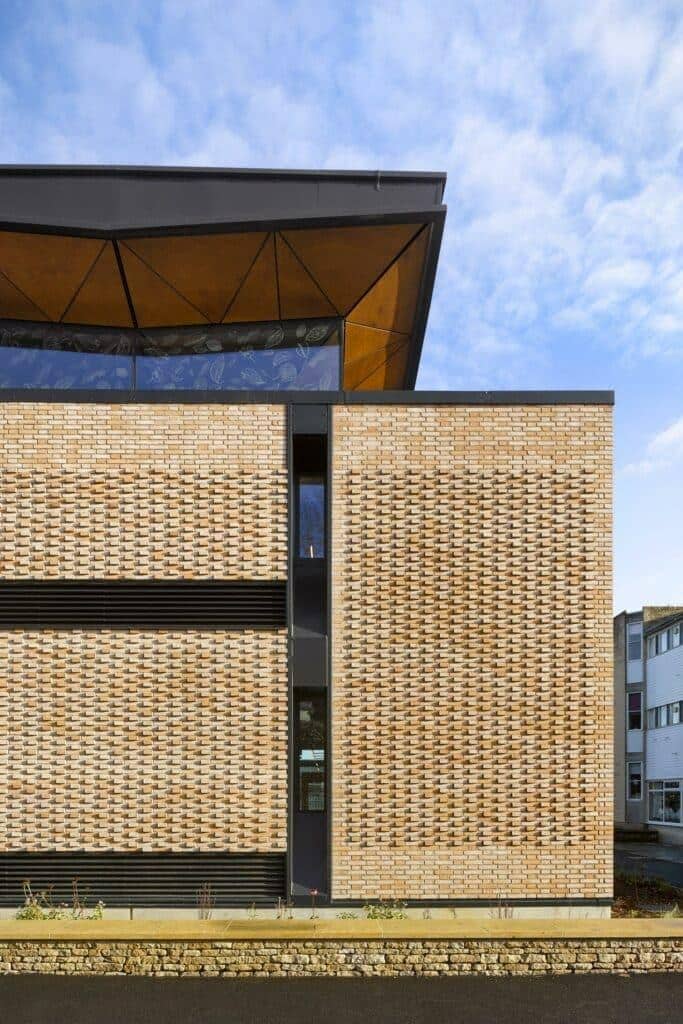
Projects like the St. Mary’s Calne School Library, designed by Woods Bagot, exemplify the integration of natural wood acoustic panels to create study spaces that combine acoustic comfort with visual warmth.
Technical Integration and Architectural Design
Implementing acoustic solutions with natural wood requires a multidisciplinary approach that integrates aesthetic, technical, and functional considerations:
Parametric Perforation Design
Digital manufacturing technologies enable the creation of customized perforation patterns that optimize absorption for specific frequencies while generating unique visual effects. Through parametric algorithms, panels with variable perforation densities can be designed to meet the acoustic needs of different areas within a space.
Integration with Construction Systems
Natural wood acoustic panels can be installed using various fastening systems:
- Direct mounting on framework
- Suspended systems for acoustic ceilings
- Self-supporting panels for flexible configurations
The distance to the base wall and the inclusion of absorbent materials in the rear cavity are critical factors that determine the system’s final acoustic performance.
Need specific technical advice for your project? Contact our team with no obligation to address technical questions, analyze specific requirements, or develop customized solutions.