TABLE OF CONTENTS
- Introduction to Exterior Suspended Ceilings with Wooden Panels
- Technical Characteristics and Benefits of Exterior Suspended Ceilings
- Installation Systems for Exterior Suspended Ceilings
- Selection Criteria for Exterior Ceiling Panels
- Specific Architectural Applications
- Aesthetic Continuity Between Indoor and Outdoor Spaces
- Performance of Wooden Panels in Different Climatic Conditions
- Maintenance and Durability
- Case Studies and Project Examples
- Technical Considerations for Specification and Installation
- Frequently Asked Questions
1. Introduction to Exterior Suspended Ceilings with Wooden Panels
Exterior suspended ceilings with natural wooden panels represent a high-value architectural solution, both aesthetically and functionally, for semi-covered horizontal spaces or transitional areas between a building’s interior and exterior. These wooden exterior claddings, also known as soffits, are installed in areas shielded from direct exposure to extreme weather conditions, such as porches, canopies, overhangs, spaces under balconies, or perimeter-covered zones.
Natural wood as a material for exterior suspended ceilings offers a unique combination of visual warmth and technical versatility that few other materials can match. However, its use in exterior applications has traditionally been limited by challenges related to dimensional stability and performance under varying humidity and temperature conditions.
The development of natural wooden panels specifically formulated for horizontal exterior applications has overcome these limitations, enabling architects to incorporate the warmth and expressiveness of natural wood in covered outdoor areas without compromising the technical performance required to ensure long-term durability and stability.
2. Technical Characteristics and Benefits of Exterior Suspended Ceilings
High-performance wooden exterior suspended ceilings offer multiple technical and aesthetic advantages, positioning them as an optimal solution for specific architectural applications.
Essential Technical Characteristics
- Controlled Humidity Resistance: Panels designed for exterior soffits are engineered to withstand variable ambient humidity conditions, provided they are protected from direct exposure to precipitation.
- Dimensional Stability: The composition of these panels ensures minimal dimensional variation due to changes in temperature and humidity, preventing warping, buckling, or cracking.
- Acoustic Properties: The structure and composition of wooden panels provide sound absorption properties, contributing to noise control in semi-covered spaces.
- Fire Resistance: Depending on their formulation, these panels can offer varying levels of fire resistance, complying with specific regulations for exterior applications.
- Structural Lightness: With significantly lower weight compared to other materials, wooden panels reduce the load on supporting structures.
Architectural and Functional Benefits
- Aesthetic Integration: They enable visual continuity between indoor and outdoor spaces, especially when using the same finishes or wood species.
- Design Versatility: Available in various formats, finishes, and installation systems to meet diverse project requirements.
- Improved Thermal Comfort: They contribute to the thermal insulation of covered areas, enhancing energy performance in transitional spaces.
- Durability: Panels specifically formulated for exterior applications are designed to maintain their aesthetic and functional properties over extended periods with minimal maintenance.
- Sustainability: The use of wood from sustainably managed, certified forests helps reduce the project’s environmental footprint.
3. Installation Systems for Exterior Suspended Ceilings
The installation of wooden panels for exterior suspended ceilings requires systems specifically developed to ensure both stability and adequate ventilation of the assembly. Visible Fastener Systems The visible fastener system is characterized by the use of fastener elements (screws or rivets) that remain visible on the panel surface:
- Screw Fastener: Specialized screws, typically with flat heads and anti-corrosion treatment, are installed perpendicular to the panel surface.
- Rivet Fastener: Particularly suitable for metal subframes, using rivets painted to match the panel’s finish.
To ensure proper installation with this system:
- Pre-drilling of panels must be done according to the manufacturer’s recommended diameters.
- It is essential to distinguish between fixed and floating fastener points to accommodate the panel’s natural movements.
- The use of centering tools is recommended to ensure proper alignment of the fasteners.
Concealed Fastener Systems
Concealed fastener systems allow for a cleaner aesthetic finish, with no visible fastener elements:
- Channel System: Uses aluminum channels into which panels are fitted via machined grooves on their edges.
- Hanging System: Panels incorporate metal elements on their underside, allowing them to be anchored to a specific subframe.
- Clip System: Employs metal clips fixed to the subframe that secure the panels without requiring front perforation.
Considerations for installation with concealed systems:
- Greater precision is required during installation to ensure a flawless finish.
- Recommended expansion joints must be adhered to in all installation systems.
- Ventilation must be ensured through a continuous air gap of at least 20 mm between the panel and the underlying construction element.
Specifications for Curved Suspended Ceilings For projects requiring curved surfaces, specific solutions allow panels to adapt to certain curvature radii:
| Curvature Radius | Panel Thickness | Maximum Distance Between Channels |
| ≥ 3 m | 6 mm | ≤ 300 mm |
| ≥ 10 m | ≤ 8 mm | ≤ 400 mm |
| ≥ 20 m | ≤ 10 mm | ≤ 450 mm |
For curvatures with smaller radii, factory-pre-curved panels are required, available in various standardized radii, such as those offered in the NATURSOFFIT-W system by Parklex Prodema.
4. Selection Criteria for Exterior Ceiling Panels
Choosing the right panels for exterior suspended ceilings involves considering multiple technical and aesthetic variables.
Wood Species and Finishes
The NATURSOFFIT-W panels by Parklex Prodema offer a carefully curated selection of species and finishes specifically developed for exterior suspended ceilings:
- White American Oak: Light-toned American oak, distinguished by the contrast of its grain and knots.
- Grey American Oak: A grey-toned oak variant that provides a contemporary look.
- Honey Eucalyptus: Eucalyptus with a honey tone that enhances the natural texture of this species.
- Grey Eucalyptus: Grey-treated eucalyptus offering a refined and modern appearance.
- Grey Ayous: Ayous with a grey tone, providing a homogeneous texture with subtle variations.
- Artisan Oak: Oak with artisanal treatment that emphasizes its natural and expressive character.
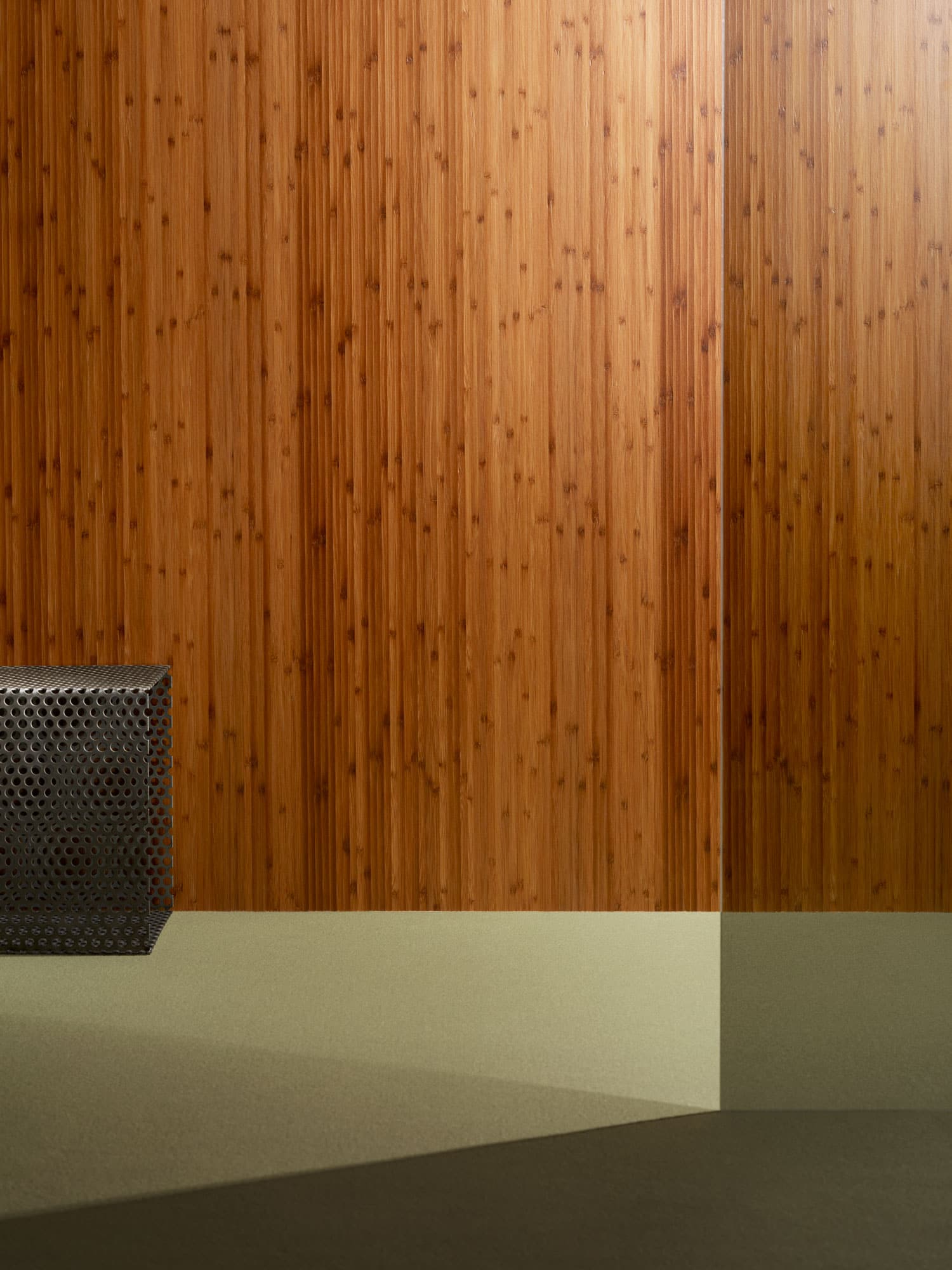
- Coffee Bamboo: Bamboo in a coffee tone that highlights the aesthetic characteristics of this sustainable species.
These panels are specifically designed for installation as soffits in covered horizontal elements, making them ideal for projects aiming to showcase the inherent charm of natural wood. The wood of these species is characterized by its prominent grain and knots. Key Technical Factors When specifying panels for exterior suspended ceilings, the following technical factors must be considered:
- Moisture Resistance: Assess the specific exposure conditions of the project (e.g., proximity to the sea, ambient humidity levels).
- Fire Reaction: Verify applicable regulatory requirements based on the building’s location and use.
- Format and Dimensions: Consider modulation possibilities based on the architectural design.
- Thickness: Select based on the distance between supports and structural requirements.
- Compatibility with Fastener System: Ensure the panel is suitable for the chosen installation system.
Applicable Regulations Panels for exterior suspended ceilings must comply with various standards:
- EN 438-7: Specifies requirements for panels based on thermosetting resins.
- EN 13501-1: Establishes the fire reaction classification for construction products.
- ASTM E84: In the North American market, determines flame spread and smoke development characteristics.
- ASTM D1037: Evaluates the physical and mechanical properties of wood fiber panels.
- NFPA 285: For high-rise building applications, establishes specific fire performance criteria.
5. Specific Architectural Applications
Wooden exterior suspended ceilings are used in various architectural typologies, each with specific requirements.
Canopies and Overhangs
In these applications, the suspended ceiling serves both an aesthetic and protective function against the elements:
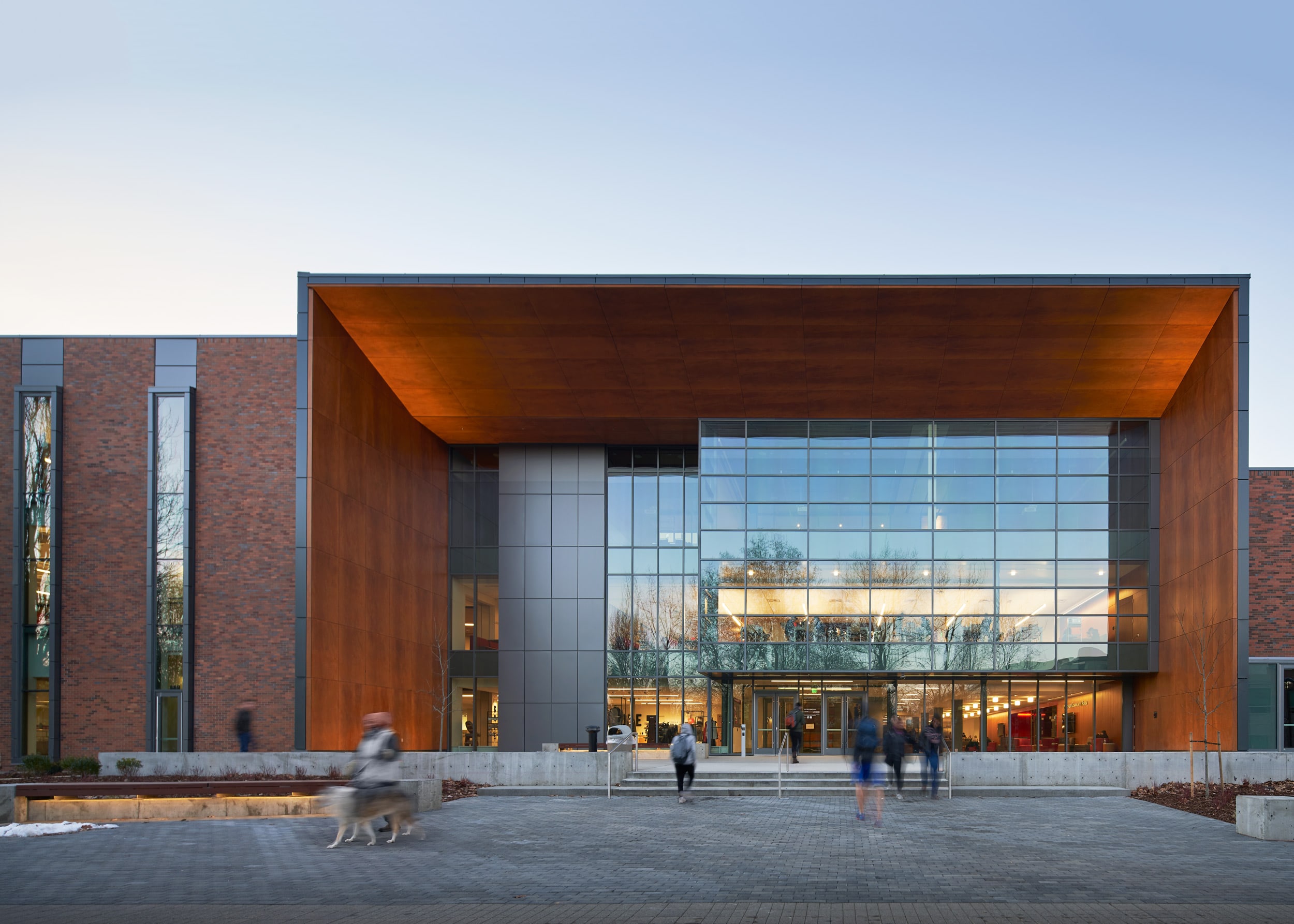
- Entrance Canopies: Define and enhance building entrances, where wooden suspended ceilings add warmth and distinction.
- Perimeter Overhangs: Protect facades and transitional spaces, extending the building’s architectural language.
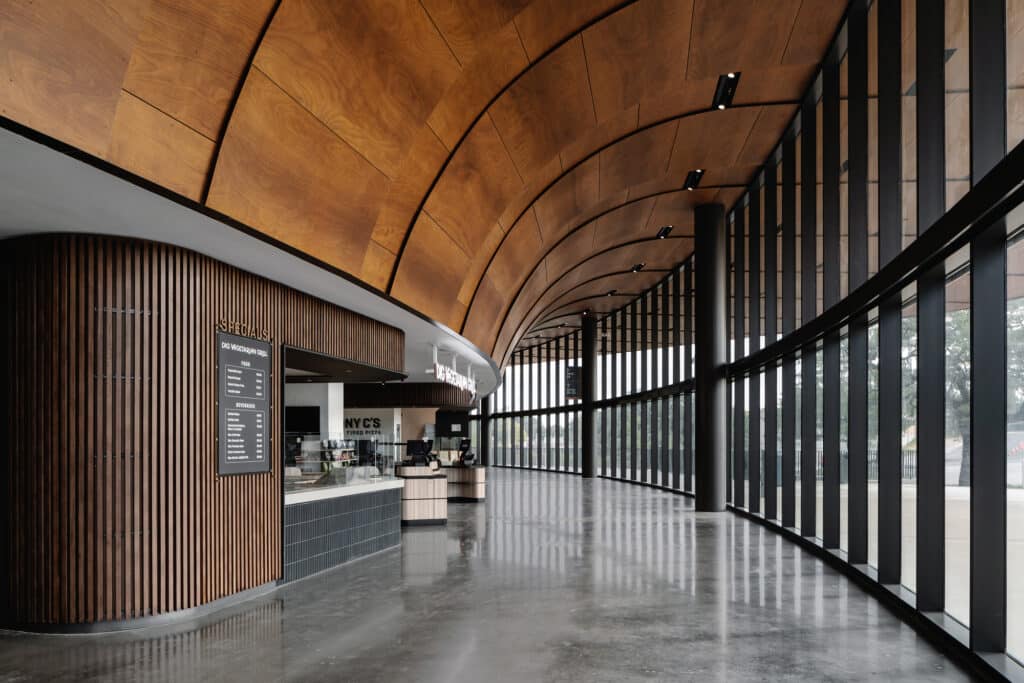
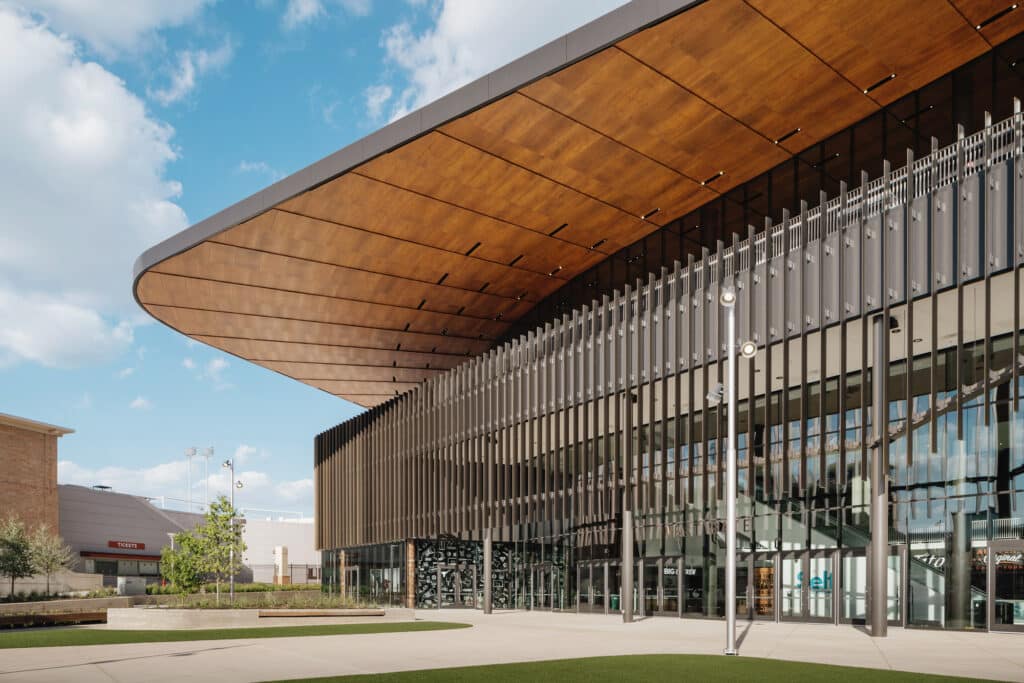
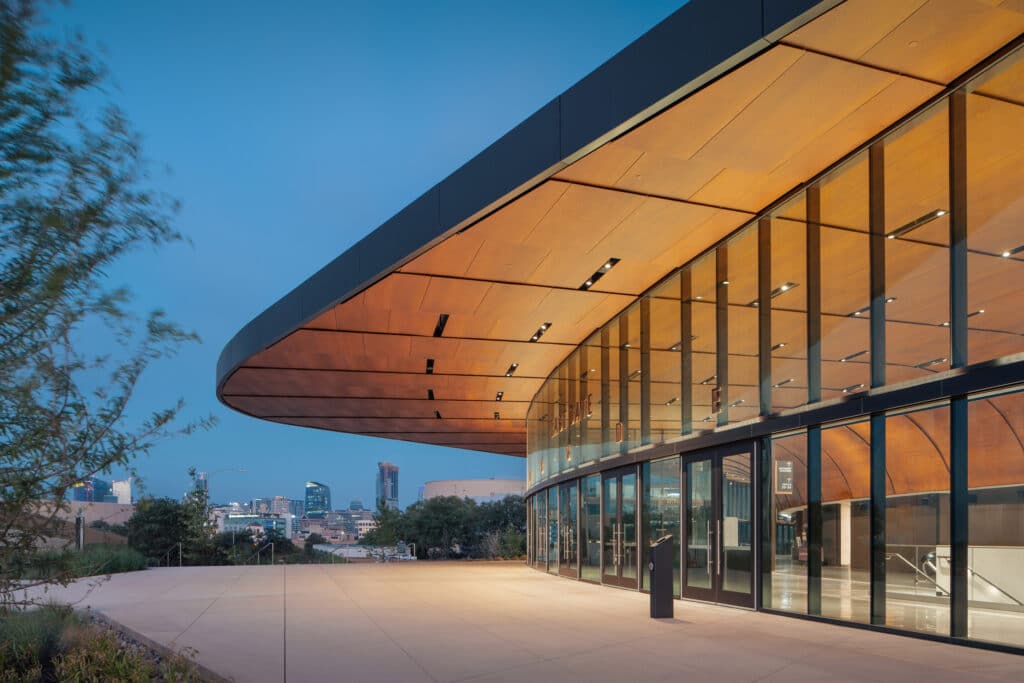
A notable example is the Moody Center at the University of Texas, designed by GENSLER, where a curved wooden suspended ceiling by Parklex Prodema creates a seamless transition between the overhanging roof and interior corridors.
Porches and Semi-Covered Spaces
These transitional zones between interior and exterior particularly benefit from the warmth and naturalness of wooden ceilings:
- Residential Porches: Provide aesthetic continuity with interiors, visually extending living spaces.
- Covered Terraces: In hotels and restaurants, where the sensory experience of materials is particularly relevant.
Soffits in Public and Commercial Buildings Applications in large-scale buildings require solutions that combine aesthetics with high technical performance:
- Exterior Circulation Areas: Covered walkways, connections between buildings, or spaces under elevated pathways.
- Access and Waiting Areas: Where wooden suspended ceilings contribute to creating welcoming environments.
- Exterior Commercial Spaces: Open commercial galleries or covered rest areas.
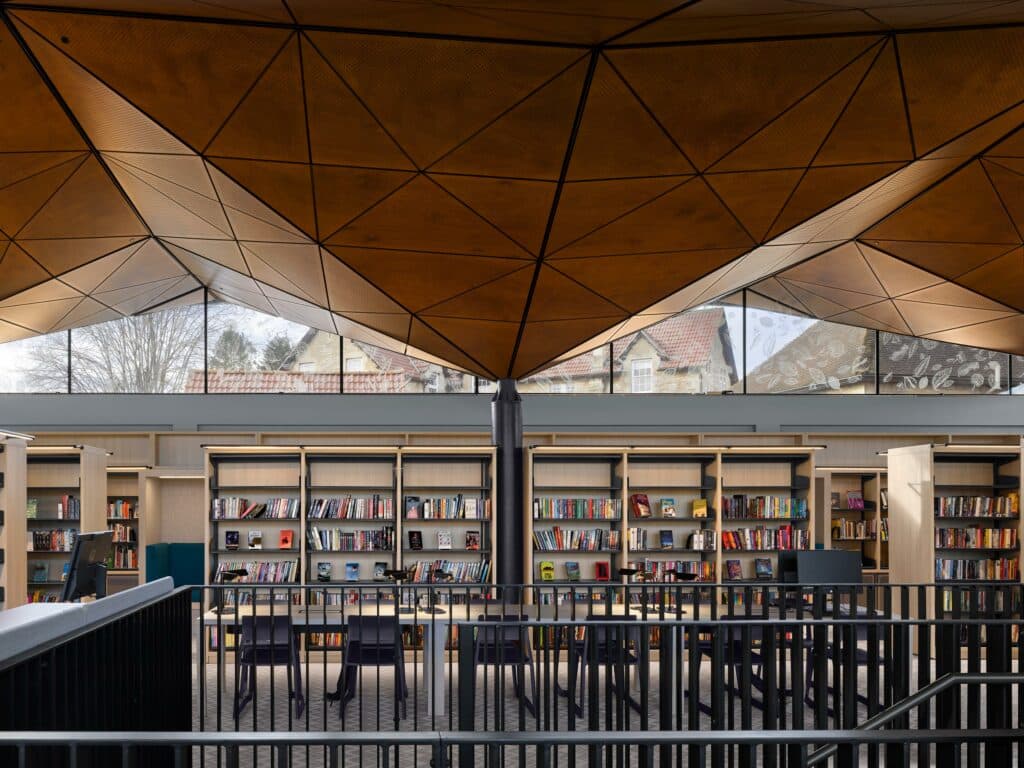
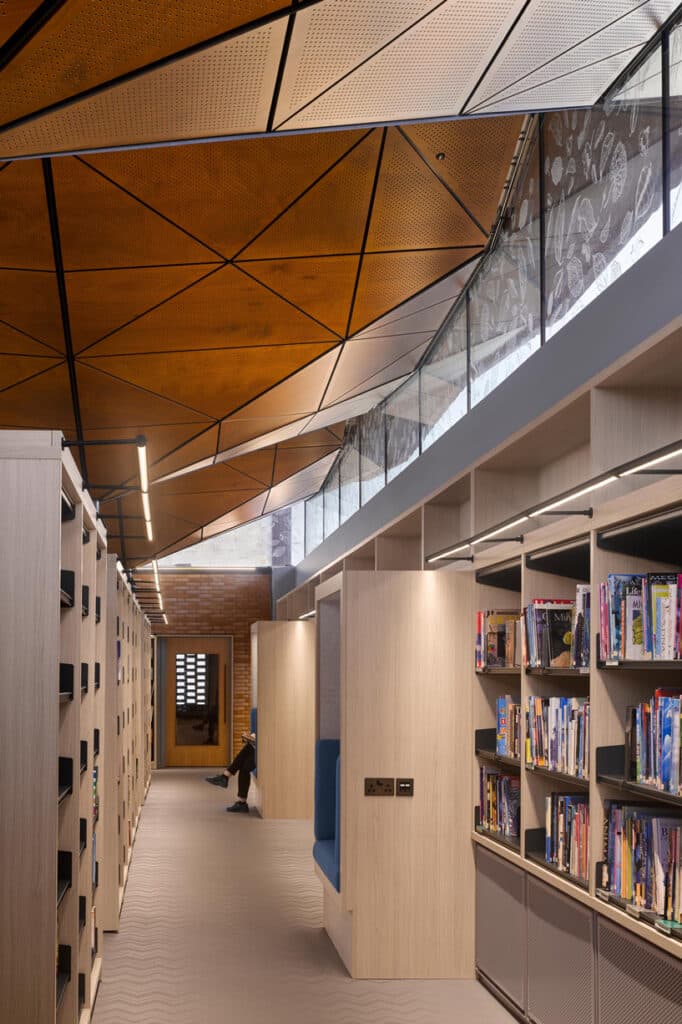
The library at St.Mary’s Calne School showcases an innovative faceted ceiling using custom triangular panels, including perforations for acoustic purposes.
6. Aesthetic Continuity Between Indoor and Outdoor Spaces
The ability to use the same material for both indoor and outdoor ceilings allows for the creation of fluid transitional spaces that blur the boundaries between covered and uncovered areas.
Material Unification Strategies
- Continuity of Species and Finish: Using the same wood species and treatment for both indoor and protected outdoor areas.
- Consistent Modulation: Maintaining the same format and installation system in both spaces.
- Joint Treatment: Designing transitions between zones to minimize the perception of material changes.
Technical Solutions for Transitions
- Connections with Structural Elements: Specific construction details to ensure continuity at critical points.
- Ventilation Systems: Ensuring adequate ventilation in transitional areas to prevent condensation issues.
- Edge Treatment: Specific perimeter finishes that aesthetically resolve connections with other construction elements.
The NATURSOFFIT-W system by Parklex Prodema facilitates this continuity by offering the same wood species for both indoor and protected outdoor applications, enabling a coherent architectural reading of the ensemble.
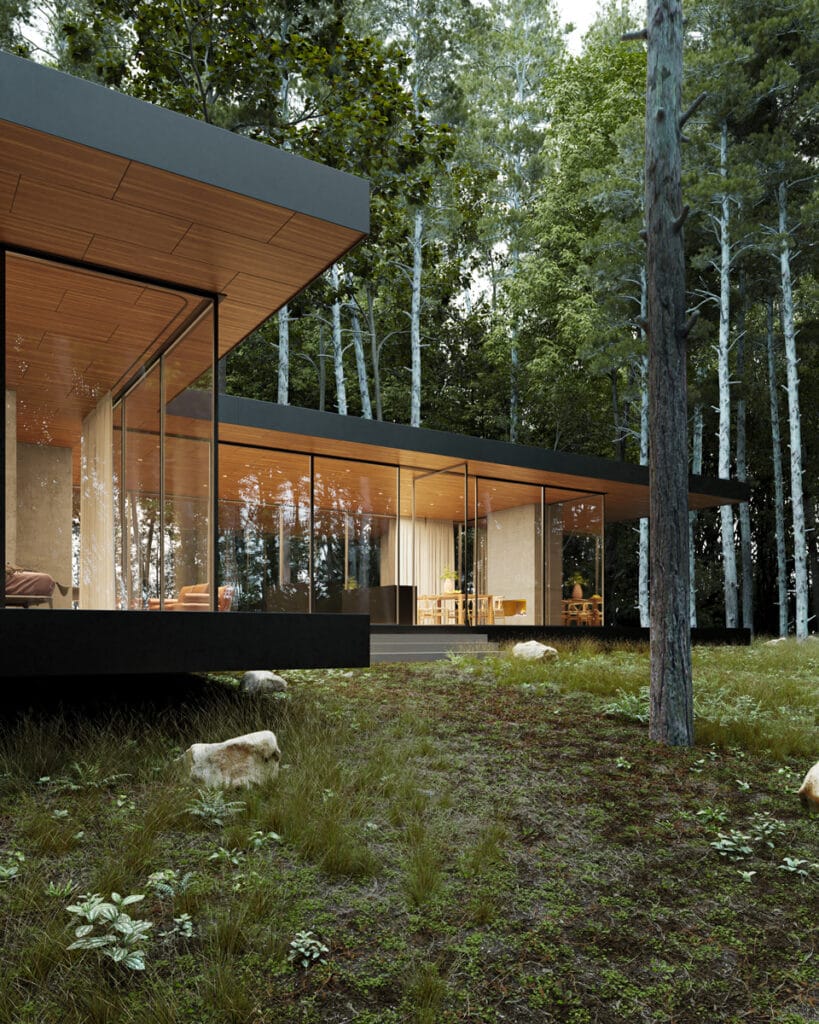
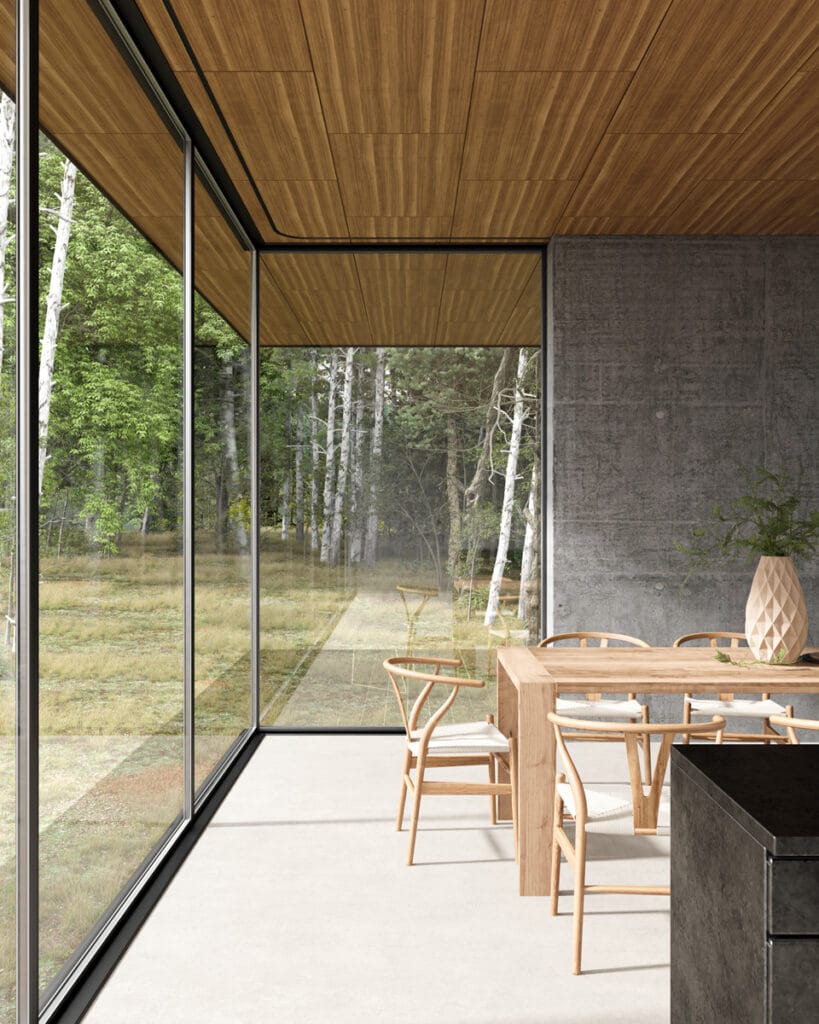
Single-family home, Indievisual AG
7. Performance of Wooden Panels in Different Climatic Conditions
The performance of wooden exterior suspended ceilings is directly related to the environmental conditions to which they are exposed.
Exposure to Humidity and Temperature
- Hygrometric Performance: High-performance exterior panels are formulated to minimize moisture absorption, maintaining dimensional stability under variable humidity conditions.
- Resistance to Thermal Cycles: Ability to withstand expansions and contractions caused by temperature changes without permanent deformation.
- UV Protection: Surface treatments ensure resistance to indirect solar radiation, preventing premature chromatic degradation.
Considerations for Specific Environments
Coastal Areas In proximity to the sea, high salinity and humidity require special considerations:
- Selection of corrosion-resistant fastener systems (stainless steel, anodized aluminum).
- Preference for wood species with greater natural resistance to humid environments.
- Increased attention to rear ventilation to prevent condensation.
Extreme Climates In locations with significant thermal variations:
- Appropriate specification of expansion joints with specific sizing.
- Selection of panels with greater dimensional stability under extreme thermal changes.
- Consideration of indirect solar exposure in calculating potential expansions.
A notable example is the Zurich North America Headquarters designed by Goettsch Partners, where NATURSOFFIT-W panels successfully withstand the demanding climatic conditions of Chicago, with its extreme annual temperature variations.
8. Maintenance and Durability
One of the key advantages of high-performance wooden panels for exterior suspended ceilings is their low maintenance requirements compared to untreated natural wood.
Maintenance Protocols
- Periodic Cleaning: Recommended with water and neutral detergents to remove dust and environmental particles.
- Visual Inspection: Periodic checks of the condition of fasteners and joints, especially after extreme weather events.
- Targeted Repairs: In case of mechanical damage, individual panels can be replaced without affecting the entire system.
Expected Lifespan
The durability of these systems depends on several factors:
- Material Quality: Panels specifically formulated for exterior use can maintain their properties for 25-30 years under appropriate conditions.
- Exposure Conditions: Protection from direct precipitation and intense solar radiation significantly extends lifespan.
- Installation System: Proper rear ventilation and adherence to expansion joint requirements are critical for the system’s longevity.
9. Case Studies and Project Examples
Analyzing completed projects provides valuable insights into the technical and aesthetic possibilities of wooden exterior suspended ceilings.
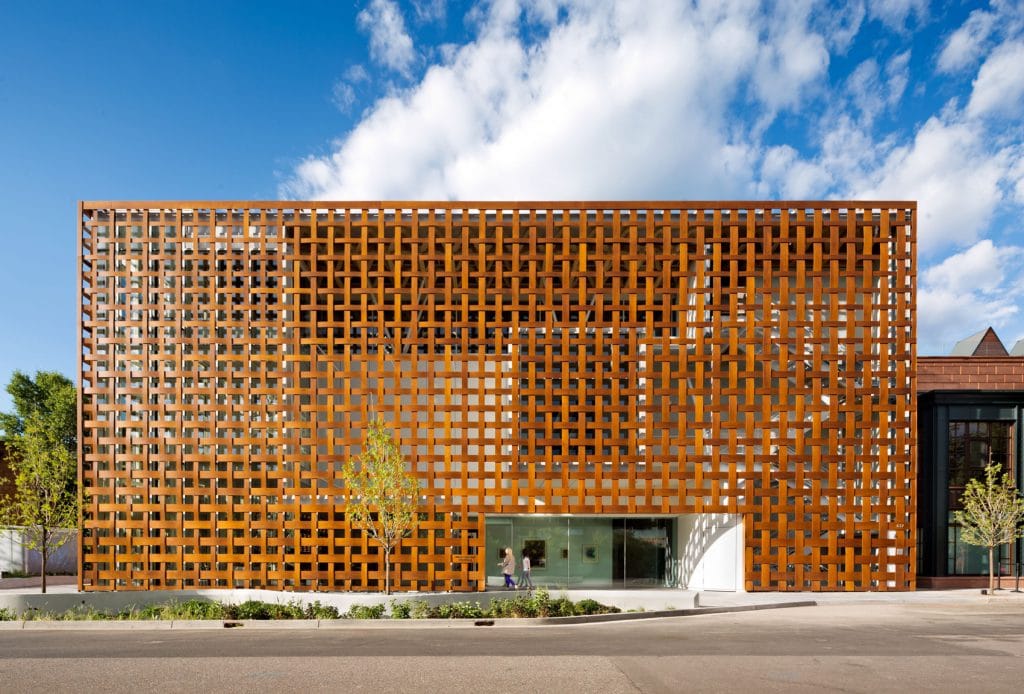
Aspen Art Museum – Shigeru Ban
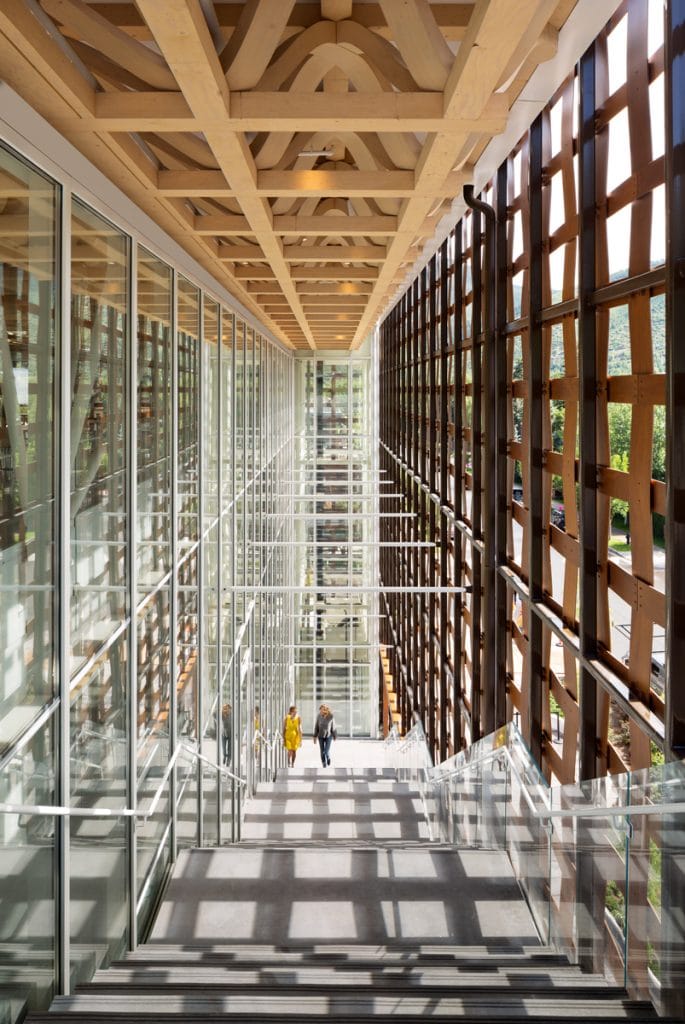
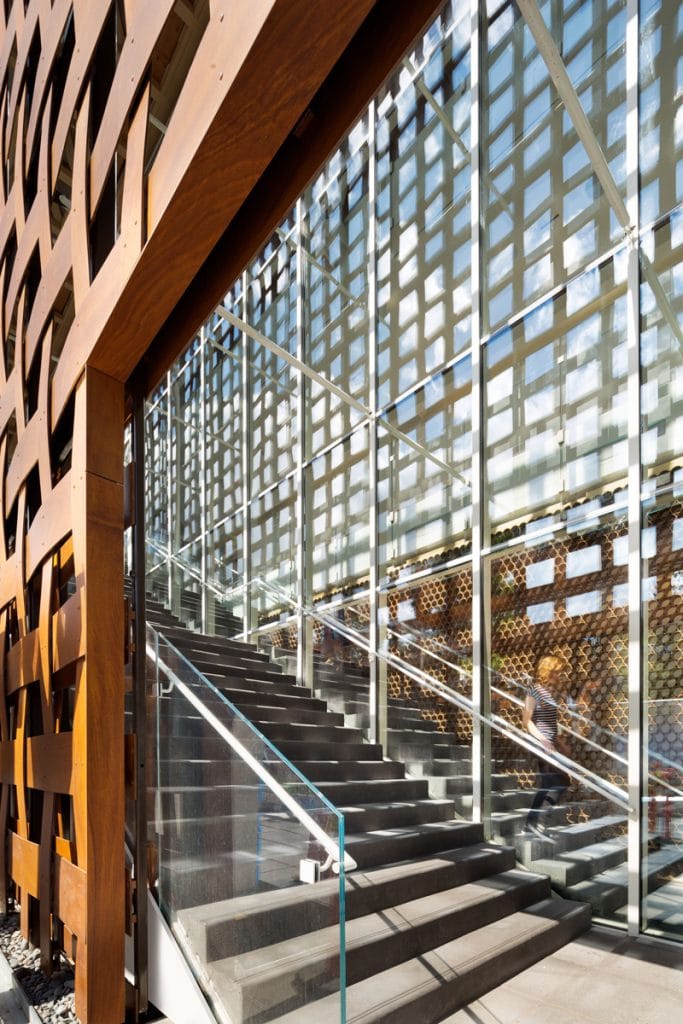
This iconic project uses natural wood panels as a defining element of the space. Inaugurated in 2014, the museum features a natural wood lattice that creates a play of light and shadow in covered areas. NATURCLAD-W panels in the Rustik finish by Parklex Prodema were seamlessly integrated into a design that emphasizes the relationship between architecture and nature, maintaining their original appearance even after years of exposure to the demanding mountain climate.
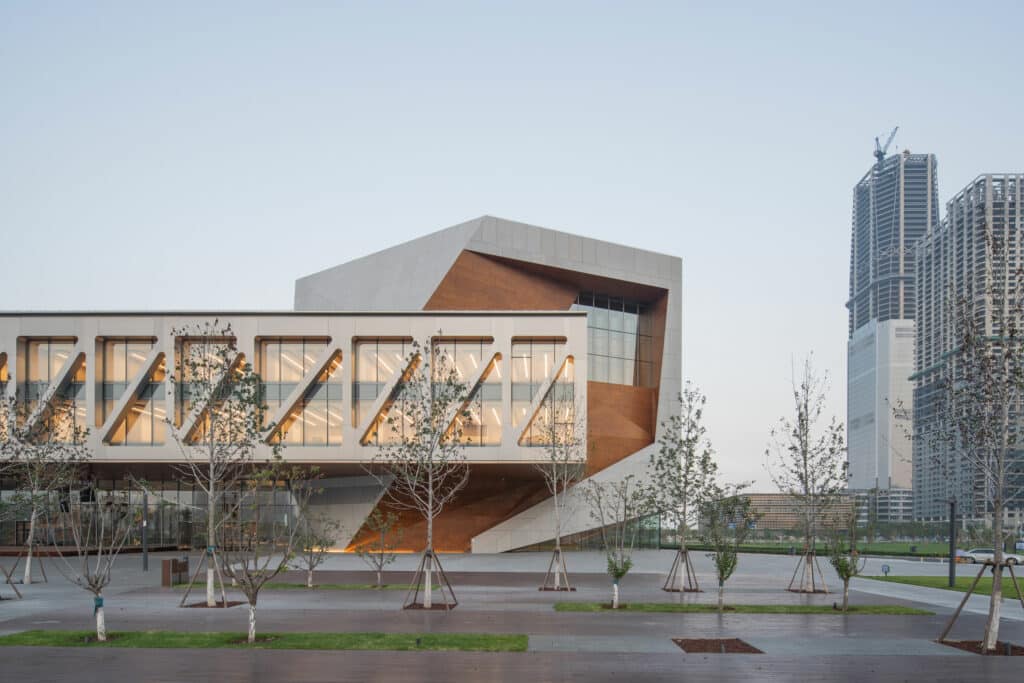
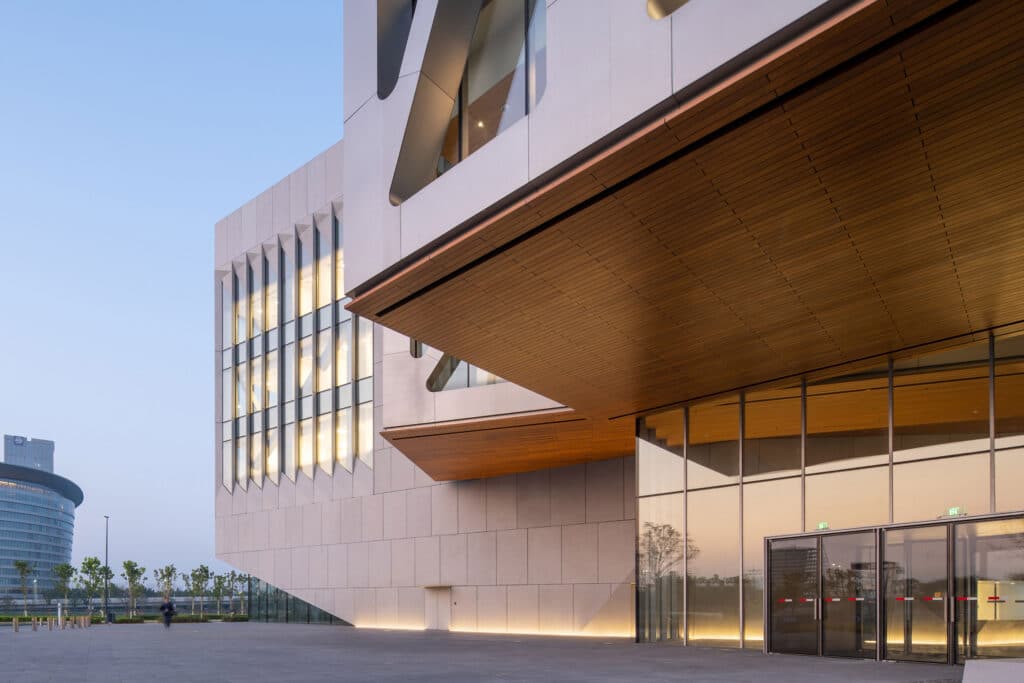
Tianjin Juilliard School – Diller Scofidio + Renfro
In this educational center, architects used wooden panels in both interior spaces and exterior suspended ceilings in protected areas. The careful selection of each wood veneer ensured perfect integration with the surrounding landscape. The use of NATURCLAD-W throughout the project, including its installation as soffits in specific areas, created material continuity that reinforces the building’s conceptualization as a series of interconnected pavilions, where transitional spaces take center stage.
Moody Center – University of Texas – GENSLER
This multipurpose facility incorporates a curved wooden canopy installed on-site. The natural flexibility of wood fibers allowed the panels to adapt to the specific curvature radius, creating visual continuity between exterior and interior. The curved wooden suspended ceiling by Parklex Prodema not only serves an aesthetic purpose but also contributes to natural light control, reducing direct radiation and reflecting light into the interior space.
10. Technical Considerations for Specification and Installation
Specification Process
To correctly specify wooden exterior suspended ceilings, the following steps are recommended:
- Analysis of Exposure Conditions: Evaluate temperature, humidity, UV radiation, and other site-specific environmental factors.
- Definition of Technical Requirements: Establish the necessary performance in terms of resistance, stability, and fire resistance.
- Panel Type Selection: Based on exposure conditions and the project’s aesthetic requirements.
- Dimensioning: Define format, thickness, and modulation in accordance with the architectural design.
- Fastener System Determination: Choose between visible or concealed systems based on aesthetic and technical criteria.
- Design of Construction Details: Address specific resolutions for connections with other architectural elements.
Installation Recommendations
Proper installation is critical to ensuring the durability and optimal performance of the panels:
- Acclimatization: Panels must be acclimatized to the site conditions before installation.
- Ventilation: Ensure a rear air gap of at least 20 mm in thickness.
- Expansion Joints: Adhere to the manufacturer’s recommended dimensions (typically 6-8 mm for 2440×1220 mm panels).
- Pre-Drilling: Perform drilling with the appropriate diameter, distinguishing between fixed and floating points.
- Installation Sequence: Follow a pattern that accommodates potential dimensional variations of the assembly.

11. Frequently Asked Questions
Can wooden panels be installed in any exterior condition?
Panels for exterior suspended ceilings are designed for installation in protected horizontal areas shielded from direct precipitation and intense solar radiation. Their use in fully exposed areas is not recommended, as it could compromise their durability.
What is the difference between panels for facades and exterior suspended ceilings?
While both are designed for exterior applications, soffit panels are specifically formulated for horizontal installation in protected areas, whereas facade panels are designed for direct exposure to the elements.
What maintenance do wooden exterior suspended ceilings require?
High-performance exterior wooden panels require minimal maintenance, typically limited to periodic cleaning with water and neutral detergent. They do not require varnishing or additional surface treatments during their lifespan.
Is it possible to combine different species or finishes in the same suspended ceiling?
Yes, different species or finishes can be combined to create customized patterns. However, the differential behavior of each species under environmental conditions must be considered, and the installation system must be compatible with all panel types used.
What environmental certifications can be achieved using these materials?
Wooden panels for exterior suspended ceilings can contribute to certifications such as LEED, BREEAM, or VERDE, especially if sourced from sustainably managed, certified forests (FSC, PEFC). Their contribution is particularly relevant in categories such as materials and resources, indoor environmental quality, and energy efficiency.