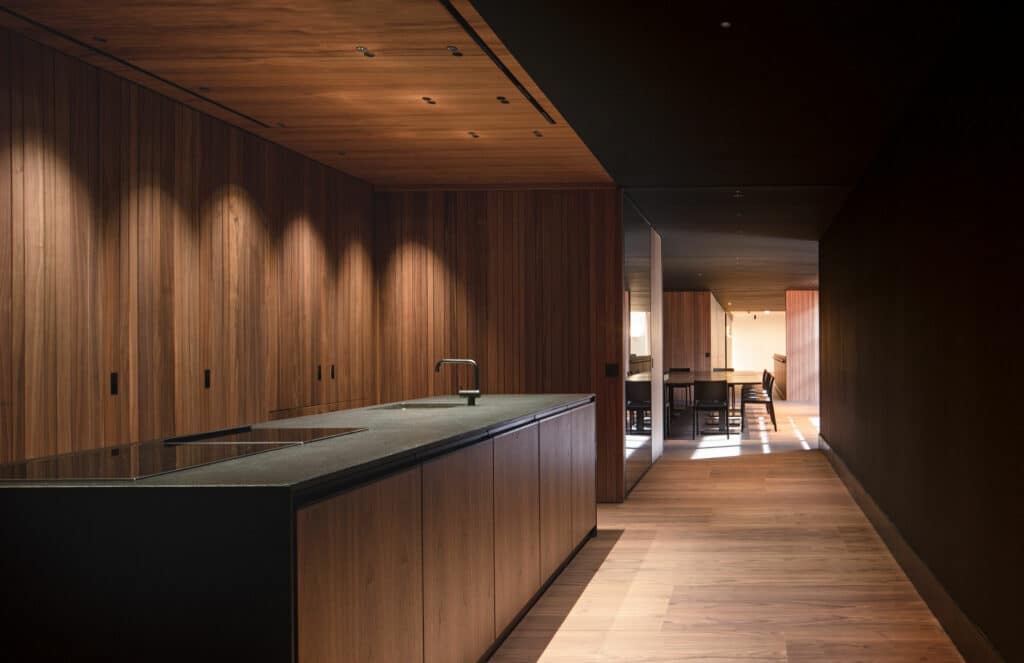
Wood wall paneling for interiors has undergone a profound transformation in contemporary architecture, evolving from purely decorative elements into comprehensive architectural solutions that combine functionality, durability, and aesthetic expressiveness. This evolution has been made possible by the development of high-performance natural wood panels that overcome the traditional limitations of wood while preserving its visual and tactile warmth.
The incorporation of wood paneling in architectural projects responds to multiple factors: its ability to humanize spaces, its favorable acoustic properties, its contribution to thermal comfort, and its positive impact on occupant well-being, as documented by numerous environmental psychology studies.
Technical Typologies for Interior Applications
Natural Wood Flat Panels
Flat panels represent the most versatile solution for interior wood wall paneling. Products like Parklex Prodema’s NATURPANEL-W interior paneling combine a natural wood veneer surface with a birch plywood core, creating a hybrid composite material that retains the expressiveness of wood while incorporating advanced technical performance.
These panels are characterized by:
- Dimensional Stability: with variations below 0.35% longitudinally and 0.65% transversely under humidity changes.
- Impact Resistance: exceeding 1.4 N/mm².
- Scratch Resistance: Grade 3 according to EN 438-2 standards.
- Low Maintenance: no need for periodic varnishing or treatments.
Linear and Grooved Panels
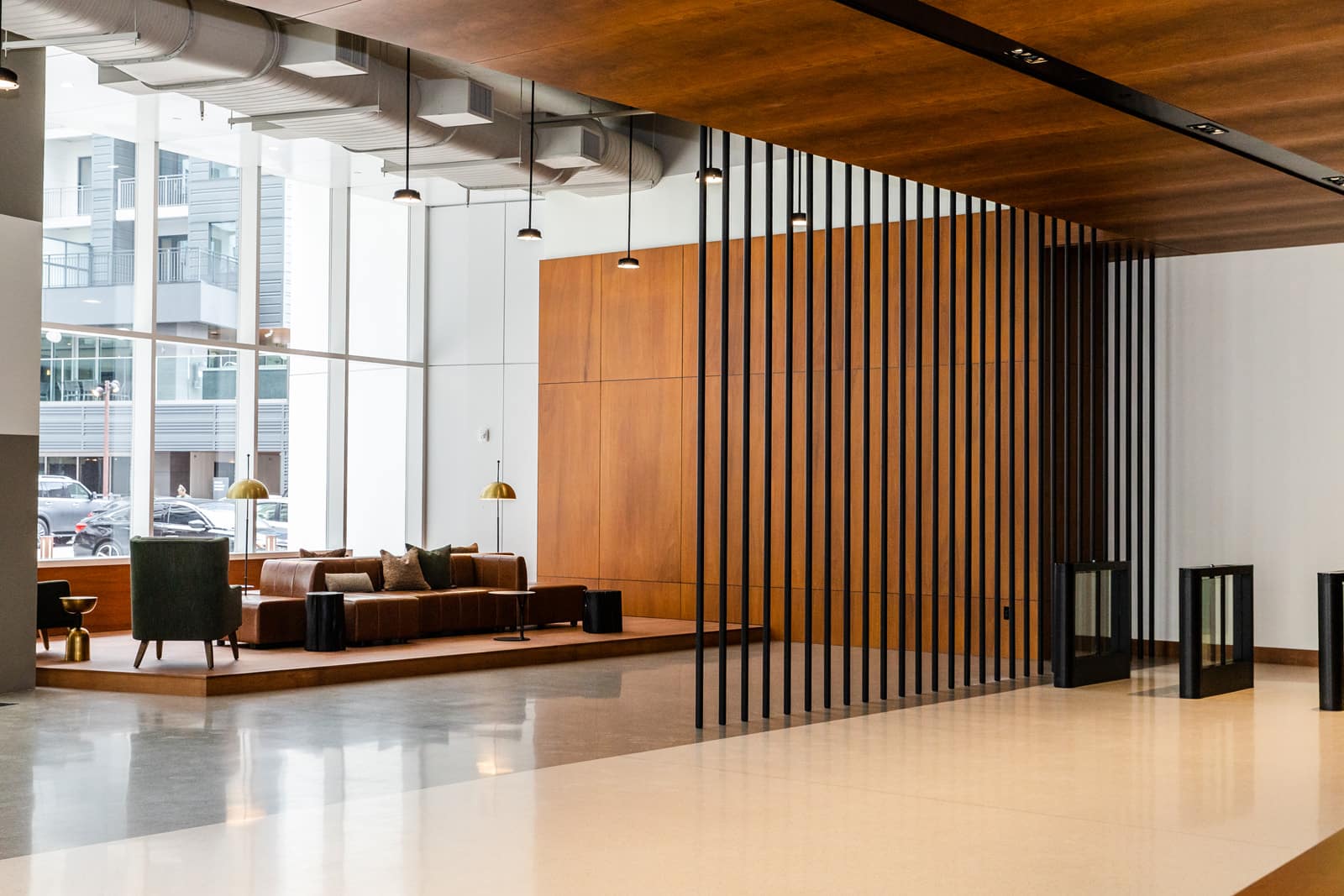
For projects requiring greater three-dimensional expressiveness, linear panel systems create textured surfaces through the arrangement of wooden planks. This solution allows for variations in depth, spacing, and visual rhythms while enhancing the acoustic performance of the space.
Grooved panels are a variant that combines a flat appearance with machined rhythmic lines on the surface, creating light and shadow effects that visually enrich the space. Their application is particularly relevant in conference rooms, auditoriums, and corporate spaces where acoustics are a priority.
Technical Solutions for Wet Areas
The use of wood paneling in wet areas has traditionally been limited, but products like NATURHARDPANEL-W panels have overcome these constraints. These panels incorporate moisture-resistant treatments, enabling their installation in bathrooms, kitchens, and other areas with occasional humidity exposure.
Installation Systems and Construction Details
Proper installation is critical to the performance and durability of the paneling. The main systems include:
Visible Fastening with Screws or Rivets
An economical and easy-to-install system using screws or rivets painted in tones matching the panel. The recommended distance between channels for 8-10 mm panels is 600 mm, extending to 800 mm for 12 mm panels.
Concealed Fastening with Plugs
A solution that maintains the visual continuity of the surface using plugs in the same finish as the panel, with an approximate diameter of 14 mm. This requires panels of at least 10 mm thickness and greater installation precision.
Concealed Fastening Systems
These use clips or special channels attached to the back of the panel, allowing installation without visible perforations. These systems also facilitate disassembly and access to concealed installations.
Aesthetic and Functional Considerations
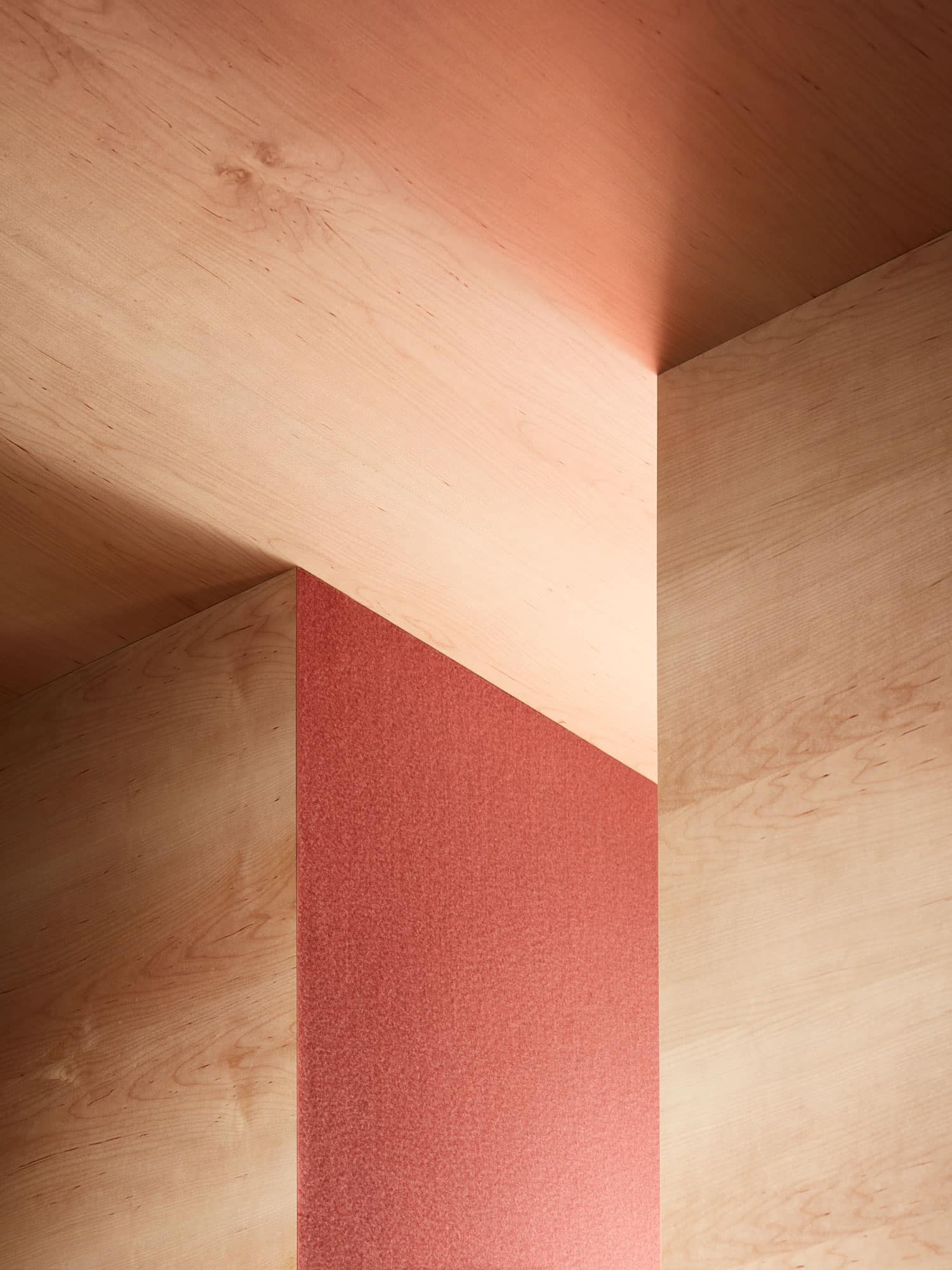
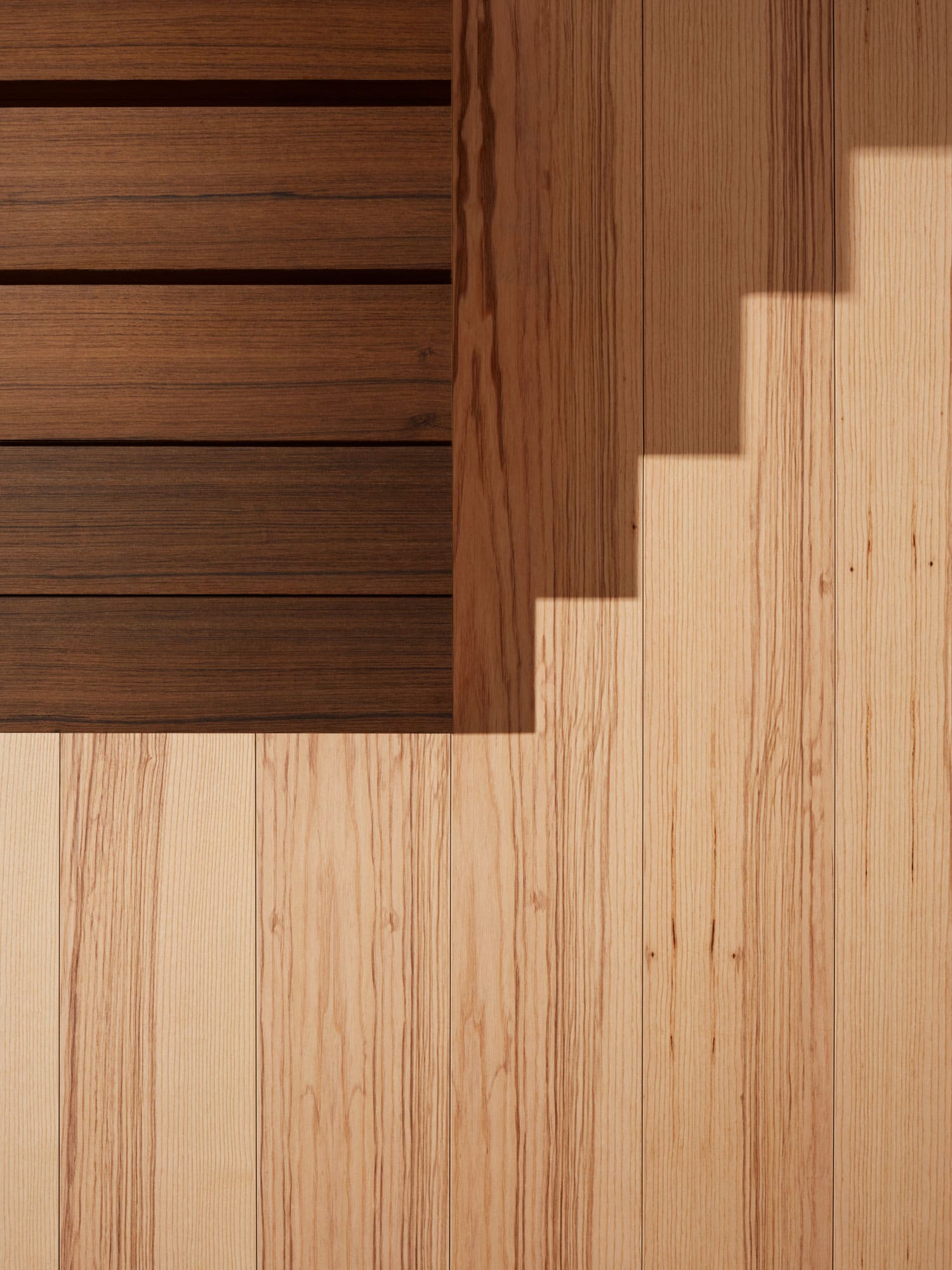
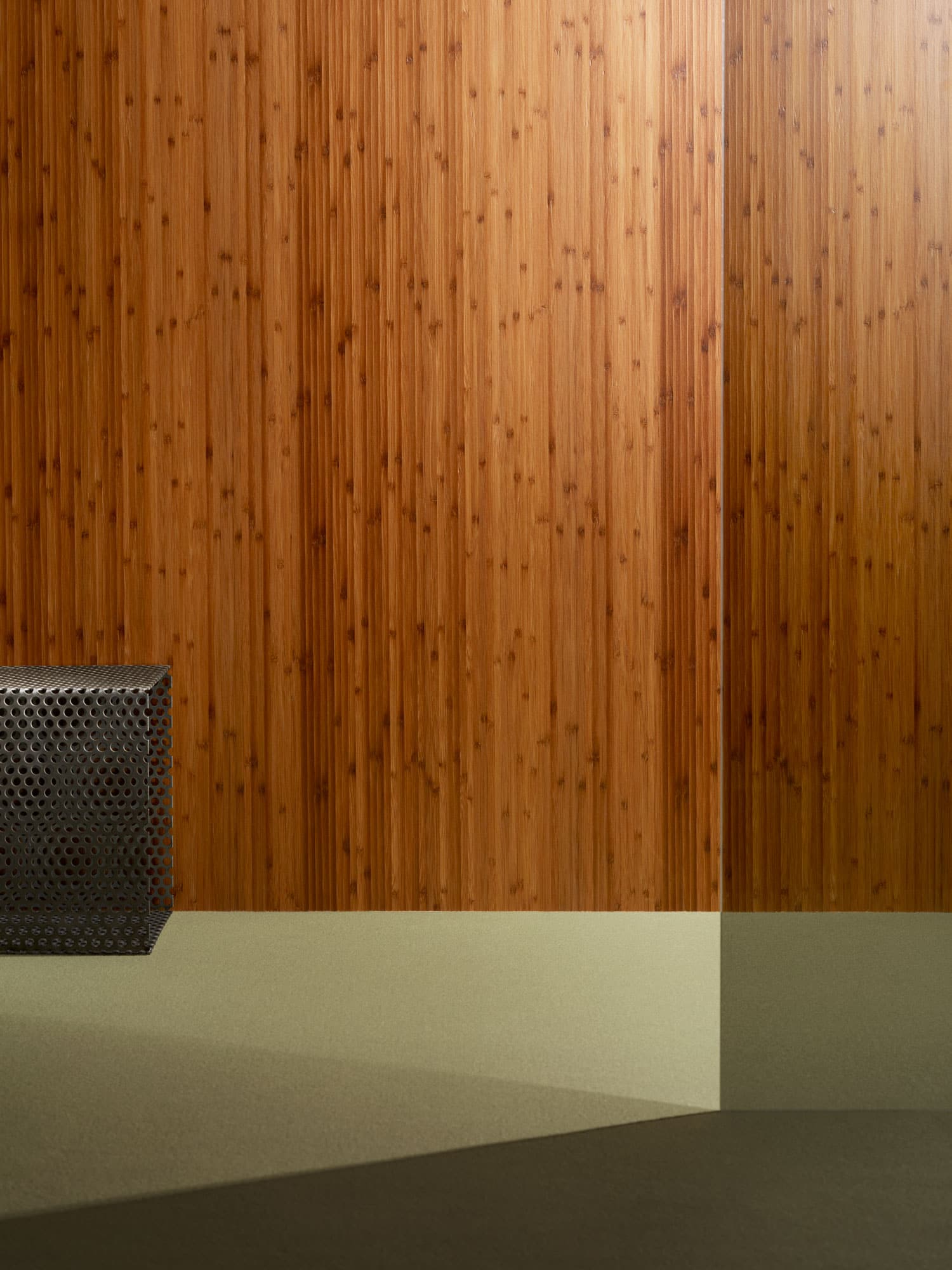
The choice of wood species and finish has both aesthetic and functional implications. Species like oak, walnut, or eucalyptus provide rich visual textures with pronounced grain patterns, while bamboo or maple offer more uniform surfaces.
Parklex Prodema’s NATURPANEL-W products are available in various species and tones, from lighter options like American Oak to darker ones like American Walnut, allowing adaptation to different architectural concepts.
The Sant Joan de Déu Pediatric Hospital in Barcelona exemplifies the integrated application of wood paneling to create welcoming healthcare spaces, demonstrating that technical functionality can be effectively combined with the warmth of natural wood. The inclusion of environmental certifications such as PEFC and FSC ensures that the wood used comes from sustainably managed forests, adding ethical value to the project and contributing to points in certification systems like LEED, BREEAM, or WELL.
Need specific technical advice for your project? Contact our team with no obligation to address technical questions, analyze specific requirements, or develop customized solutions.