TABLE OF CONTENTS
- Introduction to Sustainability in Wood Cladding
- Main Sustainable Certifications for Wood Cladding
- Life Cycle Analysis of Wood Cladding
- Contribution to Sustainable Building Certifications
- Durability as a Pillar of Sustainability
- Energy Efficiency in Ventilated Wooden Facades
- Frequently Asked Questions
1. Introduction to Sustainability in Wood Cladding
Sustainability in architecture has evolved from a trend into an urgent necessity in response to current environmental challenges. Exterior wood cladding represents a highly sustainable option, provided its entire life cycle – from sourcing to end-of-life – is managed with environmental responsibility.
Wood cladding for exteriors offers inherent sustainability advantages: it is a renewable material that sequesters carbon throughout its lifespan and requires less energy to produce compared to alternatives like steel, aluminum, or ceramics.
However, not all wood cladding has the same environmental channel. The origin of the raw material, transformation processes, applied treatments, and the product’s final durability are critical factors that create significant differences in terms of true sustainability.
The wood cladding industry has made significant strides, developing solutions like NATURCLAD-W and NATURCLAD-B natural wood panels, which combine the authenticity of wood with technologies that eliminate the need for periodic maintenance, optimizing their life cycle and improving their overall environmental footprint.

2. Main Sustainable Certifications for Wood Cladding
FSC Certification
The Forest Stewardship Council (FSC), established in 1993, is an international non-governmental organization that promotes responsible forest management worldwide. FSC certification ensures that wood products come from sustainably managed forests, respecting both ecosystems and the rights of local communities.
FSC certification is divided into different types:
- FSC 100%: All wood components come from FSC-certified forests.
- FSC Mix: Combines FSC-certified materials, recycled materials, and controlled materials.
- FSC Recycled: Made with at least 85% recycled material.
For exterior wood cladding, FSC certification ensures that the raw material does not contribute to deforestation, biodiversity loss, or the violation of indigenous community rights.
PEFC Certification
The Programme for the Endorsement of Forest Certification (PEFC) is the most widespread forest certification system in Europe and the largest globally in terms of certified forest area. It operates through a system of mutual recognition of national forest certification schemes. PEFC certification:
- Ensures sustainable forest management
- Guarantees traceability of forest products
- Promotes social, environmental, and economic balance in forest areas
- Verifies compliance through independent audits
NATURCLAD panels are PEFC-certified, providing architects and specifiers with documented assurance that the wood used comes from sustainably managed forests, verified through regular audits.
Other Relevant Certifications
In addition to FSC and PEFC, other certifications add value to exterior wood cladding from a sustainability perspective:
- Environmental Product Declarations (EPD): Verified documents providing transparent information on a product’s environmental impact throughout its life cycle.
- VOC Emissions Certifications: Ensure low or zero emissions of Volatile Organic Compounds, such as the French A+ certification.
- EU Ecolabel: A voluntary system identifying products with reduced environmental impact.
- Cradle to Cradle: Assesses material health, reusability, water management, renewable energy, and social equity in production processes.
The combination of multiple certifications in a single cladding product provides a comprehensive view of its sustainability channel, facilitating selection for projects with high environmental standards.

3.Life Cycle Analysis of Wood Cladding
Untreated Wood vs. High-Performance Wood
Life Cycle Analysis (LCA) is a standardized methodology that evaluates a product’s environmental impacts across all stages: raw material extraction, manufacturing, distribution, use, and final disposal. For wood cladding, this methodology highlights significant differences between available types.
Untreated natural wood has a low initial environmental impact due to minimal processing, but its frequent maintenance needs and lower durability can worsen its long-term environmental footprint.
In contrast, high-performance natural wood cladding, such as NATURCLAD panels with advanced protective technology, has a slightly higher initial impact due to industrial processes but offers significantly improved environmental performance over time due to extended durability and the elimination of periodic maintenance.
Comparative studies show that, over a 50-year period, high-performance, maintenance-free natural wood cladding can reduce overall environmental impact by more than 40% compared to untreated wood requiring regular treatments.
Key Factors in Carbon Footprint
The carbon footprint of wood cladding is influenced by several factors that must be considered for a comprehensive assessment:
- CO₂ Sequestration During Tree Growth: Wood stores approximately 1 ton of CO₂ per cubic meter.
- Raw Material Transport: Distance and transportation methods have a significant impact.
- Transformation Processes: Energy consumption, use of resins and adhesives, and material efficiency.
- Product Durability: Critical for spreading the initial impact over a longer period.
- Maintenance Needs: Periodic treatments can multiply the environmental footprint over the product’s lifespan.
NATURCLAD panels, thanks to their technology eliminating periodic maintenance, offer a significant advantage in terms of carbon footprint when analyzed across the product’s full life cycle.
4. Contribution to Sustainable Building Certifications
Contribution to LEED Certification
The LEED system (Leadership in Energy and Environmental Design), developed by the U.S. Green Building Council, evaluates the environmental performance of buildings, communities, and cities. Certified exterior wood cladding can significantly contribute to earning points in various LEED categories:
- Materials and Resources (MR): Up to 5 points for using products with Environmental Product Declarations (EPDs) and responsibly sourced certifications like FSC.
- Indoor Environmental Quality (EQ): Up to 3 points for using low-VOC emission materials.
- Innovation (IN): Potential for additional points through exemplary or innovative strategies.
- Energy and Atmosphere (EA): Indirect contribution through improved building thermal performance.
NATURCLAD panels, with their FSC/PEFC certifications and advanced technical properties, provide multidimensional support for LEED certification, helping projects achieve Silver, Gold, or even Platinum levels.
4.2. Scoring in the BREEAM System
BREEAM (Building Research Establishment Environmental Assessment Method) is the most widely used sustainability assessment and certification method for buildings in Europe. Certified wood cladding can contribute to the following categories:
- Materials (MAT): Up to 6 points for using materials with low environmental impact throughout their life cycle.
- Health and Well-being (HEA): Up to 2 points for using materials with low harmful emissions.
- Energy (ENE): Indirect contribution through improved energy efficiency.
- Management (MAN): Up to 1 point for using materials with certified chain of custody.
In BREEAM-assessed projects, high-performance certified wood cladding can be pivotal in achieving Very Good, Excellent, or Outstanding ratings, particularly when its contribution to the building’s full life cycle is considered.
4.3. VERDE Certification
The VERDE system, developed by the Green Building Council Spain (GBCe), evaluates a building’s environmental impact reduction compared to a reference building. Certified wood cladding contributes primarily to the following criteria:
- Natural Resources (RN): For using natural and renewable materials.
- Energy and Atmosphere (EA): For contributing to the building’s thermal performance.
- Indoor Environmental Quality (CAI): For low pollutant emissions.
- Social Aspects (AS): For using certified materials that ensure fair labor conditions.
The VERDE certification, tailored specifically to the Spanish regulatory context, particularly values the characteristics of products like NATURCLAD, which combine sustainability with compliance to local technical requirements.
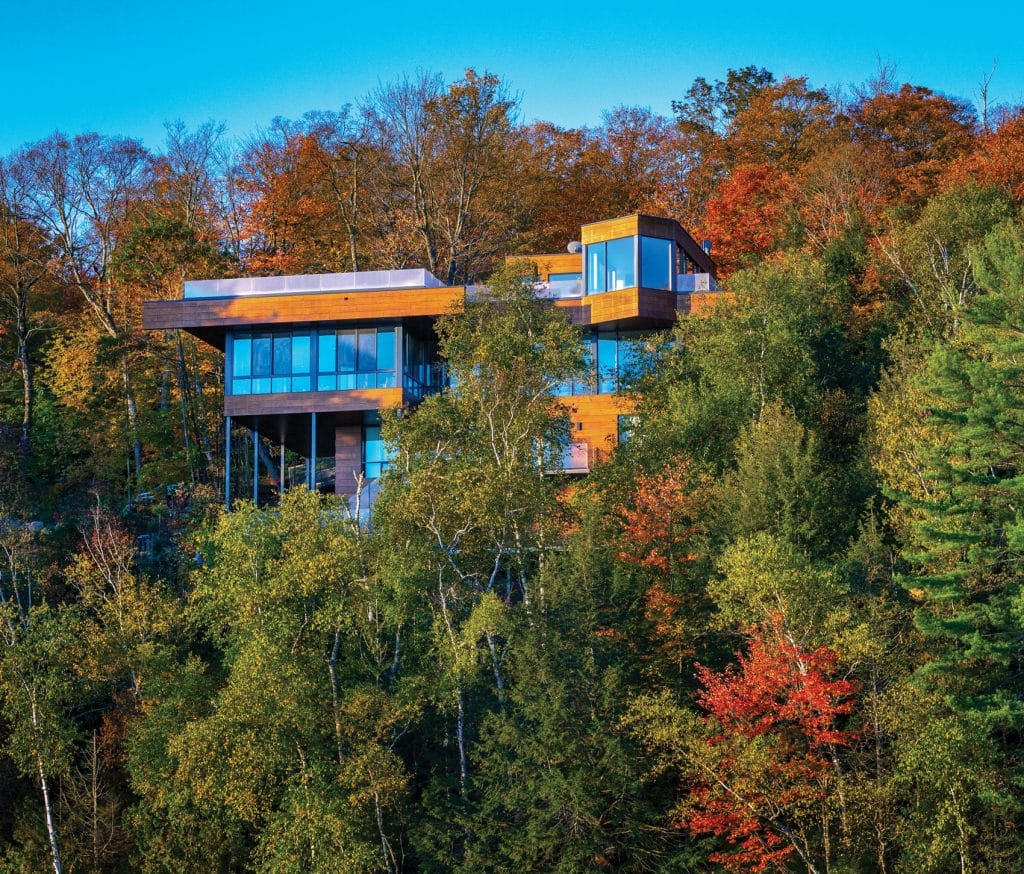
5. Durability as a Pillar of Sustainability
5.1. Impact of Maintenance on Environmental Footprint
Durability and maintenance are often underestimated in sustainability assessments but have a decisive impact on the environmental balance of wood cladding. A comprehensive analysis reveals that periodic treatments can triple a product’s initial environmental footprint over its lifespan. Each maintenance cycle involves:
- Additional resource consumption (varnishes, sealants, pigments)
- Emissions associated with the production and application of treatments
- Waste generation from packaging and chemical products
- Energy consumption during application
Cladding that eliminates these maintenance cycles, such as NATURCLAD, offers a significant environmental advantage that grows with each year of service life.
5.2. Technical Innovations to Extend Service Life
The industry has developed various technologies to enhance the durability of exterior wood cladding, optimizing its environmental channel:
- Thermo-modification Treatments: Alter the wood’s cellular structure to increase resistance to moisture and biodegradation.
- Resin Impregnation: Improves dimensional stability and weather resistance.
- High-Density Protective Layers: Shield the wood from UV radiation and abrasion.
- Advanced Fastener Systems: Enhance structural stability and prevent deformation.
The integration of some of these technologies in products like NATURCLAD has achieved a certified durability of over 35 years without maintenance under severe exposure conditions, representing a significant advancement in true sustainability.

6. Energy Efficiency in Ventilated Wooden Facades
6.1. Optimization of Thermal Performance
Ventilated facades with wood cladding offer significant advantages for the energy efficiency of buildings. This construction system creates a ventilated air cavity between the exterior cladding and the insulation, generating a chimney effect that enhances overall thermal performance. The main thermal benefits include:
- Elimination of Thermal Bridges: Up to a 30% reduction in energy losses.
- Effective Solar Protection: Up to a 40% reduction in summer heat gains.
- Minimization of Condensation: Prevents issues related to moisture.
- Improved Acoustic Insulation: 5–10 dB reduction in external noise transmission.
The low thermal conductivity of wood (approximately 0.13 W/m·K) further contributes to this efficient performance, especially when compared to metal or ceramic cladding.
Reduction in Energy Demand and CO₂ Emissions
The impact of ventilated wooden facades on a building’s overall energy demand is significant and quantifiable:
- Reduction in Heating Demand: Between 20% and 30%, depending on the climate zone.
- Reduction in Cooling Demand: Between 15% and 40%, particularly relevant in warm climates.
- Decrease in Operational CO₂ Emissions: Between 10–25 kg CO₂/m² per year.
- Improved Thermal Inertia: Mitigates temperature fluctuations and enhances comfort.
Studies on buildings with ventilated facades demonstrate reductions in annual energy consumption that, over the building’s lifespan, more than offset the environmental impact associated with the production and installation of the system.

7. Frequently Asked Questions
Can high-performance wood cladding be considered truly sustainable despite incorporating resins in its manufacturing?
High-performance natural wood cladding, although incorporating resins and adhesives, has a favorable environmental balance when its full life cycle is considered. The elimination of periodic maintenance treatments and extended durability significantly offset the initial impact of these components. Additionally, modern technologies enable the use of low-impact resins, many of which have specific certifications for low emissions.
How does transportation distance affect the sustainability of wood cladding?
Transportation can account for 5% to 15% of the total carbon footprint of wood cladding. However, this impact must be contextualized: a long-lasting, maintenance-free cladding transported from a greater distance may have a lower overall environmental impact than a locally sourced alternative that requires frequent maintenance or has a shorter lifespan.
How do FSC and PEFC certifications compare in terms of sustainability assurance?
Both certifications are internationally recognized and provide robust assurances of sustainable forest management. FSC is often considered slightly stricter in its social and environmental criteria, while PEFC has greater implementation in Europe and is particularly relevant for smaller-scale forest producers. From an architectural specification perspective, both certifications are widely accepted in major sustainable building certification systems.
Is it possible to integrate wood cladding into Nearly Zero Energy Buildings (NZEB)?
Wood cladding, especially in ventilated facade systems, is fully compatible and beneficial for Nearly Zero Energy Buildings. Its contribution to reducing thermal bridges, compatibility with high-performance insulation systems, and low embodied energy make it particularly suitable for such buildings, where the overall energy and carbon balance is a priority.