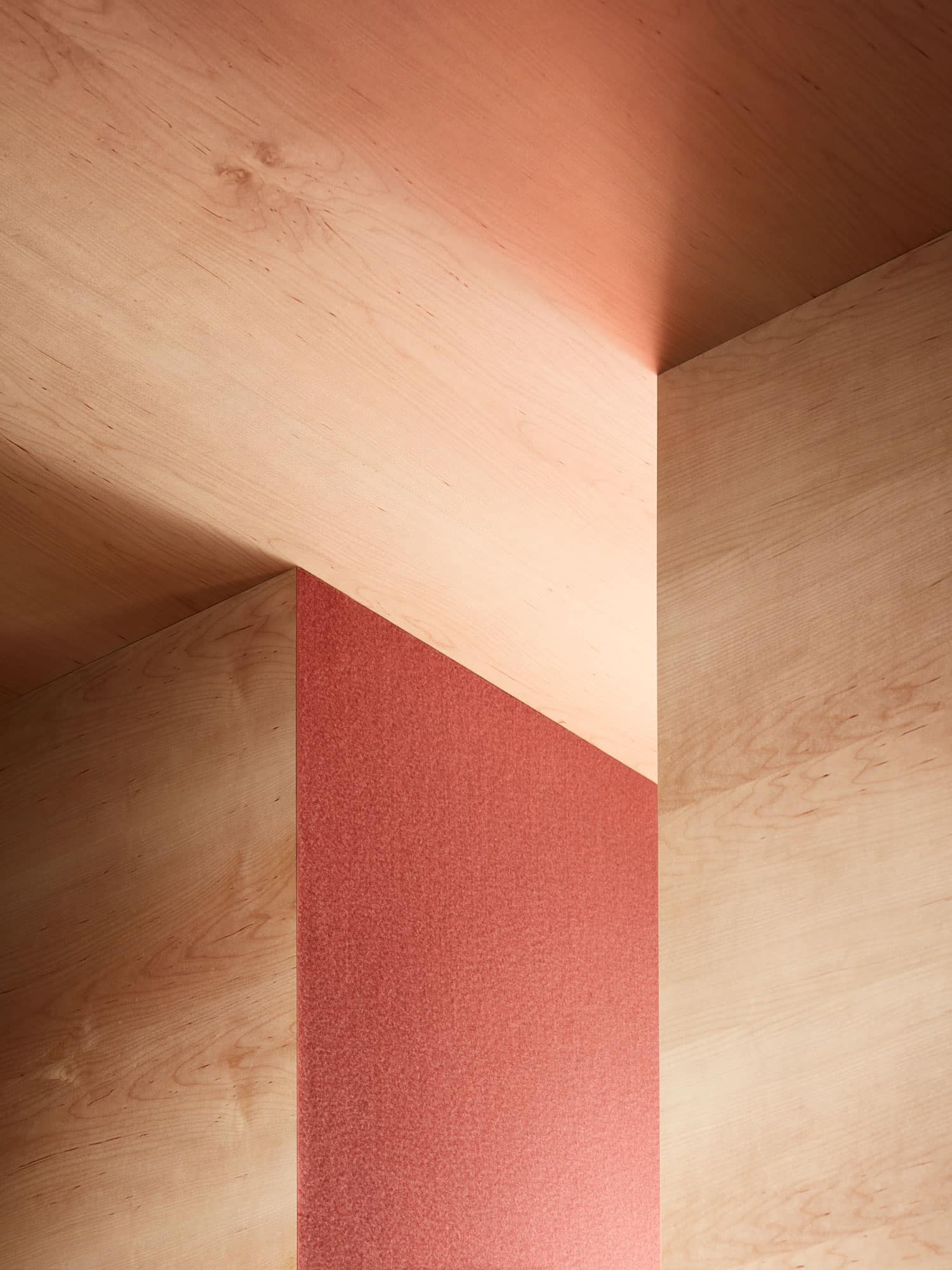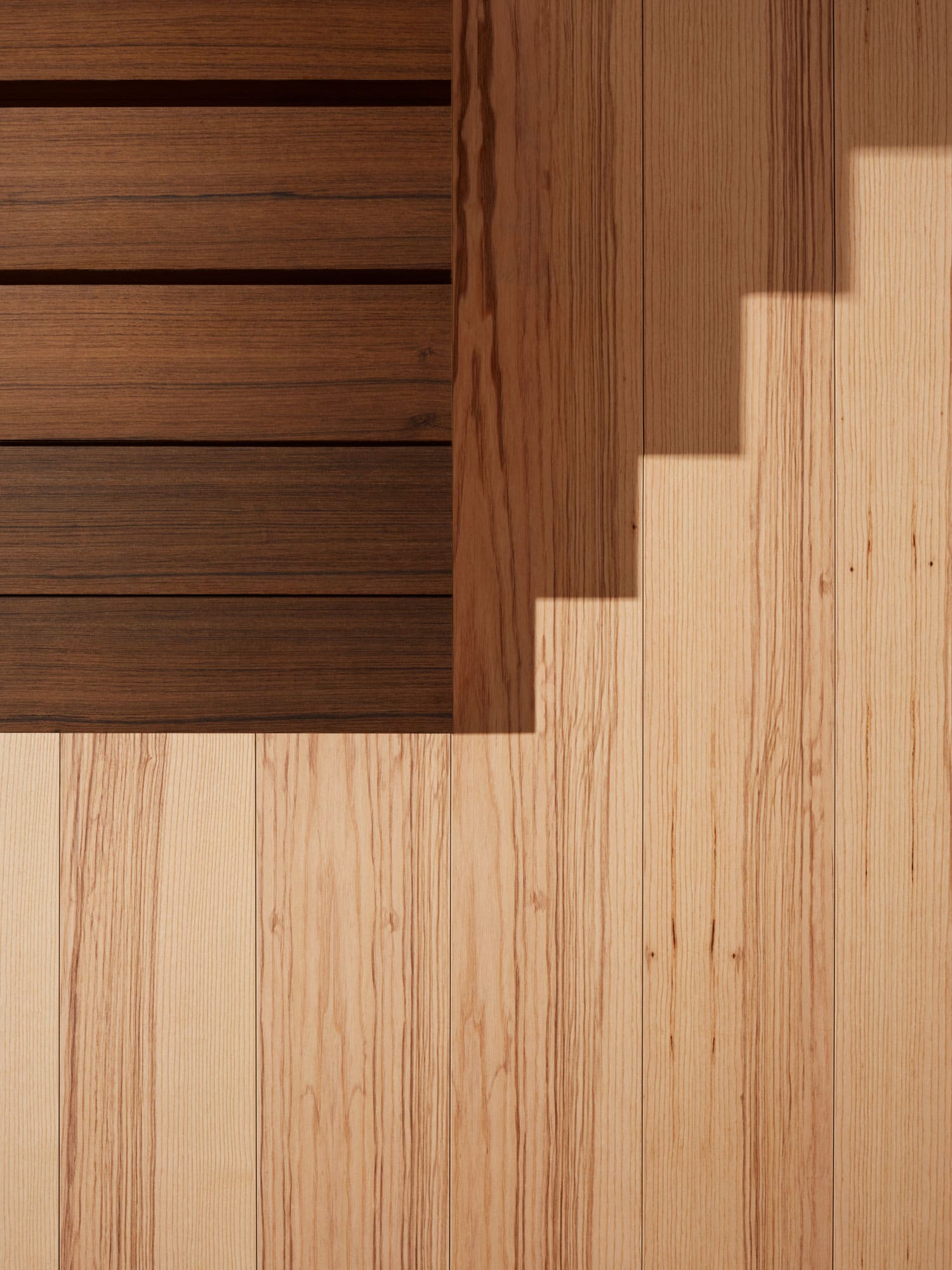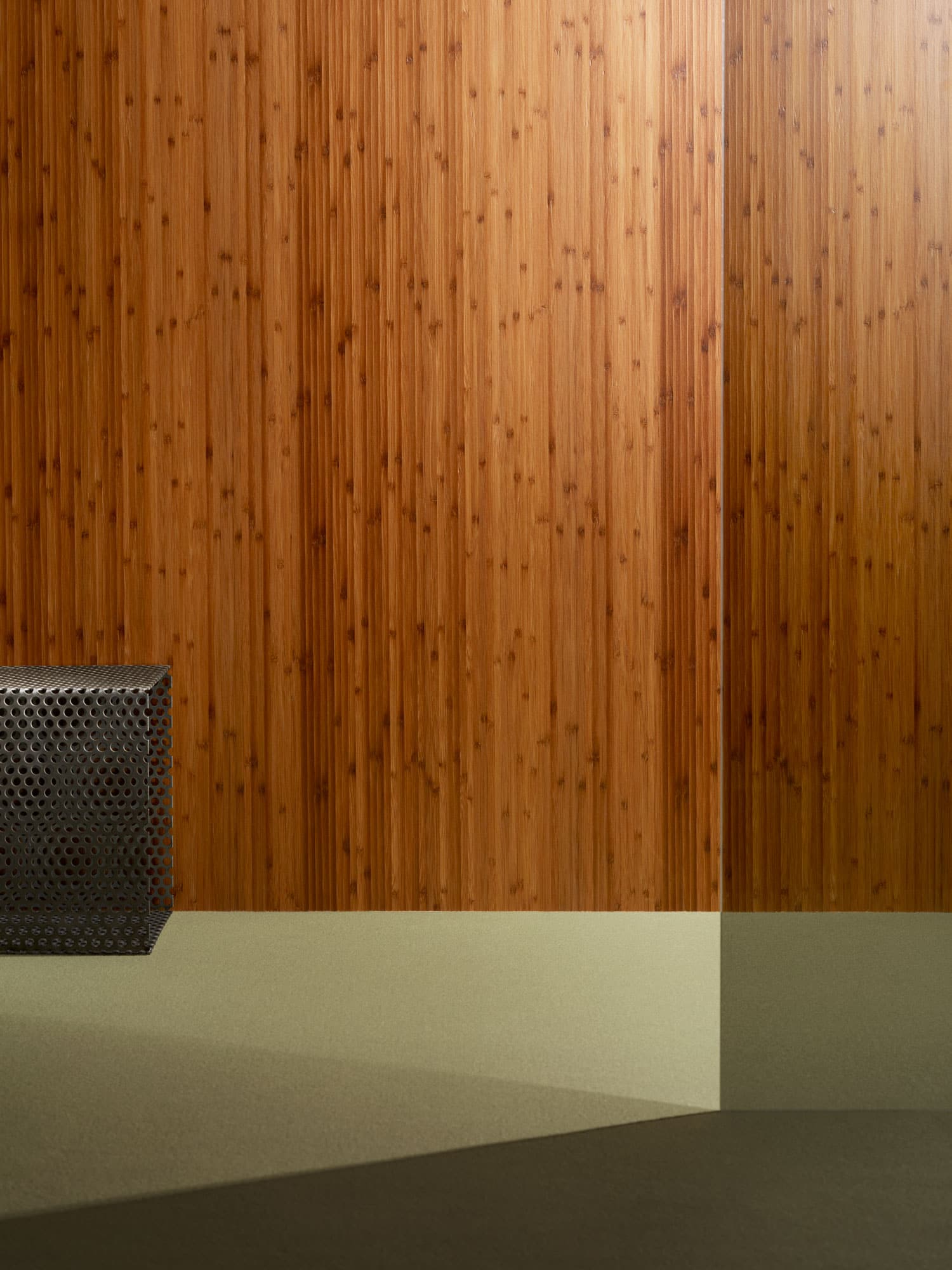
Acoustics and wood form a natural combination that enables the creation of balanced sound environments in interior architecture. Natural wood finishes offer unique acoustic properties that can be optimized through specific design to achieve the required sound comfort for each spatial typology.
Acoustic Fundamentals of Natural Wood
Absorption Properties
Wood exhibits inherent acoustic characteristics that distinguish it from other materials:
- Absorption coefficient: Solid wood achieves αw values between 0.15–0.25 on smooth surfaces
- Selective absorption: Greater effectiveness in mid frequencies (500–2000 Hz)
- Anisotropic behavior: Properties vary depending on fiber orientation
Acoustic Diffusion
The natural texture of wood contributes to sound diffusion:
- Surface irregularities: Grain and knots act as natural diffusers
- Modularity: Panel installation creates interfaces that promote sound dispersion
- Depth effects: Dimensional variations generate multiple reflection planes
Solutions for Educational Spaces
Classrooms and Teaching Areas
Acoustic requirements in educational settings include:
- Reverberation time: 0.6–0.8 seconds for standard classrooms
- Speech intelligibility: STI (Speech Transmission Index) > 0.60
- Background noise reduction: Levels < 35 dB(A)
Implementation strategies:
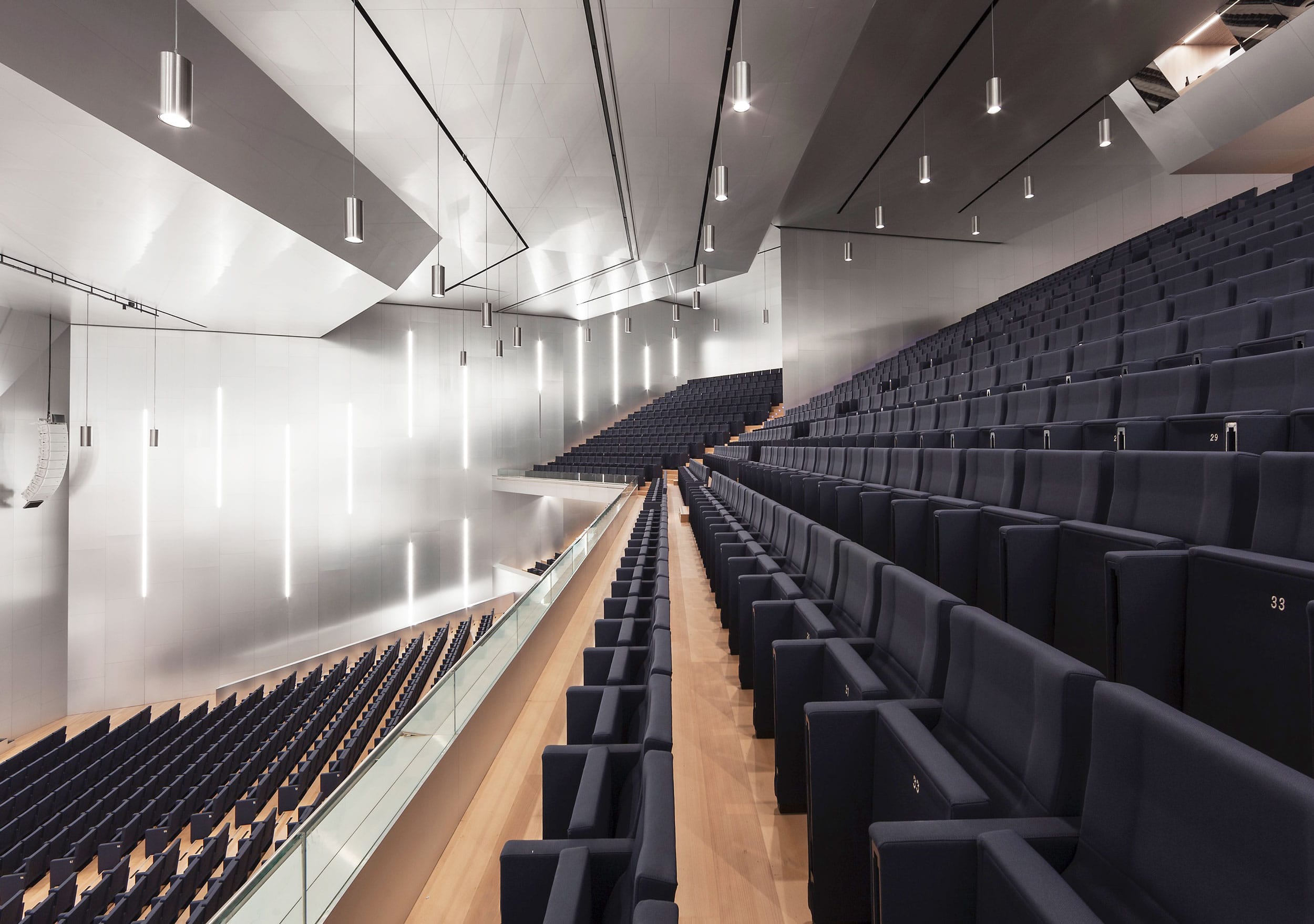
- Acoustic ceilings: Perforated panels in NATURPANEL-W or NATURHARDPANEL-W to enhance acoustic absorption in auditoriums, conference rooms, and spaces requiring reverberation time control.
- Focal walls: Partial wood finish on front walls to manage early reflections
- Combined treatments: Strategically distributed absorbent and reflective surfaces
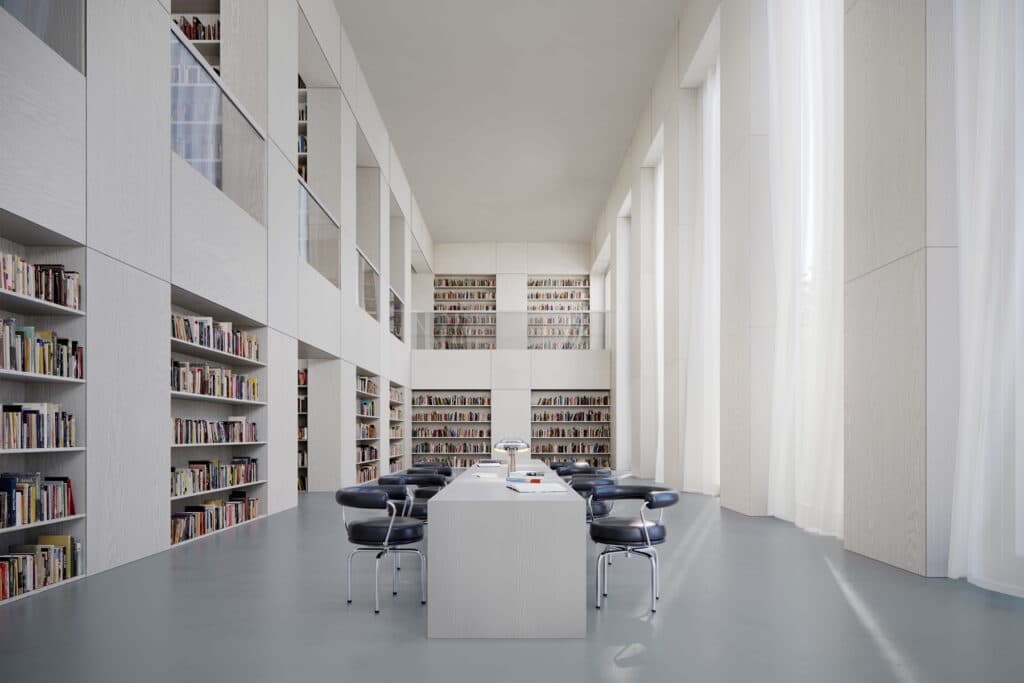
Libraries and Study Spaces
These spaces require extremely low noise levels:
- NC criterion: NC-30 to NC-35 maximum
- Zoning isolation: Acoustic differentiation between quiet and collaborative areas
Perforated wood finishes enable the creation of acoustic transition zones that gradually modulate sound levels.
Applications in Corporate Spaces
Open-Plan Offices
Acoustic design in open workspaces seeks to balance:
- Speech privacy: Prevent intelligibility beyond 4–5 meters
- Noise masking: Controlled background noise levels
- Functional flexibility: Adaptability to different layouts
Technical solutions:
- Suspended panels: Modular systems allowing reconfiguration
- Acoustic partition walls: Movable elements with natural wood finish
- Acoustic islands: Localized concentrations of absorbent material
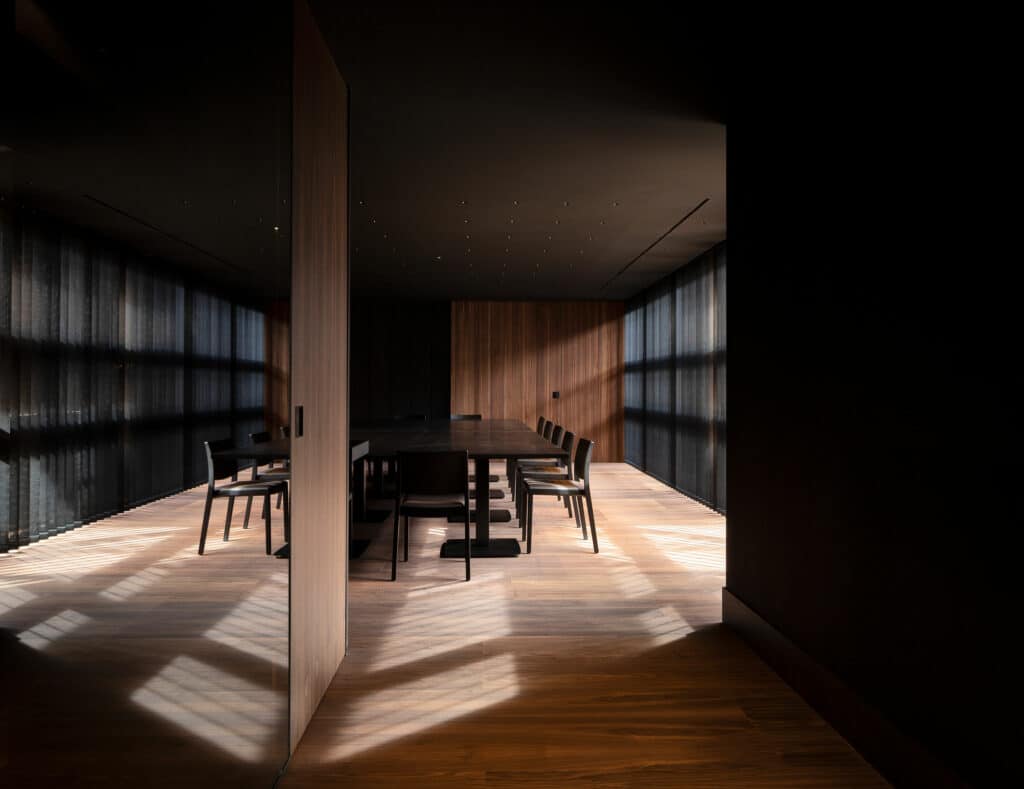
Meeting Rooms
Specific requirements include:
- Acoustic confidentiality: Isolation > 45 dB DnT,w
- Communication quality: Optimal intelligibility for video conferences
- Reverberation control: Reverberation time 0.4–0.6 seconds
Spaces for Dining and Hospitality
Restaurants and Cafés
Acoustic comfort in these spaces must balance:
- Sound ambiance: Sufficient for conversational intimacy
- Noise levels: Maximum 65–70 dB(A) during peak hours
- Local intelligibility: Clear communication at each table
Natural wood plank systems enable acoustic treatments that integrate seamlessly into interior design.
Hotel Spaces
Common areas require specific treatments:
- Lobbies: Reverberation control in large-volume spaces
- Corridors: Reduction of noise transmission between rooms
- Lounge areas: Creation of relaxing sound environments
Healthcare and Wellness Spaces
Healthcare Facilities
Hospital acoustics present unique requirements:
- Stress reduction: Sound environments that promote recovery
- Medical privacy: Acoustic isolation between consultation rooms
- Sound signaling: Clarity in emergency communications
Wood finishes with antimicrobial properties, such as those available in the Parklex Prodema range, combine acoustic and sanitary benefits.
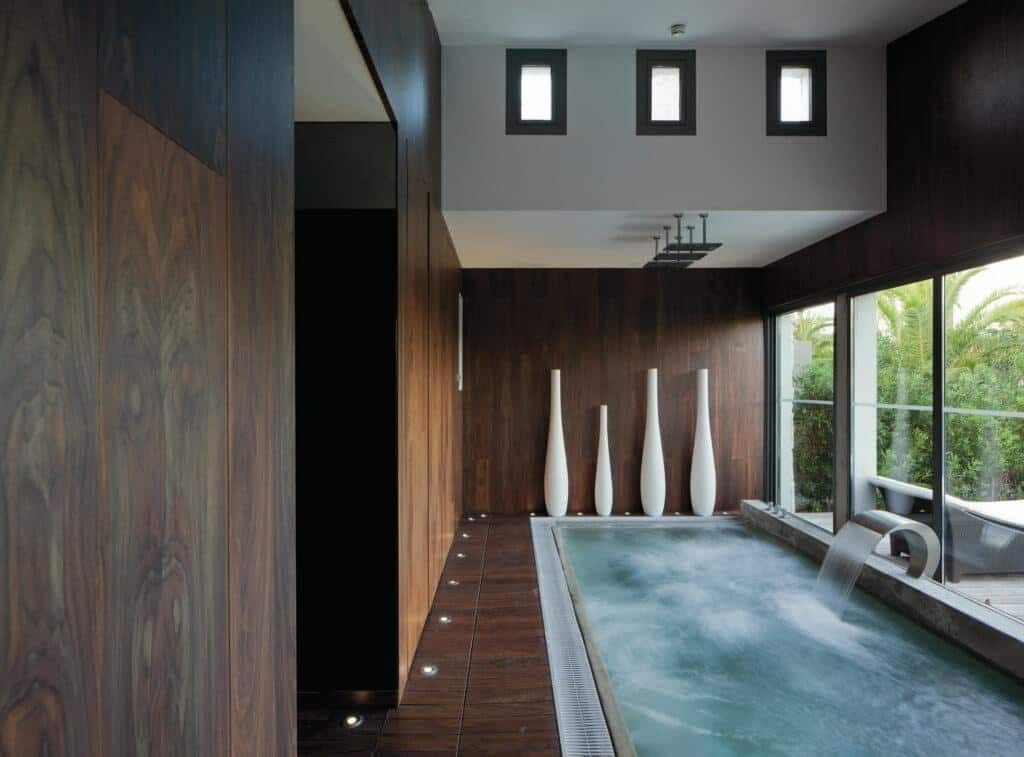
Wellness and Spa Spaces
These environments require:
- Extreme tranquility: Noise levels < 30 dB(A)
- Natural masking: Sounds of water, nature
- External noise isolation: Protection from urban traffic
Acoustic Design Criteria
Configuration Selection
Acoustic optimization requires considering:
- Perforation percentage: Between 8% and 25% depending on application
- Perforation diameter: Typically between 3 and 12 mm
- Rear cavity: Air chamber of 50–200 mm with absorbent material
Integration with Other Systems
Acoustic treatments must be coordinated with:
- Lighting: Integration of luminaires into perforated panels
- HVAC: Compatibility with air diffusers and returns
- Audiovisual systems: Placement of speakers and technical equipment
Acoustic simulation using specialized software enables prediction of the performance of a wood finish in various spatial configurations, optimizing selection prior to execution.
Need specific technical advice for your project? Contact our team with no obligation to address technical questions, analyze specific requirements, or develop customized solutions.