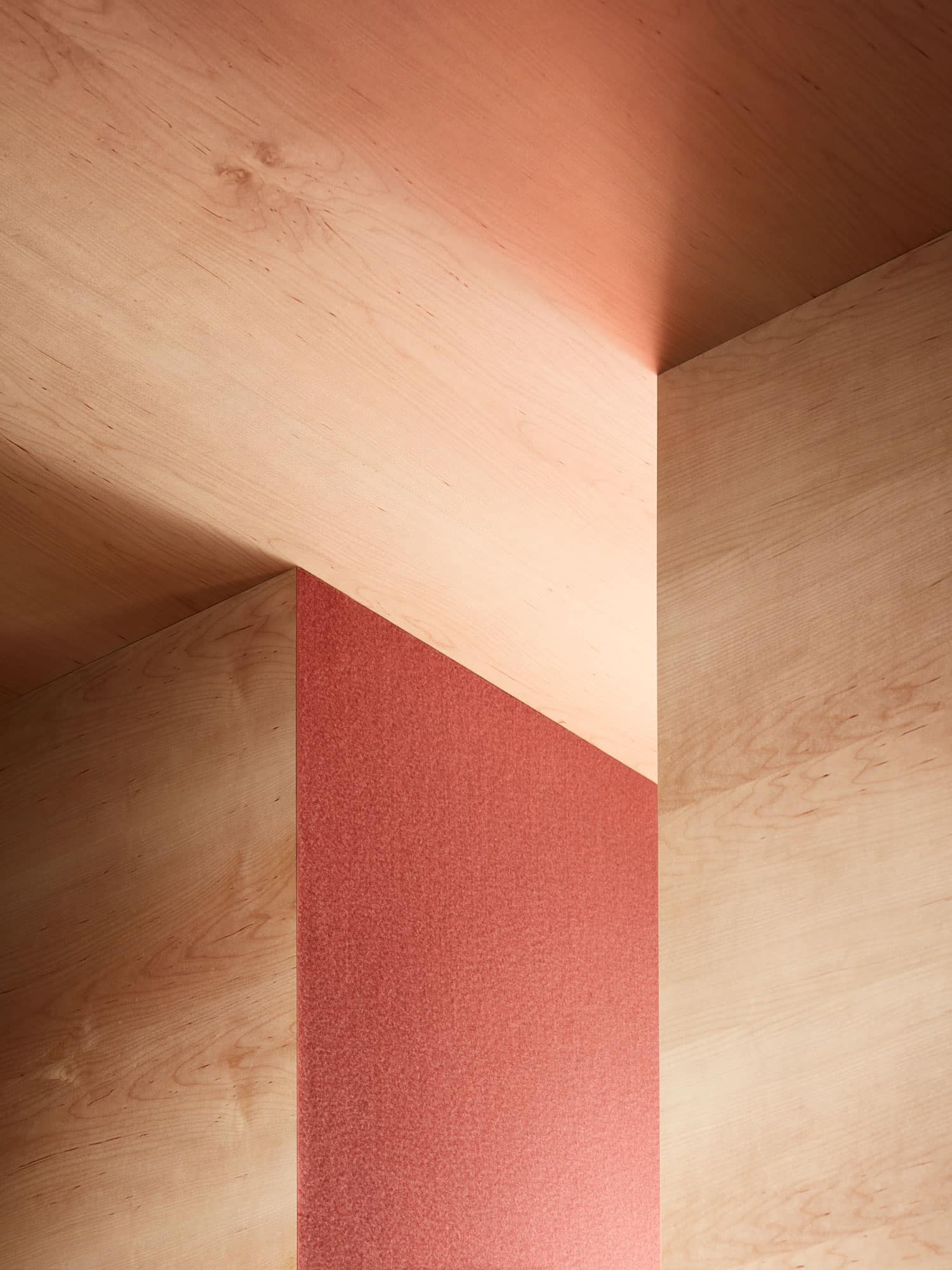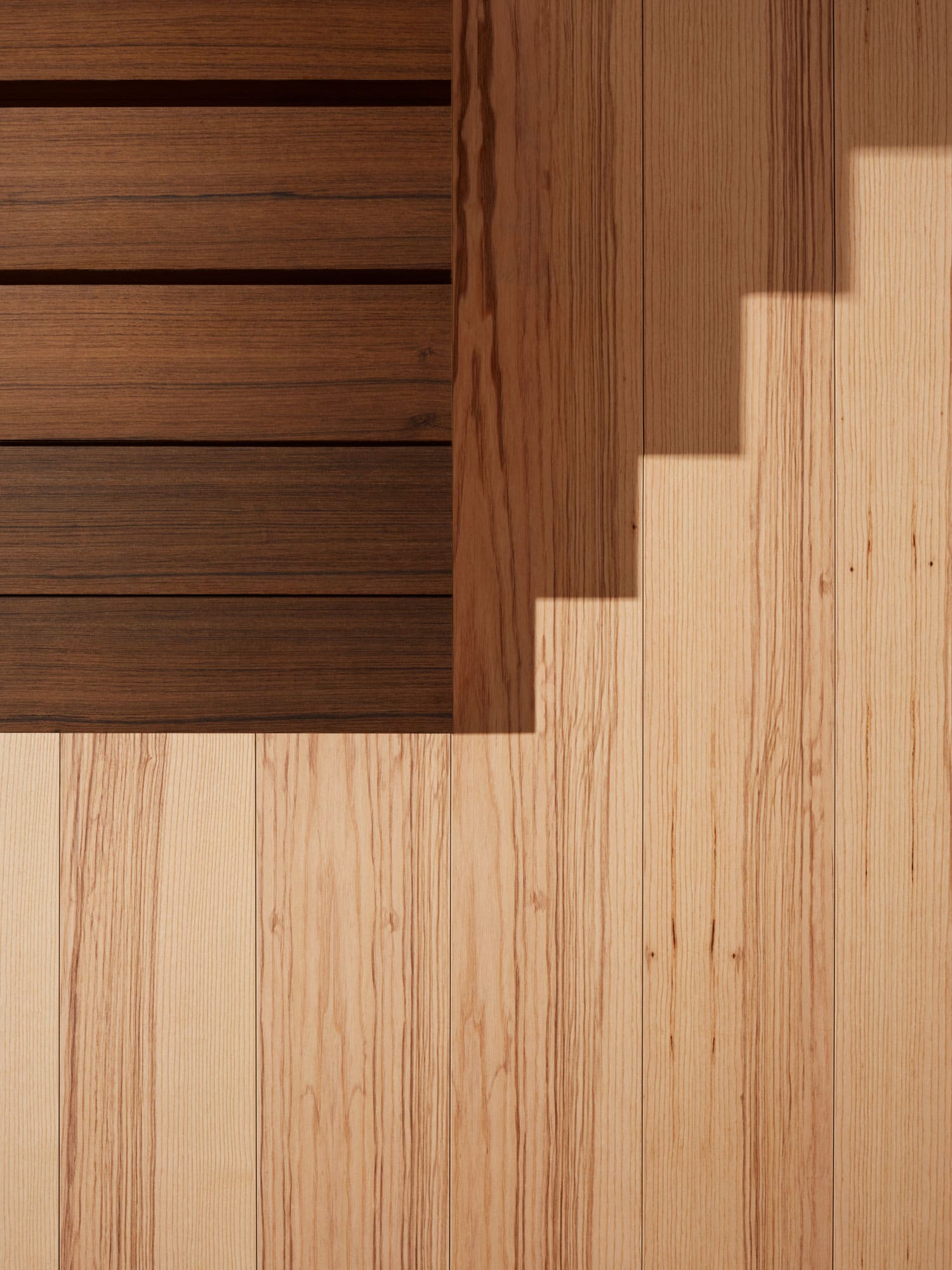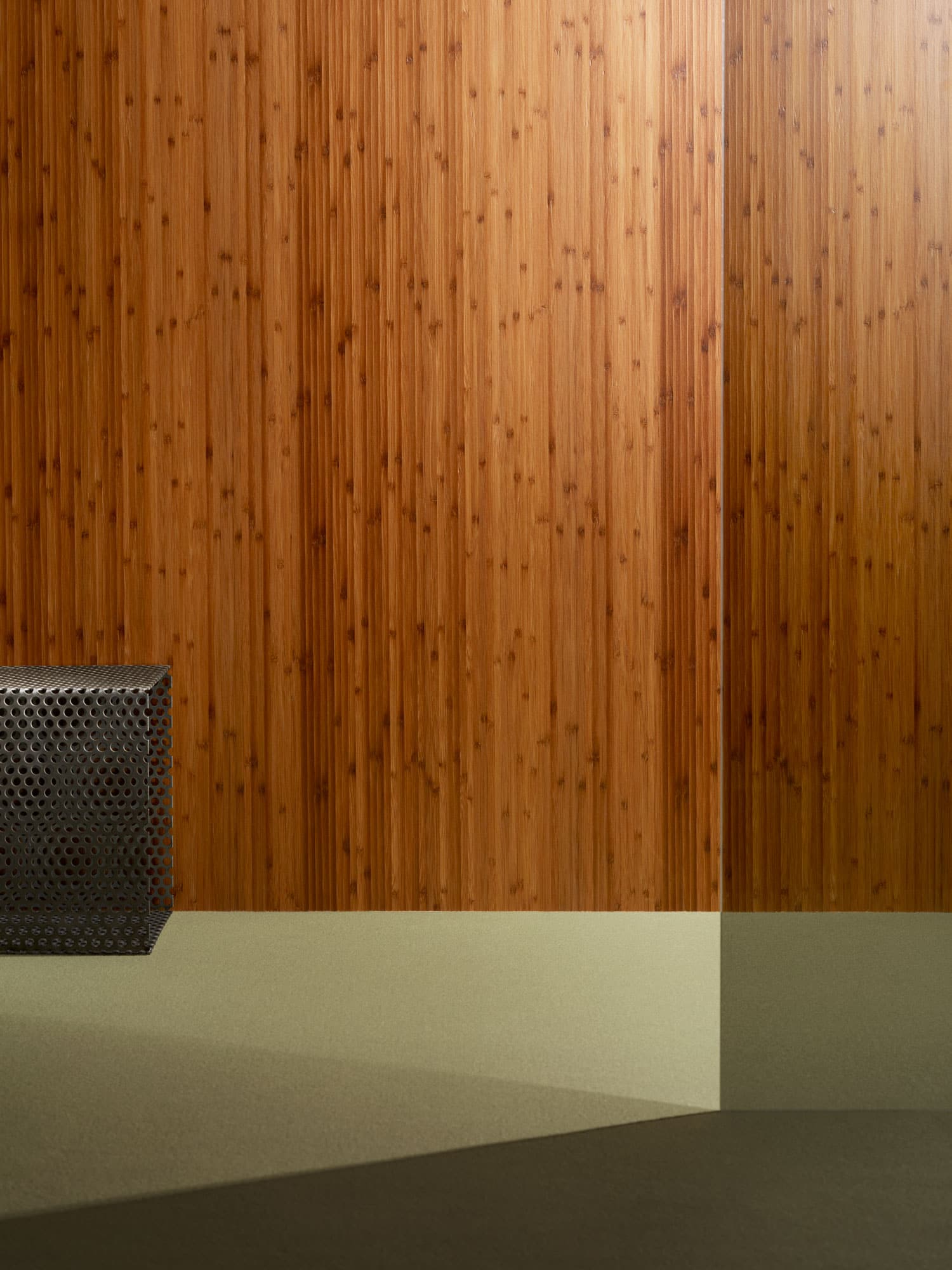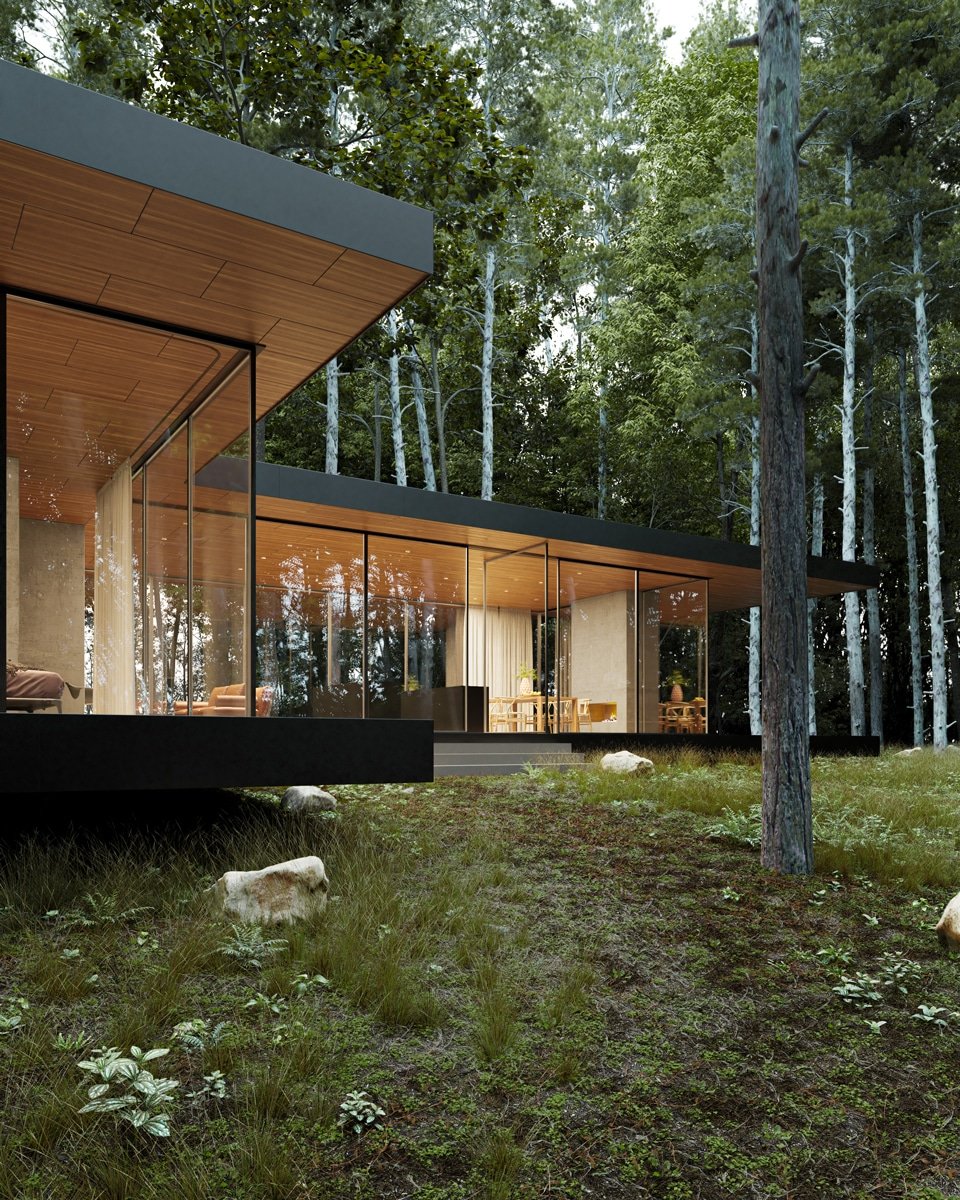
In contemporary architecture, the pursuit of continuity between interior and exterior has become one of the most powerful strategies for creating coherent spatial experiences. Beyond transparency or visual relationships, this continuity is increasingly supported by material language, capable of dissolving boundaries and articulating a fluid narrative that accompanies the user.
In this context, engineered wood positions itself as a key resource due to its ability to adapt to multiple conditions without losing identity, allowing architects to develop a continuous discourse from the building envelope to the most detailed interior.
The current challenge is no longer merely to visually connect the interior with the exterior, but to build a homogeneous experience where material, form, and texture generate true perceptual continuity. This is where advanced wood systems gain particular relevance, offering solutions that combine aesthetic expressiveness with technical precision.
Material as a generator of spatial continuity
Architectural continuity is not achieved solely through open geometries or large glazed surfaces, but through a coherent material strategy that allows the building to be read as a whole. In this sense, wood provides a unique sensory quality: warmth, texture, and human scale. However, transferring these qualities from interior to façade often entails technical limitations when working with natural wood.
The evolution toward wood-based technological materials has made it possible to overcome these barriers. Today, it is feasible to extend the same material language from exterior to interior without interruption, ensuring weather resistance and long-term durability.
This continuity not only unifies the project, but also constructs a narrative in which the user perceives space as an uninterrupted sequence, where boundaries blur and the building becomes an immersive experience.
Form as an extension of the architectural discourse
Beyond material, form plays a decisive role in shaping spatial continuity. Curved surfaces, folded planes, and smooth transitions between elements help avoid abrupt ruptures and generate a more organic reading of space. In this regard, the possibility of working with curved panels—both pre-curved and curved on site—opens a design field that transcends traditional orthogonality.
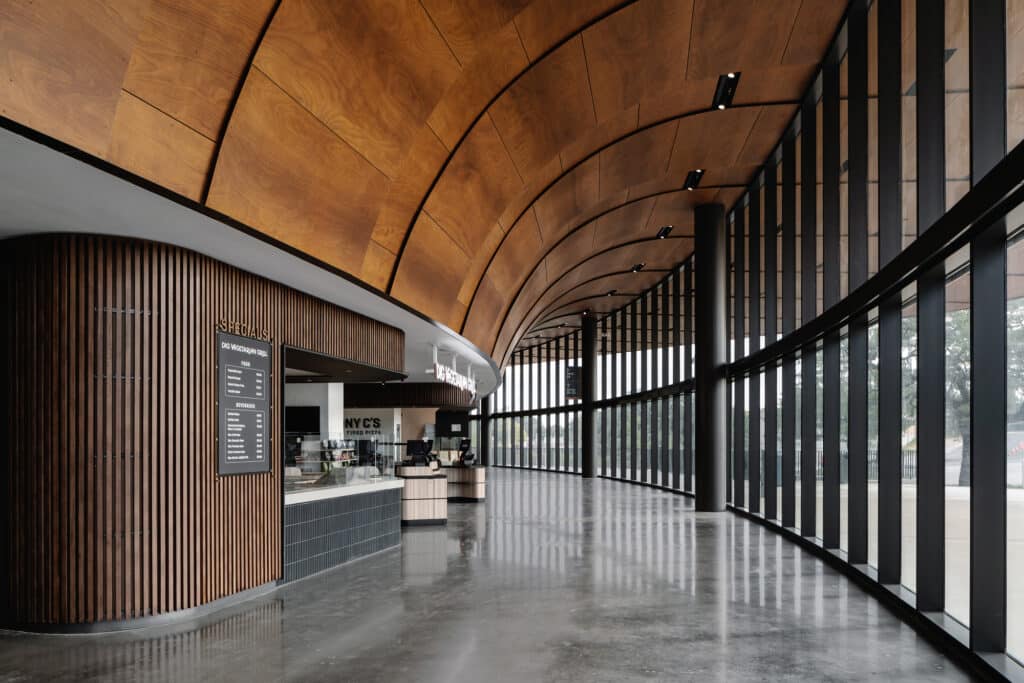
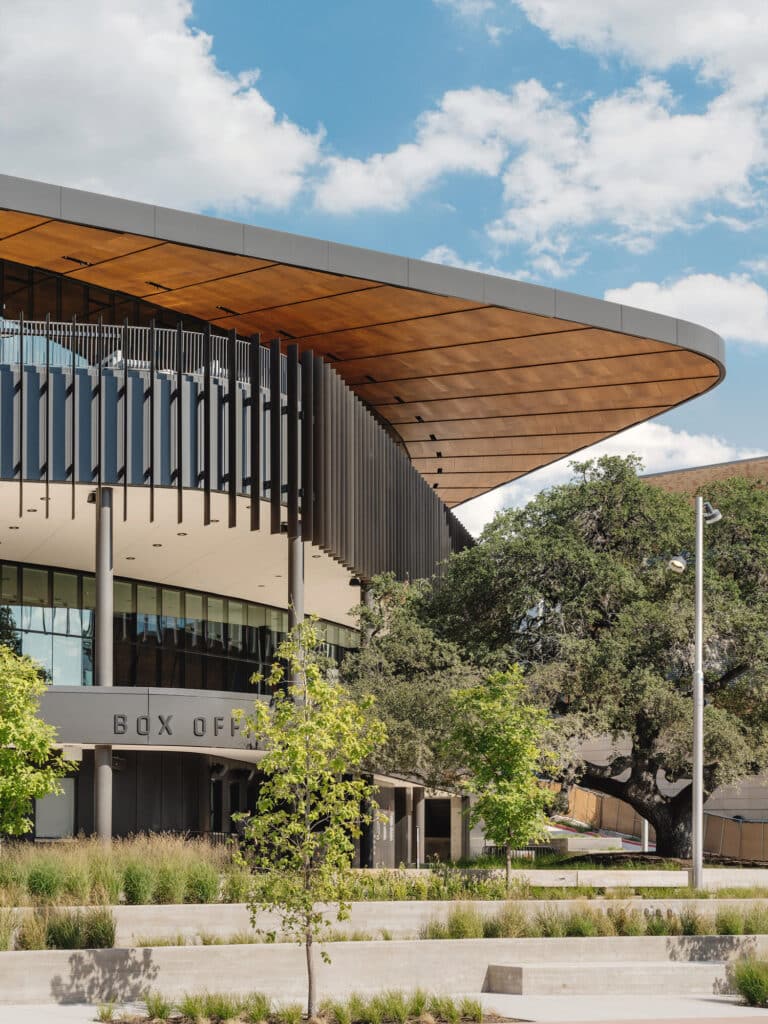
The ceiling of the Moody Center at the University of Texas is a paradigmatic example of how curvature can become a narrative element. In this project, wood not only clads the space but defines it, enveloping the user in an interior topography that recalls movement from the outside. Continuity is not limited to materiality but extends to geometry, creating an immersive experience where the boundary between architecture and landscape becomes blurred.
Perforation and texture: the sensory dimension of space
Architectural continuity is not only visual or formal; it is also sensory. The introduction of perforations in wood panels allows designers to work with light, acoustics, and tactile perception, enriching the spatial experience. These perforations, far from being merely technical, become a design element that adds depth and complexity to surfaces.
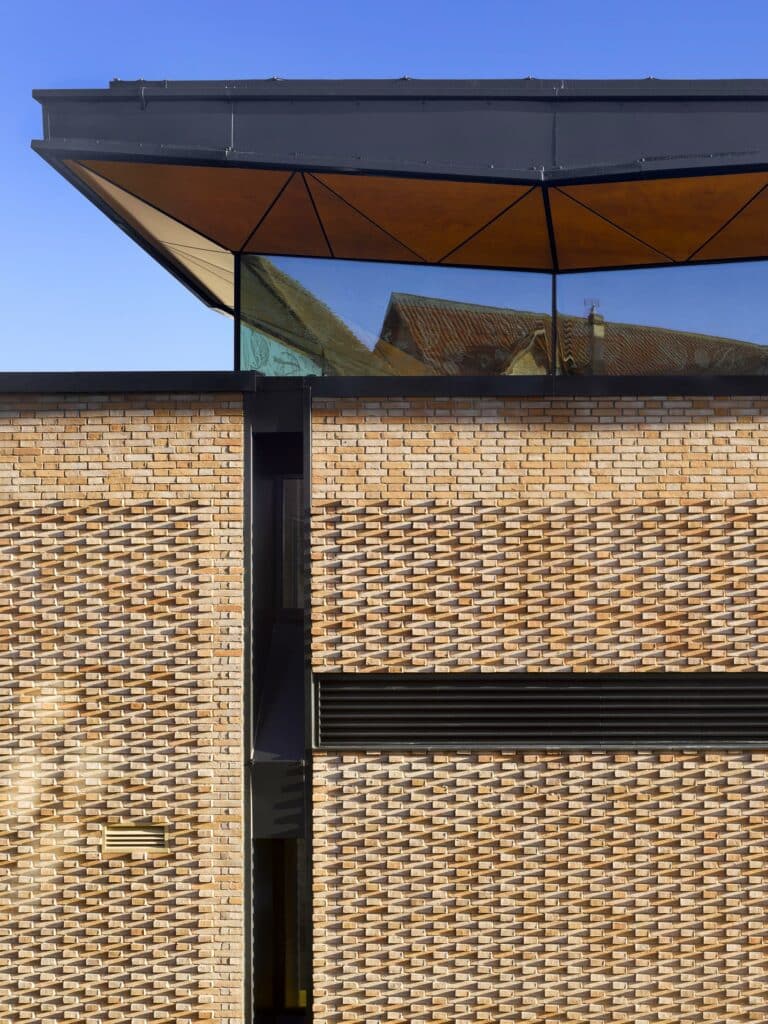
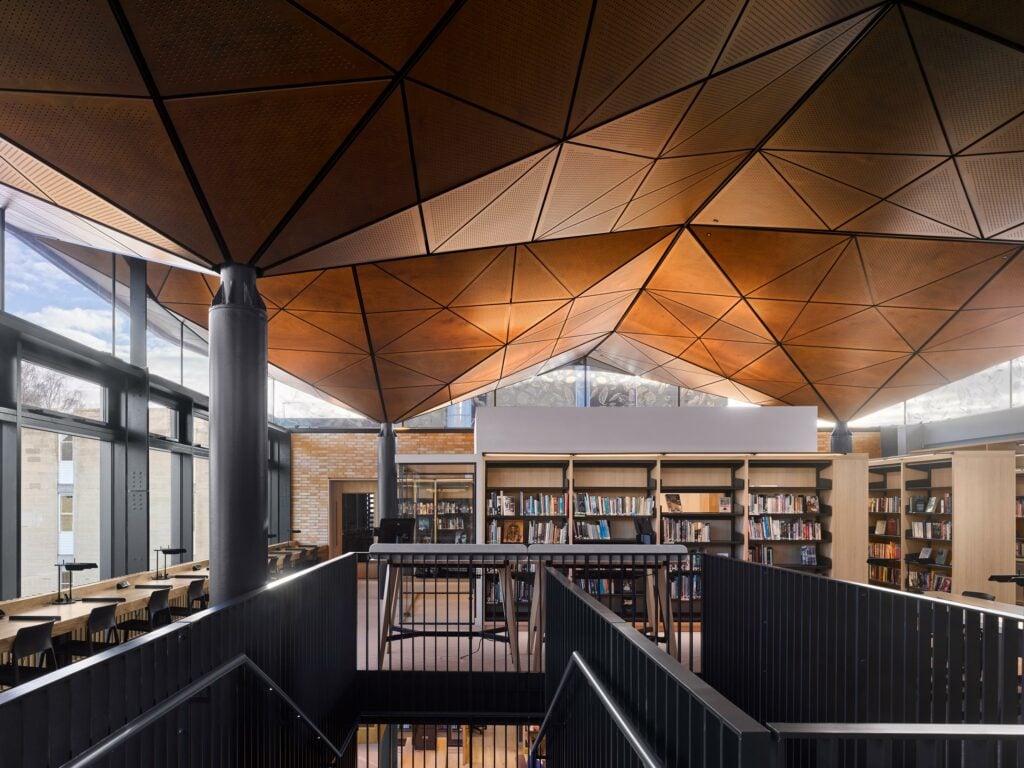
In spaces such as libraries or auditoriums, perforation makes it possible to integrate acoustic requirements without sacrificing aesthetic coherence. The St Mary’s Calne School library project illustrates how wood can shape an interior where functionality and narrative intertwine. In this case, the material envelops the space, generating a warm and continuous atmosphere, while technical solutions are seamlessly integrated into the surface, without fragmenting the overall reading.
From envelope to interior: a continuous skin
One of the most complex aspects of architectural design is ensuring that the transition between façade and interior does not create a conceptual break. The façade is no longer understood as a boundary, but as a layer that extends inward, maintaining material and formal coherence.
Engineered wood enables this transition to be addressed naturally. Its use in ventilated façades, combined with interior solutions, allows the same finish to extend from exterior to interior, reinforcing the project’s identity. This strategy not only provides visual continuity but also simplifies the architectural language, reducing the need to introduce additional materials that could fragment the narrative.
The result is a cleaner architecture, where each element responds to a shared logic and where the material acts as a unifying thread across the different scales of the project.
Design flexibility and creative freedom
Continuity should not be understood as rigid uniformity, but as a flexible system capable of adapting to the specific conditions of each project. The possibility of combining flat, curved, and perforated surfaces within a single material system offers architects significant creative freedom.
This flexibility is especially relevant in contemporary projects, where hybrid programs require solutions capable of responding to multiple needs without losing coherence.
In this sense, material ceases to be a limitation and becomes a catalyst for design, enabling the exploration of new ways of inhabiting space without compromising technical feasibility.