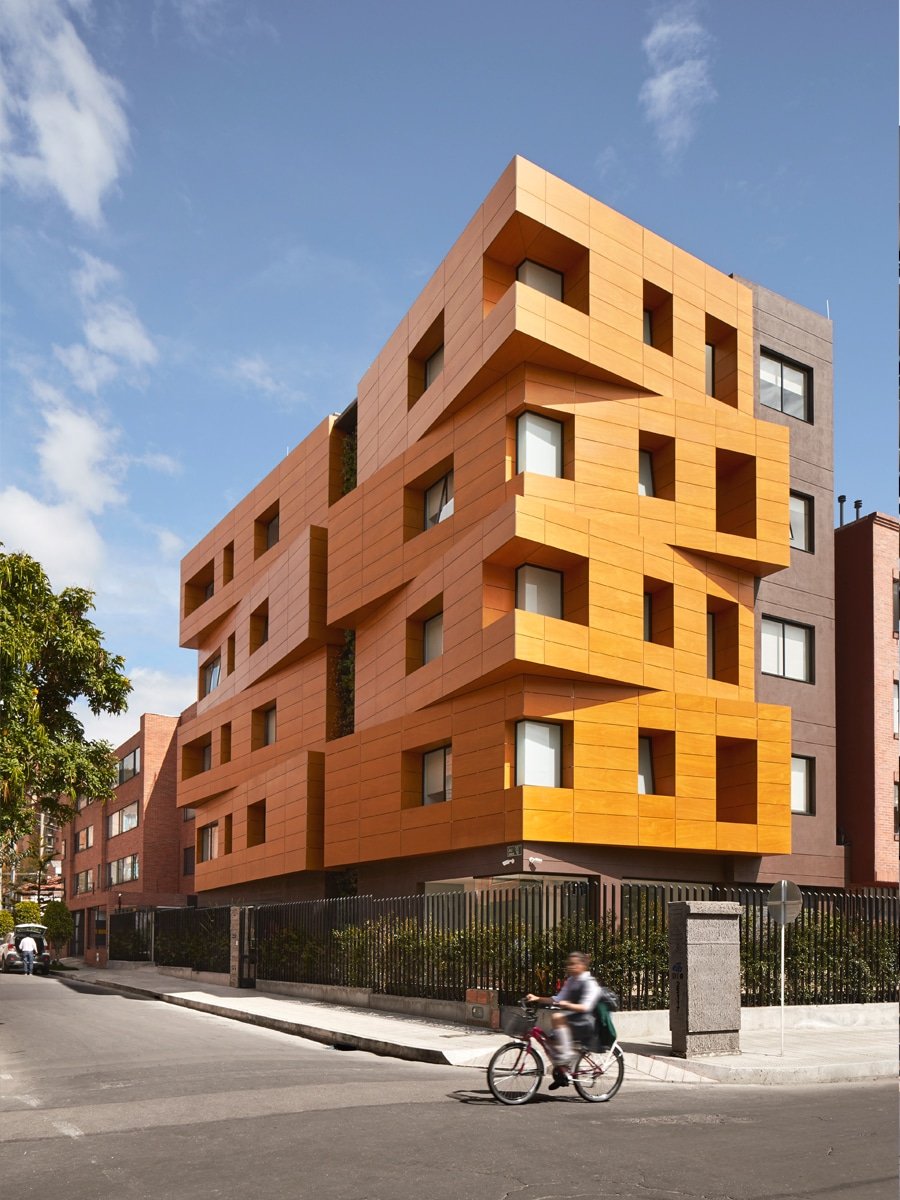
Extended durability and minimal or reduced maintenance are key sustainability factors in specifying exterior claddings. Natural wood panels have revolutionized traditional perceptions of wood maintenance in outdoor settings, transforming lifecycle considerations and total cost of ownership in demanding architectural projects.
Surface Technology for Maintenance Elimination
Parklex Prodema’s NATURCLAD claddings incorporate advanced surface technologies that eliminate traditional maintenance needs. The multilayer coating with thermosetting resins and PVDF protection creates a permanent barrier against UV radiation, moisture, and atmospheric pollutants – the primary causes of degradation in conventional wood claddings.
This factory-integrated protection is significantly more durable than treatments applied on-site. While traditional varnishes and stains require renewal every 3–5 years, factory-applied protection retains its properties throughout the cladding’s lifespan, estimated at over 25 years based on accelerated aging tests.
Environmental Impact of Maintenance Cycles
A full lifecycle analysis reveals that eliminating maintenance cycles yields substantial environmental benefits. Traditional processes such as sanding, cleaning, and reapplying surface protectors involve energy consumption, waste generation, VOC emissions, and transportation of materials and equipment.
Quantified impacts show a 60–75% reduction in CO₂ emissions associated with maintenance over the first 20 years of service life. This reduction includes the elimination of chemical strippers, cleaning solvents, renewal coatings, and a drastic reduction in sanding waste and used protective materials.
Differential Resistance to Atmospheric Agents
Tests under the EN ISO 4892-2 standard demonstrate that NATURCLAD panels maintain chromatic stability (ΔE ≤ 5) after 3,000 hours of artificial UV exposure, equivalent to over 10 years of real-world exposure in harsh climatic conditions. This resistance contrasts sharply with untreated natural wood, which can experience chromatic changes exceeding ΔE 15 within 2–3 years.
Thermal cycle resistance is verified through thermal shock tests simulating fluctuations between -20°C and +80°C. The panels maintain structural and surface integrity without cracking, deformation, or loss of interlayer adhesion – common issues in post-applied protection systems.
Economic Considerations of Low Maintenance
A 25-year total cost of ownership analysis shows that low-maintenance claddings offset any initial investment differential. Avoided costs include maintenance materials, specialized labor, access equipment, operational disruptions, and waste management.
In institutional and commercial buildings, where maintenance interruptions incur additional operational costs, the economic advantage is even more significant. Projects such as healthcare facilities, educational institutions, or commercial buildings particularly value the operational continuity provided by systems with no scheduled maintenance needs.
Structural and Aesthetic Durability
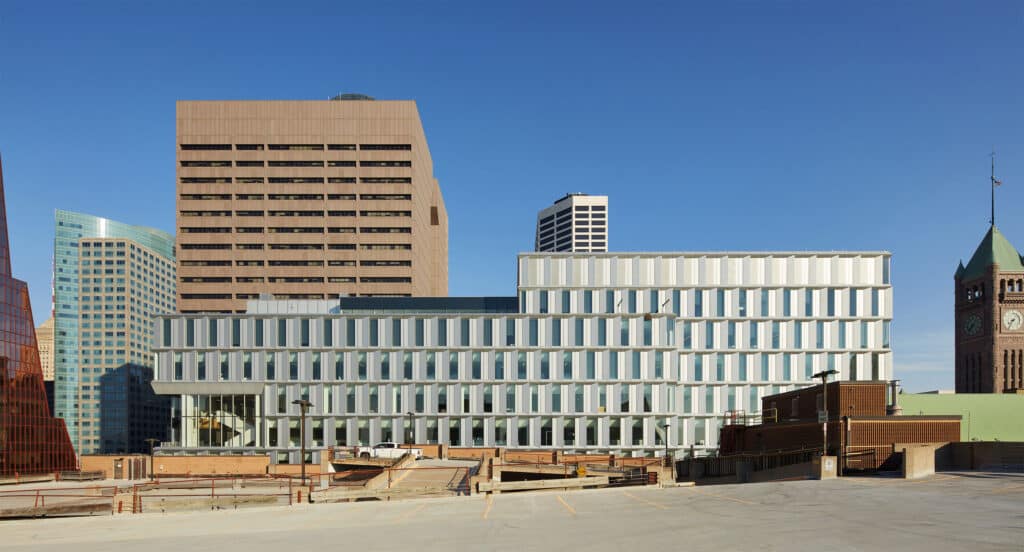
The multilayer technology of NATURCLAD panels provides superior structural durability through comprehensive substrate protection. The core of resin-treated fibers maintains stable mechanical properties, while the natural wood veneer preserves its aesthetic integrity without surface degradation.
Mechanical resistance tests after accelerated aging show over 95% retention of original properties in bending, impact, and tensile strength. This performance stability contrasts with traditional systems, where surface degradation progressively compromises the structural integrity of the assembly.
Implications for Environmental Certification
Extended durability is a recognized factor in certification systems like LEED and BREEAM. Materials with a lifespan exceeding 25 years without significant maintenance contribute specific points in materials and resources categories. Verified lifespan documentation through standardized testing strengthens the technical justification for these points.
Need specific technical advice for your project? Contact our team with no obligation to address technical questions, analyze specific requirements, or develop customized solutions.