TABLE OF CONTENTS
- Introduction to Natural Wood Cladding Facades
- Ventilated Facade Systems with Natural Wood Cladding
- Planning and Design of Wood Cladding Facades
- Technical Aspects of Installation
- Regulations and Certification for Wood Facades
- Examples of Application in Architectural Projects
- Frequently Asked Questions
1. Introduction to Natural Wood Cladding Facades
The integration of high-performance natural wood cladding in facades represents an architectural solution that combines the aesthetic expressiveness of a noble material with advanced technical performance. Technological innovations in the treatment and processing of wood have overcome traditional limitations associated with its use in exterior applications, offering architects the opportunity to incorporate this material into contemporary projects with guarantees of durability and minimal maintenance.
This technical guide is specifically designed for architects and professionals looking to implement natural wood cladding facadesin their projects, providing the necessary information for proper specification, design, and installation. Through a practical and application-oriented approach, we will address the fundamental aspects to ensure optimal results in terms of both aesthetics and long-term performance.
2. Ventilated Facade Systems with Natural Wood Cladding
Composition and Technical Characteristics
Advanced ventilated facade systems with natural wood cladding consist of various elements that interact to provide superior technical performance.
Natural wood cladding panels:They constitute the visible element of the system and are formed by:
- External layer of selected natural wood, with different possibilities of species and finishes
- Specific treatments that improve its resistance to UV radiation, humidity, and biological agents
- Stabilizing core that provides rigidity and minimizes dimensional movements
- Rear balancing layer that ensures the stability of the assembly
Ventilated air chamber: Space between the cladding and the insulation that allows:
- Evacuation of moisture through the chimney effect
- Improvement of the facade’s thermal performance
- Additional protection of the building structure
Support subframe: Channel system that:
- Transmits the loads from the cladding to the main structure
- Allows adjustments and leveling during installation
- Facilitates ventilation of the air chamber
- Provides flexibility to adapt to different geometries
Thermal insulation: Layer that improves the building’s energy efficiency, which can be located in various ways according to the project’s needs.
Fastener elements: Components that connect the wood panels to the subframe, which can be visible or hidden according to aesthetic requirements. The ventilated facade systems with natural wood cladding from Parklex Prodema are characterized by technical performances that significantly surpass traditional solutions:
- Improved dimensional stability
- Superior resistance to UV radiation
- Certified durability in demanding exterior conditions
- Optimized performance against moisture
- Reduced or zero maintenance
Architectural and Functional Advantages
The implementation of facades with natural wood cladding offers multiple benefits that contribute to both the architectural quality and the functional performance of the building.
Aesthetic and Expressive Advantages:
- Warmth and naturalness that humanizes the architecture
- Expressive versatility through different species, formats, and finishes
- Noble aging that adds character to the building over time
- Possibility to create volumetrics and three-dimensional effects
- Harmonious integration with natural environments or contrast with other materials
Functional and Technical Advantages:
- Improvement of the building’s thermal behavior (25-40% reduction in energy consumption)
- Elimination of condensations and thermal bridges
- Protection of the building’s structure and construction systems
- Excellent acoustic performance (10-20 dB reduction in sound transmission)
- Ease of maintenance and selective replacement
Sustainability Advantages:
- Renewable material with a positive carbon balance
- Possibility of PEFC/FSC certification that guarantees sustainable origin
- Lower embodied energy compared to other facade materials
- Contribution to sustainable building certifications (LEED, BREEAM, WELL)
- Recyclability and reuse at the end of its useful life
The combination of these advantages positions high-performance natural wood cladding facades as a high value-added solution for architectural projects that seek to balance aesthetic expressiveness, technical performance, and environmental commitment.
3. Planning and Design of Wood Cladding Facades
Criteria for Selecting Species and Finishes
The choice of wood species and its finish is a fundamental decision that affects both the aesthetics and technical performance of the facade.
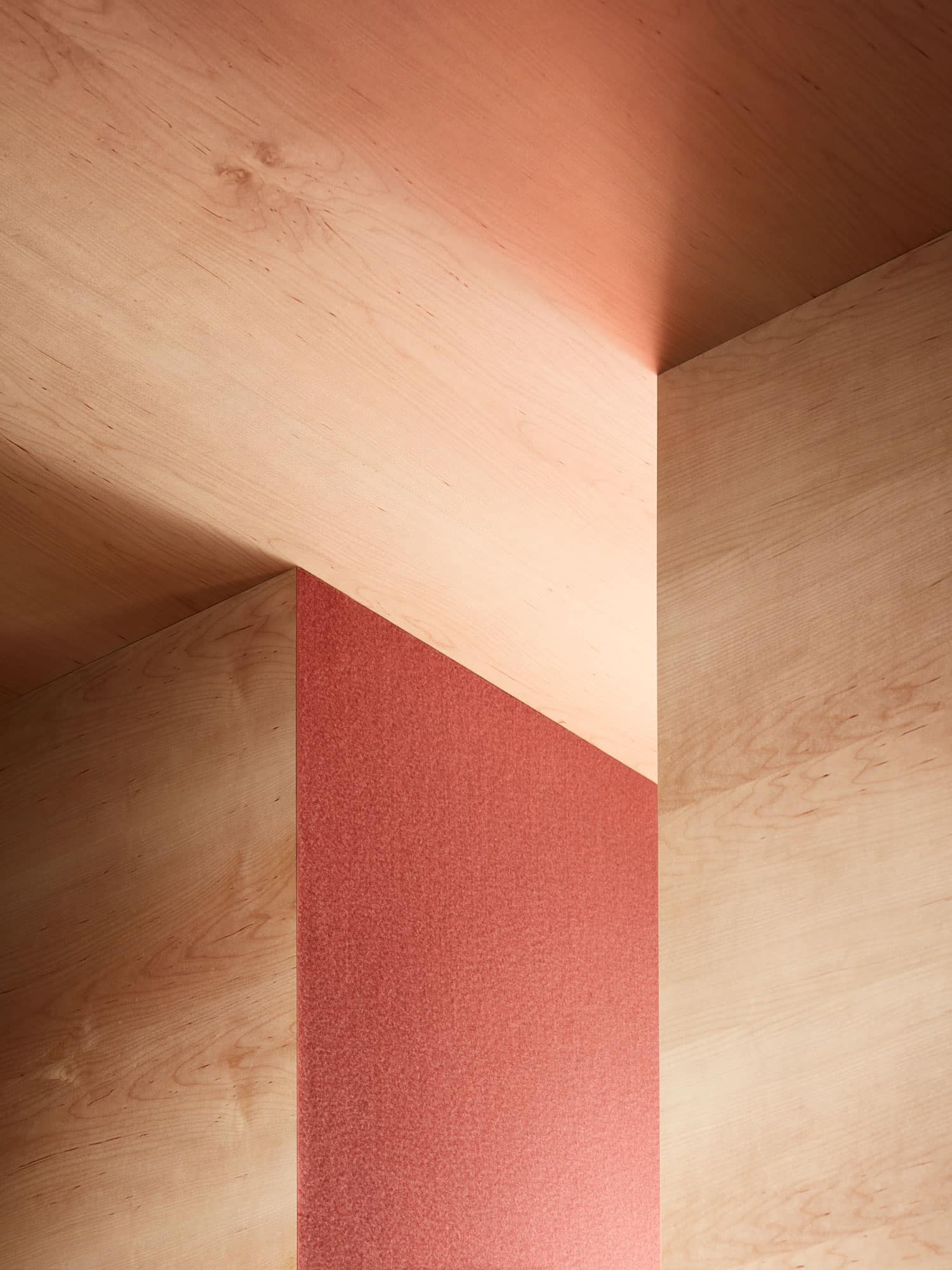
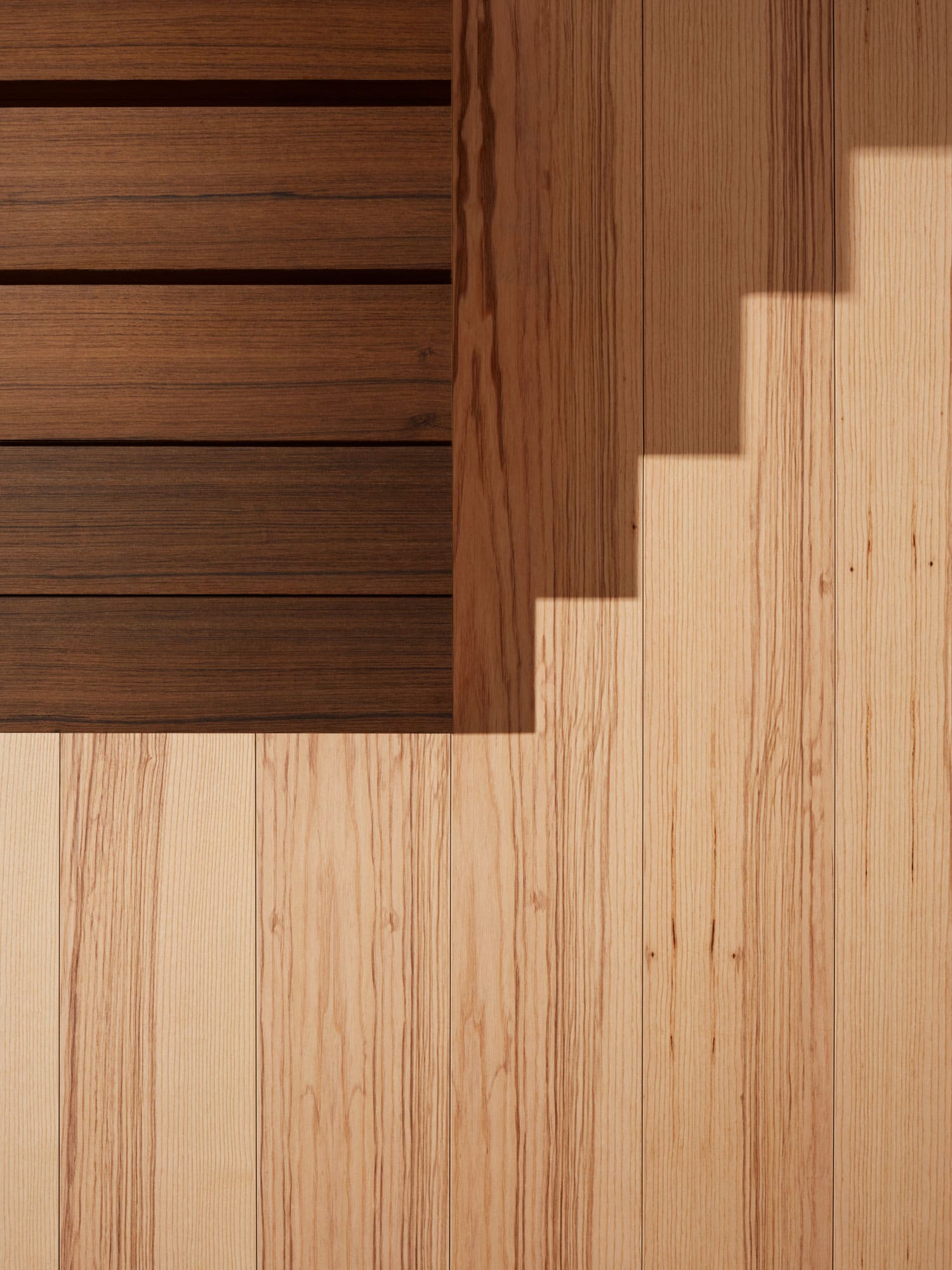
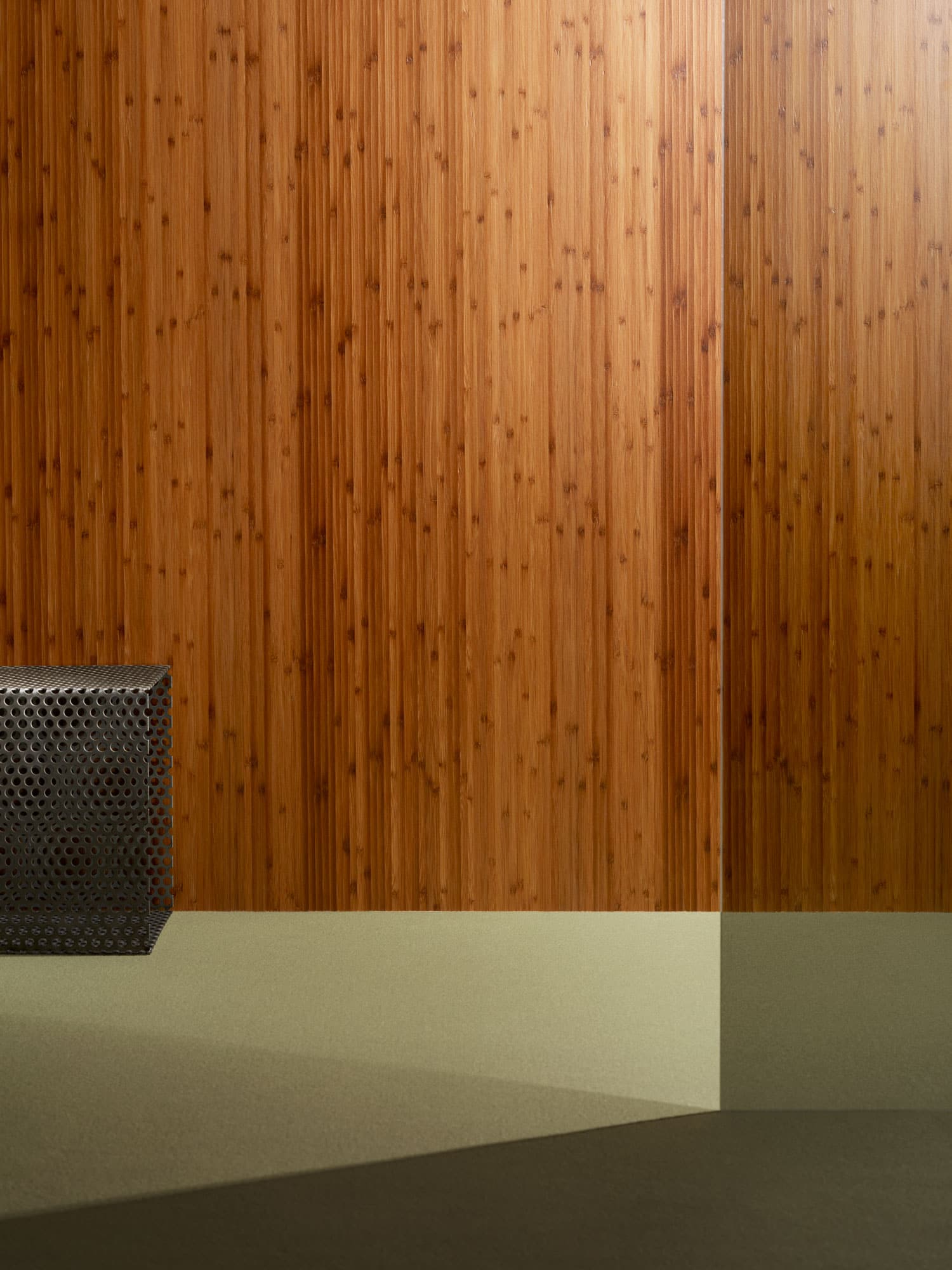
Available Wood Species: Parklex Prodema solutions offer a wide variety of species, each with distinct aesthetic and technical characteristics:
- Oak: Warm tone and characteristic grain, excellent natural durability
- Walnut: Dark tones and elegant grain, high dimensional stability
- Ayous: Light and uniform tone, great versatility in application
- Okume: Reddish tone and silky texture, good outdoor performance
- Bamboo: Distinctive linear structure, high sustainability due to rapid growth
Finishes and Surface Treatments: Available finishes allow for customization of appearance and optimization of performance based on the specific needs of the project:
- Natural: Preserves the original appearance of the wood with integrated UV protection
- Textured: Raised surface that enhances tactile and visual expressiveness
- Matte: Reduces reflections and provides a contemporary look
- Integrated Color: Allows specific tones to be incorporated while maintaining visible natural texture
Selection Criteria: The choice should consider multiple factors:
- Local climatic conditions
- Facade orientation and sun exposure
- Architectural style and expressive language of the project
- Relationship with other building materials
- Specific maintenance and durability requirements
The Parklex Prodema technical team can provide specialized advice to select the optimal combination of species and finish for each architectural project, offering physical samples that allow direct evaluation of the material’s aesthetic qualities.
Climatic and Orientation Considerations
The performance of natural wood cladding facades is influenced by the climatic conditions of the site and the specific orientation of each facade.
Climatic Variables to Consider:
- Solar Radiation: Intensity, duration, and angle of incidence
- Precipitation: Frequency, intensity, and prevailing direction
- Relative Humidity: Average values and seasonal fluctuations
- Temperature: Extreme ranges and freeze-thaw cycles
- Wind: Prevailing directions and maximum speeds
- Salinity: Particularly relevant in coastal environments
- Atmospheric Pollution: Relevant in urban and industrial environments
Implications Based on Orientation:
- South Facades (Northern Hemisphere): Maximum solar radiation, less exposure to humidity
- North Facades: Lower solar radiation, longer drying time after precipitation
- East/West Facades: Oblique solar exposure, intermediate conditions
- Roofs and Horizontal Surfaces: Maximum exposure to radiation and precipitation
Adapted Design Strategies:
- Selection of specific species and finishes based on exposure
- Adjustment of the ventilation system for each orientation
- Consideration of complementary protective elements
- Modulation and panel layout tailored to specific conditions
- Reinforced construction details in critical areas
A detailed analysis of these factors enables optimization of the facade design, maximizing its durability and technical performance regardless of the project’s environmental conditions.
4. Technical Aspects of Installation
Subframe and Fastener Systems
The correct specification and installation of the subframe and fastener systems are critical to ensuring the optimal performance of natural wood cladding facades.
Types of Subframe:
- Metal: Typically made of aluminum or galvanized steel, offering lightweight and resistant properties
- Mixed: Combination of metal and treated wood elements
- Treated Wood: For specific applications where material homogeneity is desired
Key Factors in Subframe Design:
- Load Transmission: Self-weight, wind, and thermal movements
- Compatibility with the thermal insulation system
- Adaptation to existing support irregularities
- Ease of leveling and adjustment on-site
- Durability matching the cladding’s service life
Fastener Systems for Wood Panels:
- Visible Fastener: Using specific corrosion-resistant screws
- Hidden Fastener: Clip systems or rear panel fastener methods
- Adhesive Systems: For specific applications with particular aesthetic requirements
Technical Considerations for Installation:
- Correct sizing based on specific structural calculations
- Provision for expansion and movement joints
- Electrochemical compatibility between materials
- Corrosion resistance suitable for the installation environment
- Maintenance of ventilation across the entire facade surface
The Parklex Prodema team provides detailed specifications and support during the design phase to ensure the correct definition of these critical system elements.
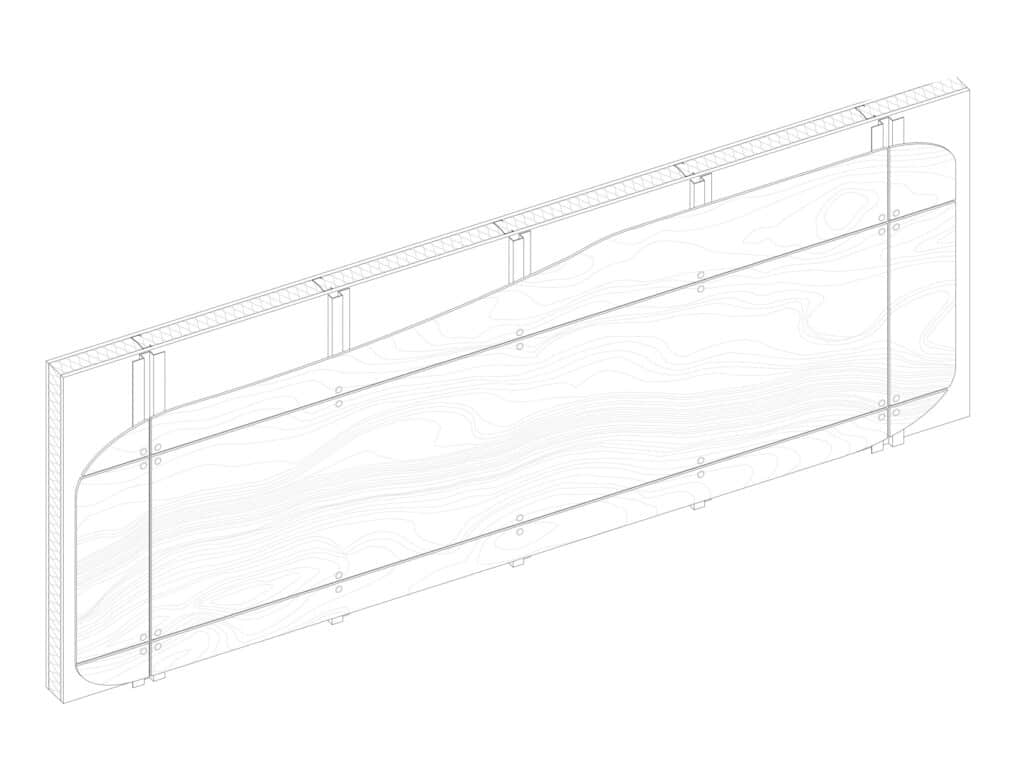
Resolution of Junctions and Construction Details
The final quality of a natural wood cladding facade depends significantly on the proper resolution of junctions and construction details.
Critical Points to Address:
- Facade base and top termination
- Internal and external corners
- Window and door openings (jambs, lintels, sills)
- Junctions with other materials and systems
- Structural and cladding expansion joints
- Changes in plane or complex geometries
Technical Principles for Detail Design:
- Protection against water ingress
- Maintenance of insulation continuity
- Ensuring ventilation at all points
- Allowance for thermal and structural movements
- Facilitation of water drainage and evacuation
- Accessibility for maintenance when necessary
Resources for Developing Construction Details:
- Parklex Prodema’s library of standard details (CAD)
- Technical manuals with specific recommendations
- Personalized advice for non-standard solutions
- Possibility of developing custom details for unique projects
The proper definition and subsequent execution of these construction details are essential to ensure both the technical durability and aesthetic quality of the final result.

5. Regulations and Certification for Wood Facades
Performance combating fire
Natural wood cladding facades must comply with specific regulations related to their fire behavior, which are particularly relevant in certain building typologies.
Applicable Regulatory Framework:
- Technical Building Code (CTE) – DB SI (Spain)
- Eurocodes and harmonized European standards
- Specific regulations according to country and region
- Particular requirements based on building use
Fire Reaction Classifications: Parklex Prodema systems offer various options depending on project requirements:
- Standard classification: Suitable behavior for general applications
- Fire-resistant panels: With fire-resistant core for applications with higher demands
- Specific solutions for high-rise buildings or sensitive uses
Design Strategies to Optimize Safety:
- Proper compartmentation of the ventilated chamber
- Incorporation of fire barriers at critical points
- Appropriate system selection according to specific requirements
- Coordination with other building protection systems
The Parklex Prodema technical team can advise on the optimal solution for each project, ensuring regulatory compliance without compromising the aesthetic and expressive qualities of the natural wood cladding.
Certified Durability and Sustainability
Parklex Prodema’s natural wood cladding facade systems feature certifications that endorse both their technical durability and commitment to sustainability.
Durability Certifications:
- Accelerated aging tests
- Resistance to humidity and temperature cycles
- Performance to combat UV radiation
- Resistance to impacts and mechanical loads
- Compliance assessments with harmonized European standards
Sustainability Certifications:
- Forest certifications (PEFC/FSC) that guarantee sustainable origin
- Environmental Product Declarations (EPD) according to ISO 14025
- Life Cycle Assessments (LCA) in accordance with ISO 14040/44
- Contribution to sustainable building certification systems
- Absence of toxic compounds and harmful emissions
Added Value for the Architectural Project:
- Guarantee of quality and long-term performance
- Technical documentation for regulatory justification
- Contribution to the project’s sustainability criteria
- Differentiation and tangible added value
- Compliance with increasingly demanded ESG criteria
This certified foundation provides architects with the necessary assurance to specify natural wood cladding solutions with full confidence in their technical and environmental performance.
6. Examples of Application in Architectural Projects
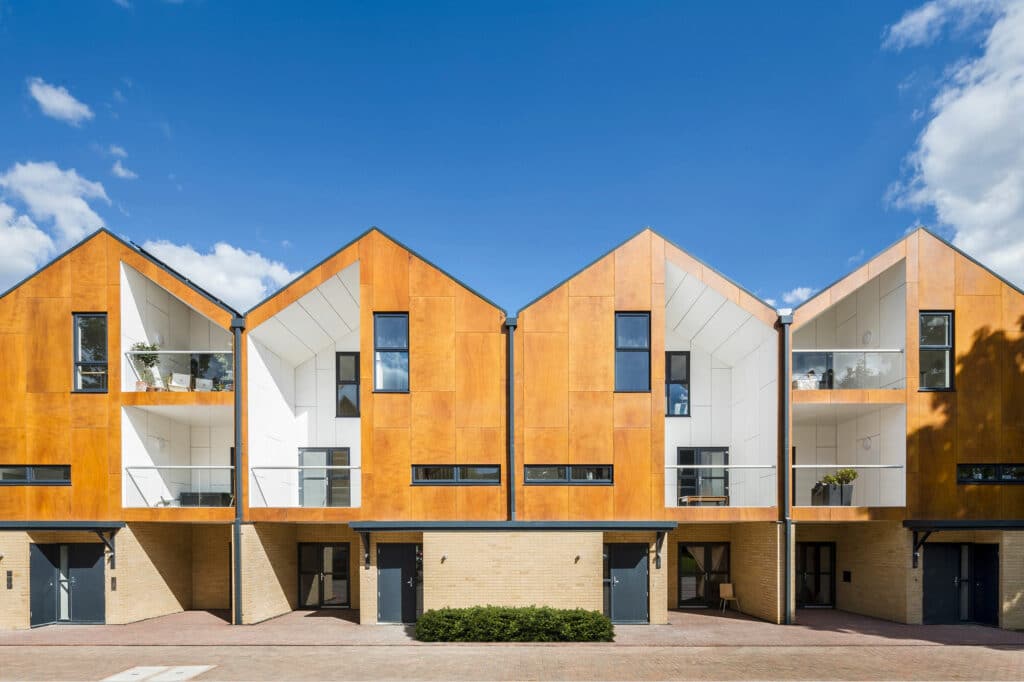
Adaptation to Different Building Typologies Parklex Prodema’s natural wood cladding facade systems have demonstrated their versatility and adaptability to a wide range of architectural typologies.
Residential Buildings:
- Single-family homes: Harmonious integration with natural surroundings
- Multi-family buildings: Aesthetic differentiation and enhanced performance
- Social housing: Economically efficient solutions with high performance
- Residential rehabilitation: Aesthetic and energy upgrades
Public and Institutional Buildings:
- Educational centers: Warm environments that promote learning
- Cultural facilities: Material expressiveness aligned with their function
- Healthcare buildings: Warmth that contributes to user well-being
- Administrative buildings: Contemporary and sustainable institutional image
Commercial and Corporate Architecture:
- Corporate offices: Expression of corporate values
- Commercial spaces: Welcoming environments that enhance the customer experience
- Hotel sector: Differentiation and creation of memorable atmospheres
- Sports facilities: Resistance and material expressiveness
In each case, the systems adapt to the specific requirements of the typology, delivering optimal technical solutions without compromising the architectural expressiveness of the material.
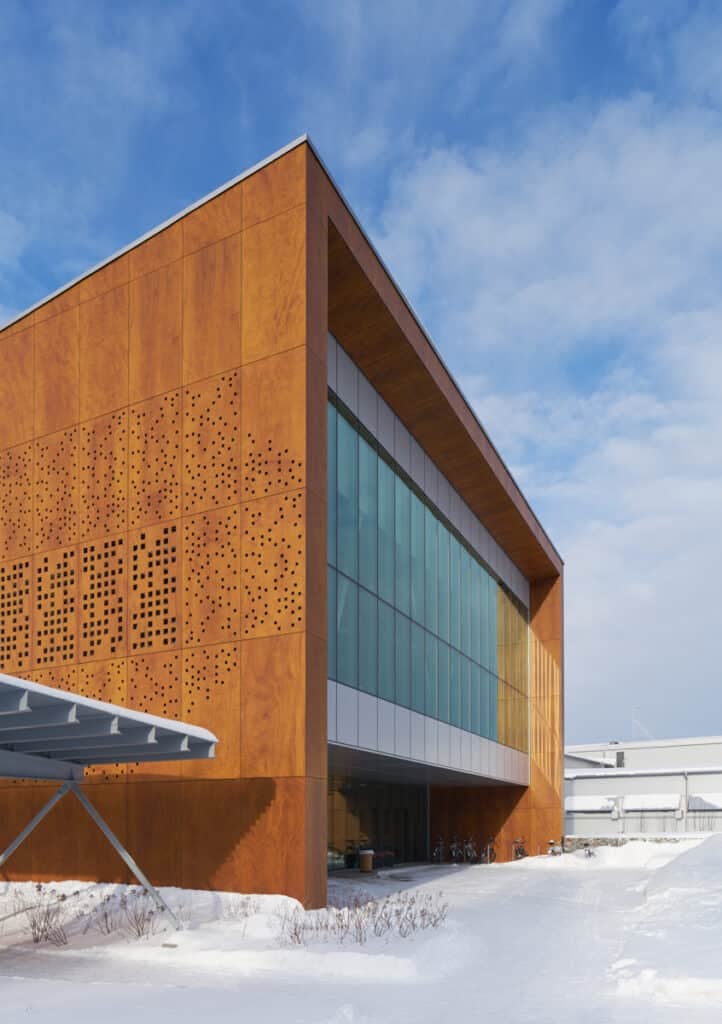
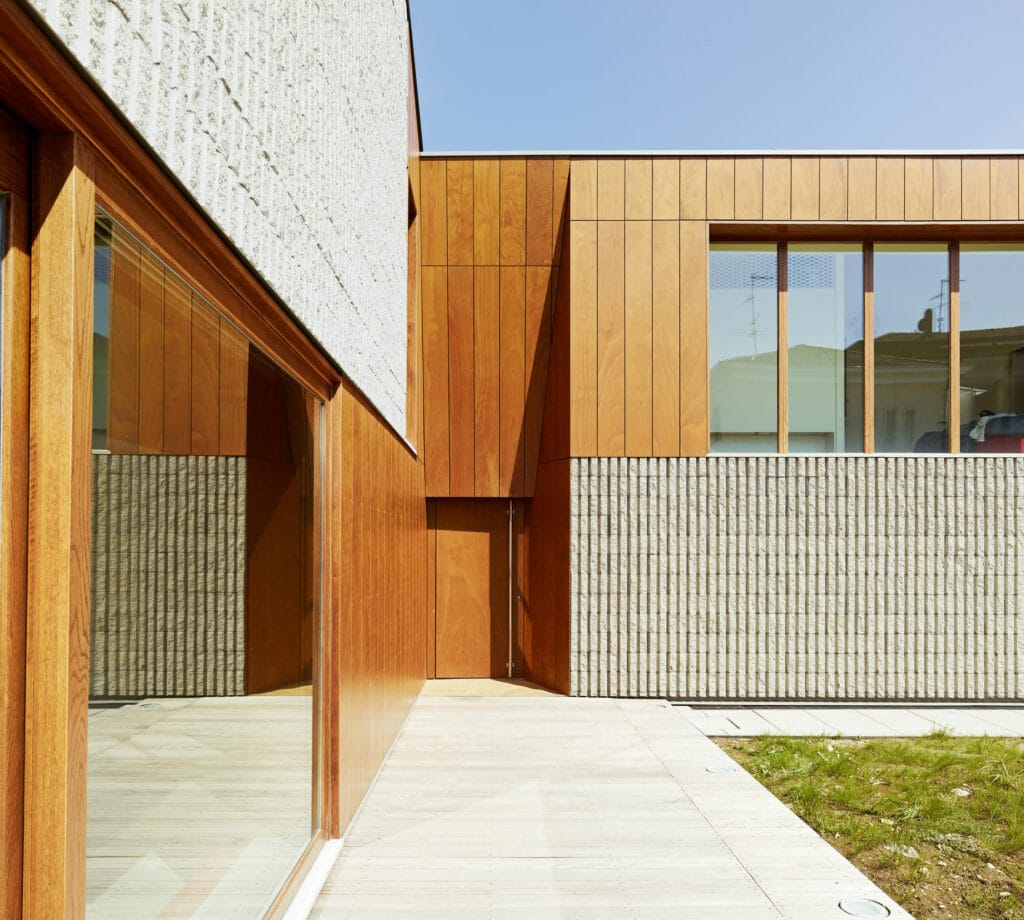
Facebook in Luleå, SPARCH / Private Residence, Franzetti Primi Architetti Associati
Customized Solutions for Unique Projects
Beyond standard applications, Parklex Prodema offers the development of customized solutions for projects with particular requirements.
Format and Dimension Adaptations:
- Panels with special dimensions
- Custom cutting and machining systems
- Thicknesses adapted to specific requirements
- Non-standard geometries for unique projects
Specific Technical Solutions:
- Fastener systems adapted to complex geometries
- Integration with other building materials and systems
- Development of non-conventional construction details
- Solutions for extreme environmental conditions
The technical and R&D department at Parklex Prodema works closely with architects and project teams to develop solutions that bring unique architectural visions to life with full technical assurance.

7. Frequently Asked Questions
What is the difference between a ventilated facade system with natural wood cladding and traditional wood cladding?
Advanced ventilated facade systems incorporate technologies that overcome the traditional limitations of wood in exterior applications: special treatments against UV radiation and humidity, multilayer composition that enhances dimensional stability, and fastener systems that ensure continuous ventilation. This results in significantly greater durability (15-20 years compared to 2-5 years) and virtually no maintenance, unlike traditional cladding, which requires periodic preservation treatments.
How do local climatic conditions affect the choice of facade system?
Climatic conditions are a determining factor influencing the selection of wood species, finish, and system configuration. In coastal areas with high salinity, species with greater natural resistance and fastener systems with enhanced anti-corrosion treatment are recommended. In areas with high solar radiation, certain finishes offer greater UV protection. Our technical team analyzes the specific conditions of each site to recommend the optimal solution.
What maintenance is required for Parklex Prodema natural wood cladding facades?
Unlike traditional cladding, our systems are designed to require minimal maintenance. Periodic application of varnishes or protective treatments is not necessary. Basic maintenance involves only occasional cleaning with water and neutral soap to remove surface dirt. In particularly demanding environments, we recommend periodic visual inspections to verify the proper functioning of the system.
How do wood facades contribute to the building’s energy efficiency?
When implemented as part of a ventilated facade system, they significantly contribute to energy efficiency through three main mechanisms: the incorporation of continuous thermal insulation that eliminates thermal bridges, the effect of the ventilated chamber that reduces heat transmission in summer, and the low thermal conductivity of the wood itself. Studies show reductions of 25-40% in energy consumption related to climate control in buildings retrofitted with these systems.