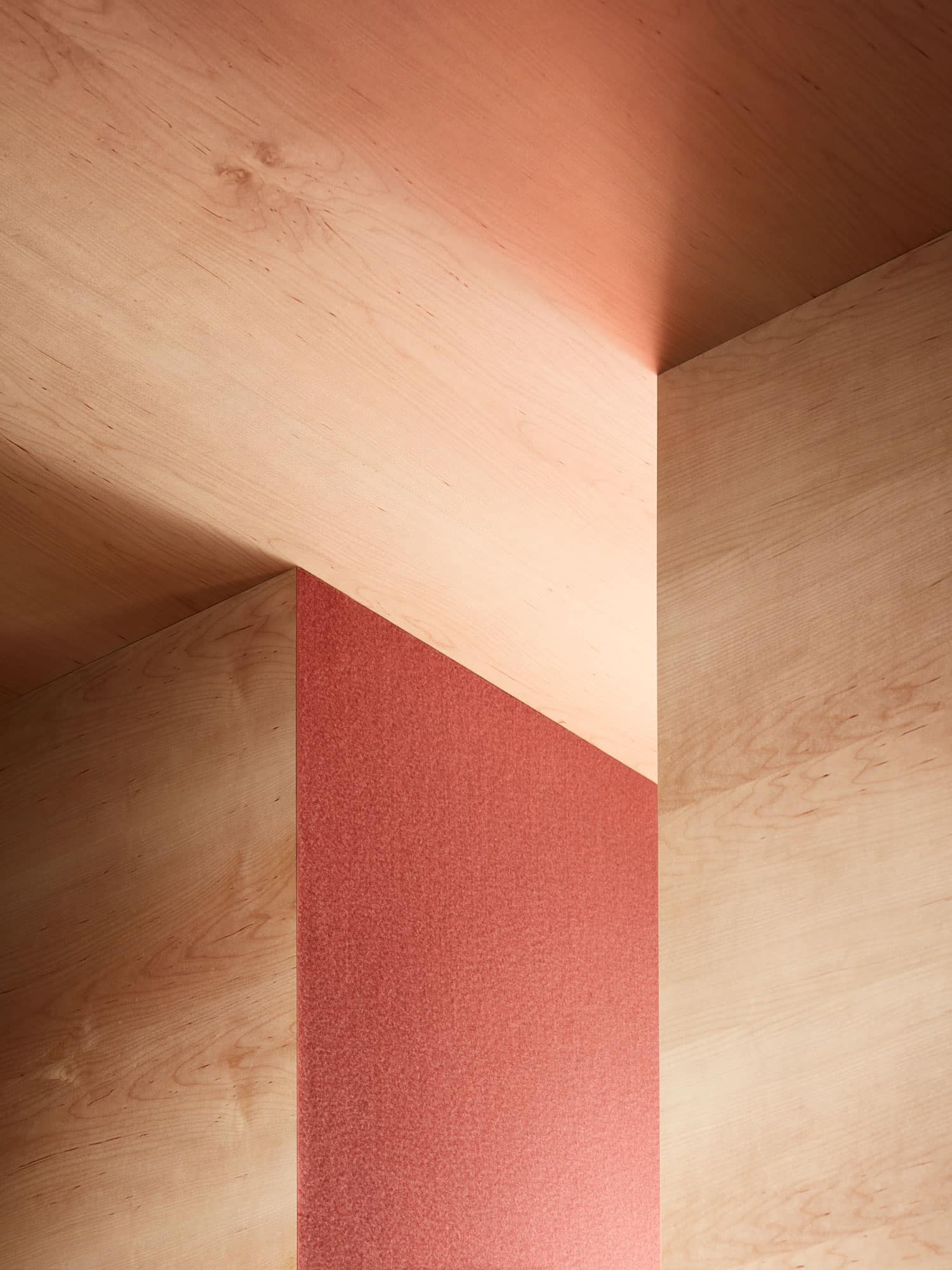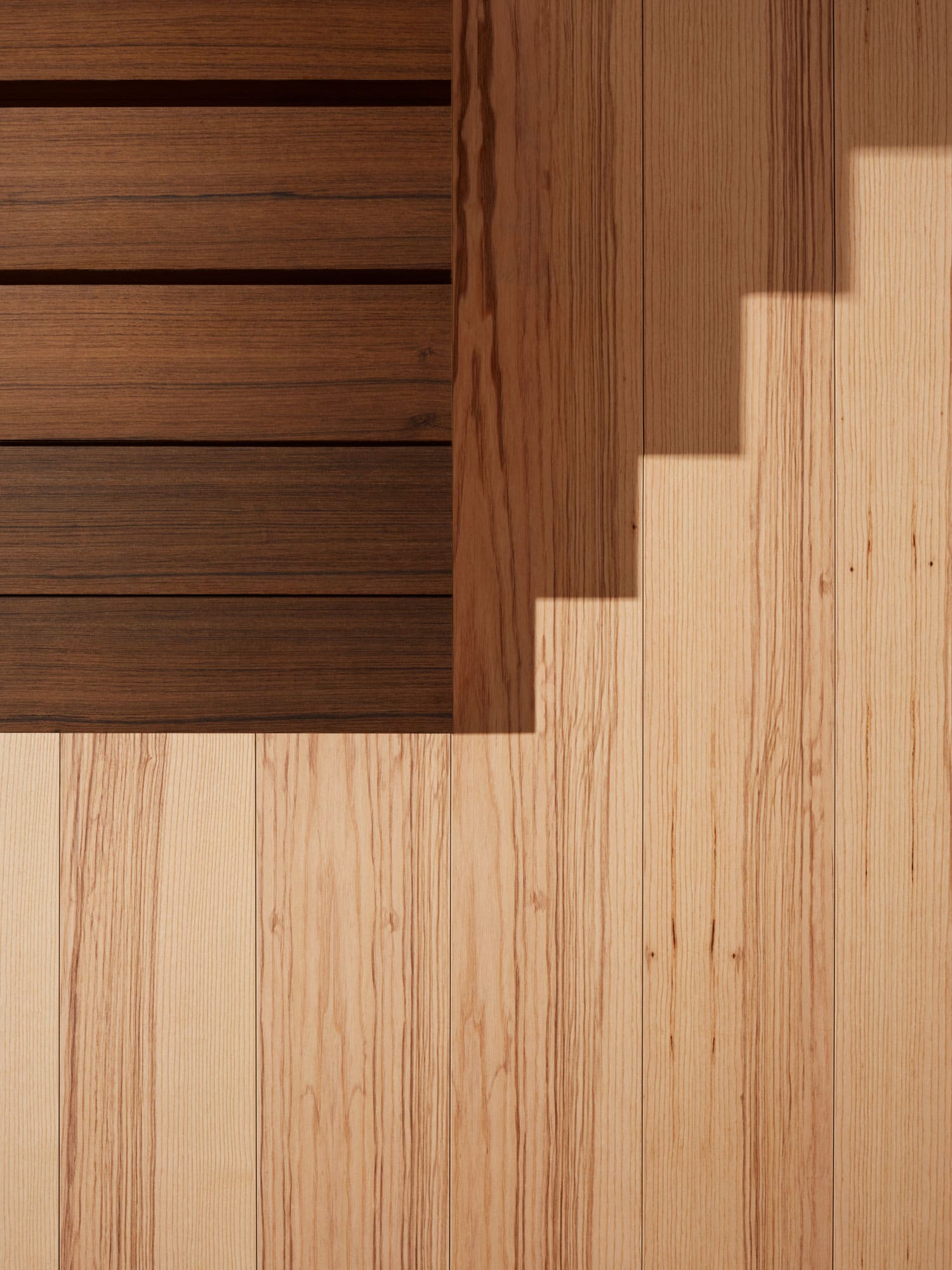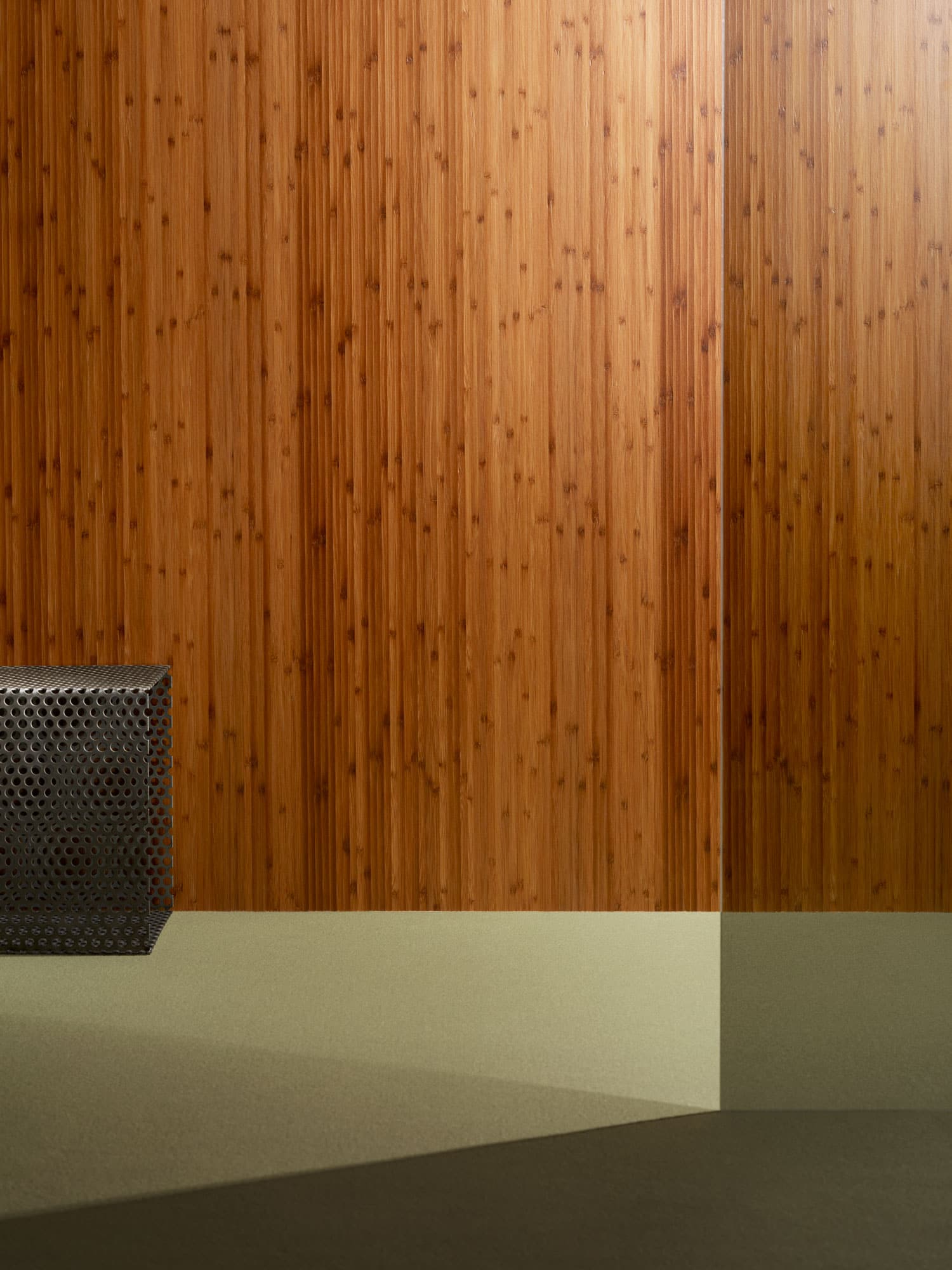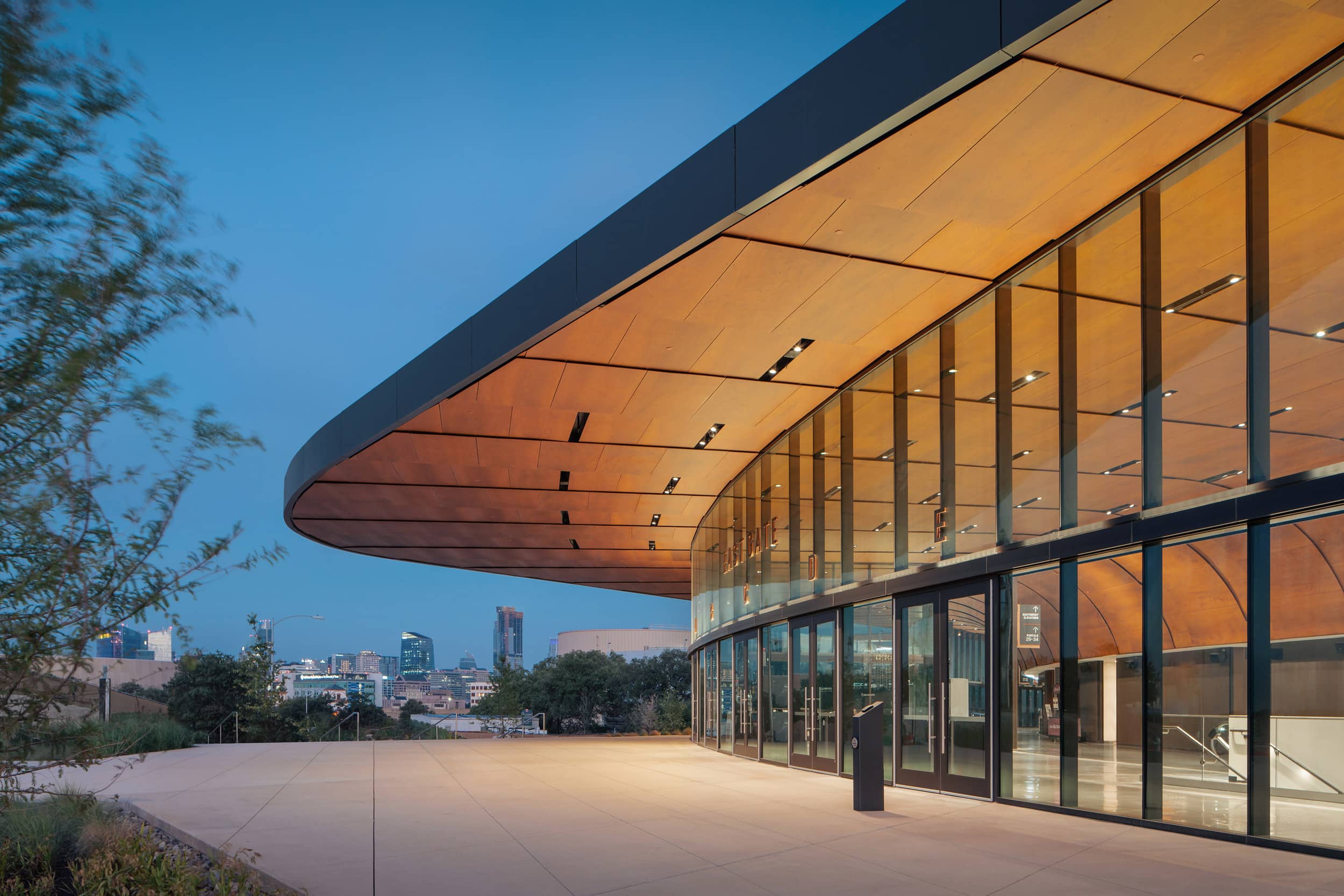
The architectural integration of natural wood planks transcends the mere application of a cladding material, becoming a design strategy that articulates the relationship between interior and exterior spaces. This material continuity creates cohesive spatial experiences that enhance the perception of naturalness and warmth, establishing visual dialogues that unify the architectural envelope. Systems like NATURSIDING-W enable this strategy through technical solutions that ensure tailored performance for each context.
Strategies for Material Continuity
Aesthetic continuity between exterior and interior claddings requires comprehensive planning that considers both perceptual and technical aspects. Using the same wood species in both contexts, with products specifically developed for each application, allows for gradual transitions that blur traditional boundaries between interior and exterior.
Coordinated Selection of Finishes
Chromatic and textural coherence between exterior and interior planksdemands careful selection of wood species and surface treatments. Finishes like Rustik maintain recognizable visual characteristics in both ventilated facade applications and interior claddings, creating a unified material narrative. The natural variability of grain and knots in these species enhances the perception of authenticity while avoiding artificial repetition.
Differentiated surface treatments allow for tailored performance without compromising aesthetic continuity. Exterior planksincorporate UV protection and weather resistance, while interior claddings prioritize features like moisture resistance or antibacterial properties, depending on specific use cases.
Technical Resolution of Transitions
Effective materialization of interior-exterior continuity requires specific technical solutions for transition points. Threshold zones, such as porches, galleries, or semi-covered spaces, demand products that combine the performance requirements of both contexts.
Transition Spaces
Exterior suspended ceilings with NATURSOFFIT-W panels are key elements in achieving these transitions. These systems allow wood to extend from interiors to protected exterior areas, creating spatial sequences that guide the user experience. Protection against direct UV radiation and precipitation ensures visual continuity without compromising durability.
Dimensional and Modular Coordination
Dimensional compatibility between exterior and interior systems facilitates architectural integration. Standard plankwidths (136 mm, 188 mm, 290 mm) enable consistent proportional relationships across applications. This modulation can extend to other architectural elements, such as joinery, flooring, or lighting systems.
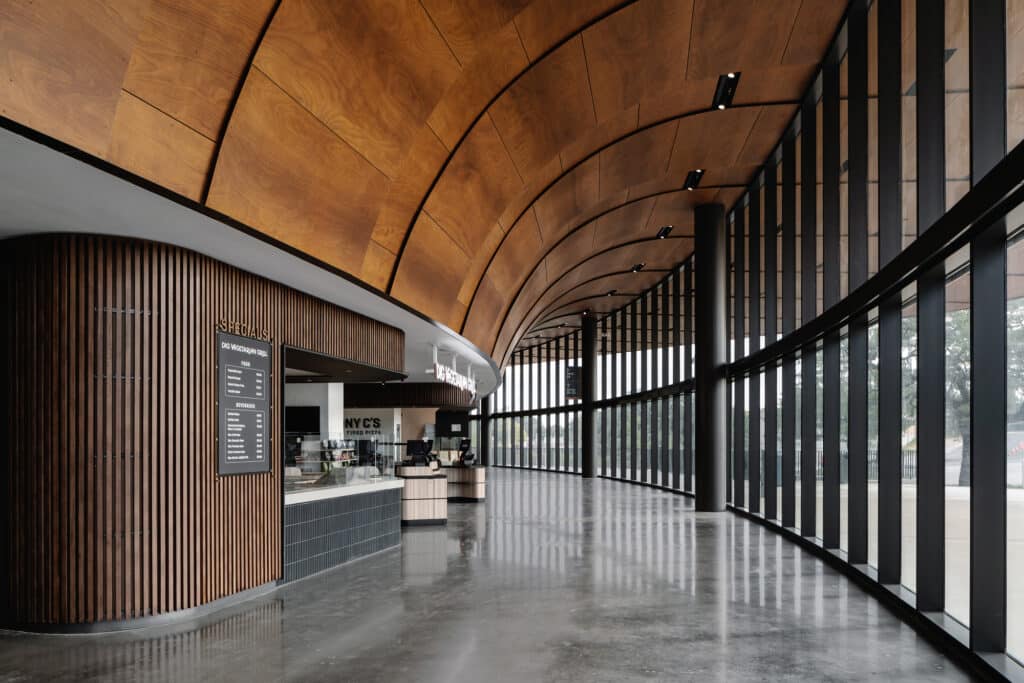
Applications in Architectural Typologies
Corporate and Institutional Buildings
Contemporary corporate complexes use natural wood continuity to humanize workspaces and create distinctive architectural identities. Extending cladding from reception areas to exterior façades generates recognizability and warmth in predominantly technical buildings.
Cultural and Educational Facilities
In educational centers, wood plank continuity contributes to environments that promote well-being and concentration. Gradual transitions between recreational outdoor spaces and indoor learning areas using natural wood elements reduce perceptual contrast and ease user adaptation.
Biophilic Benefits of Integration
The continuous visual connection with natural elements like wood produces documented psychophysiological effects. Research in biophilic design has shown that the presence of natural wood in interiors can reduce stress and cortisol levels.
Spatial Perception and Comfort
Eliminating abrupt material contrasts between interior and exterior reduces visual fatigue and enhances the perception of spatial expansiveness. Users experience a greater connection to the natural environment, even in dense urban contexts with limited vegetation.
Perceived thermal comfort improves when wood serves as a continuity element, as its intermediate surface temperature generates both visual and tactile warmth. This characteristic is particularly valuable in transition spaces where thermal variations can be significant.
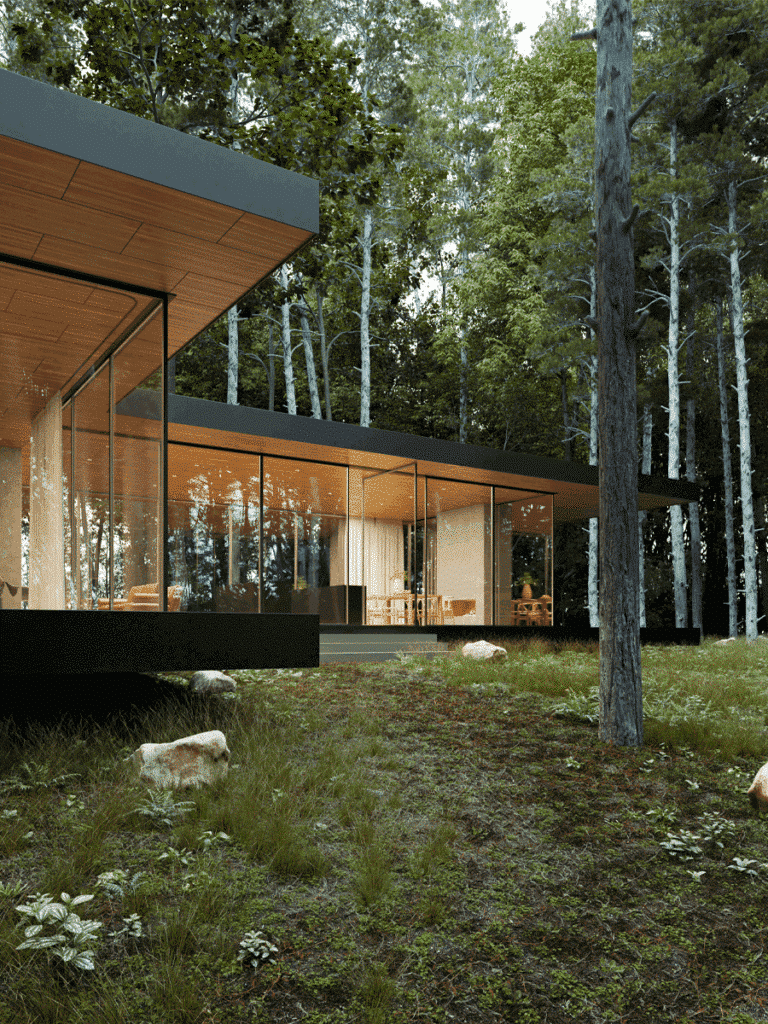
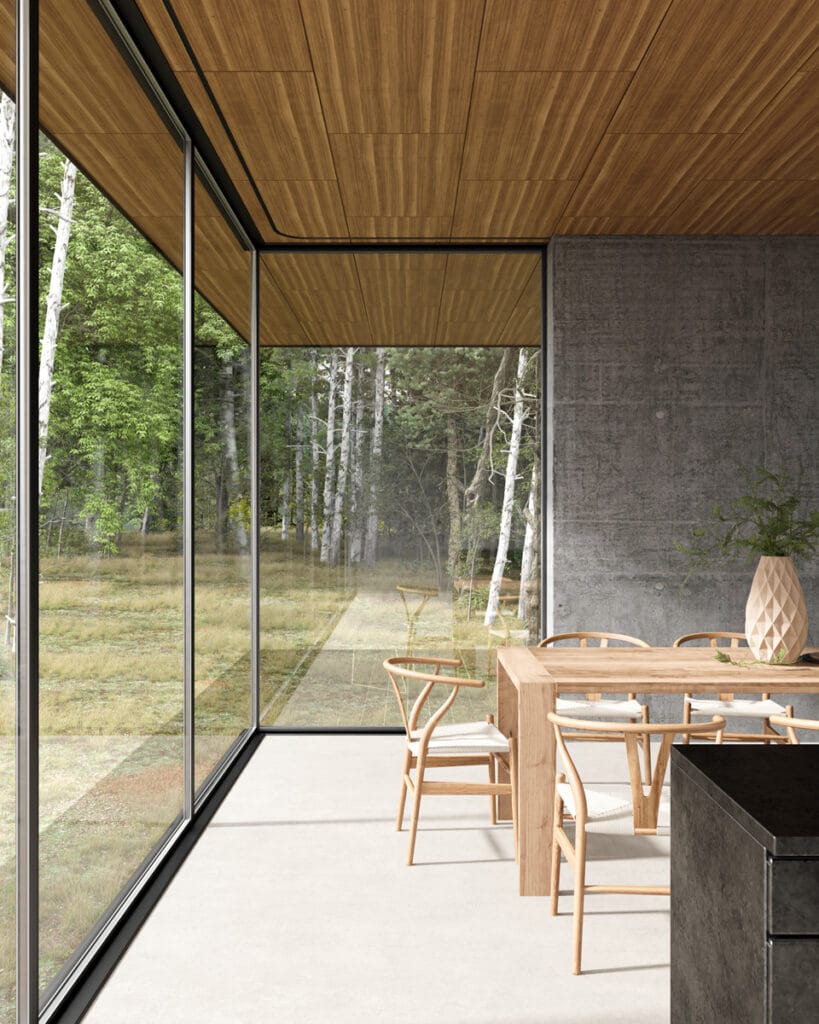
Single-Family Home, Indievisual AG
Technical Considerations for Implementation
Compatibility of Construction Systems
Coordination between exterior and interior fastenersystems requires specific planning. Ventilated facade systems for exterior planksmust account for continuity with interior structures, especially in transition zones where both systems converge.
Expansion joints must be sized to accommodate differential movements between exterior and interior applications. Exterior planksexperience greater thermal variations, requiring specific tolerances that do not compromise visual continuity.
Differentiated Maintenance
While aesthetic continuity is the goal, maintenance needs differ between applications. Exterior planksmay require more frequent cleaning due to exposure to atmospheric pollution, while interior claddings benefit from more controlled conditions. Maintenance planning must account for these differences without compromising the overall coherence.
Need specific technical advice for your project? Contact our team with no obligation to address technical questions, analyze specific requirements, or develop customized solutions.