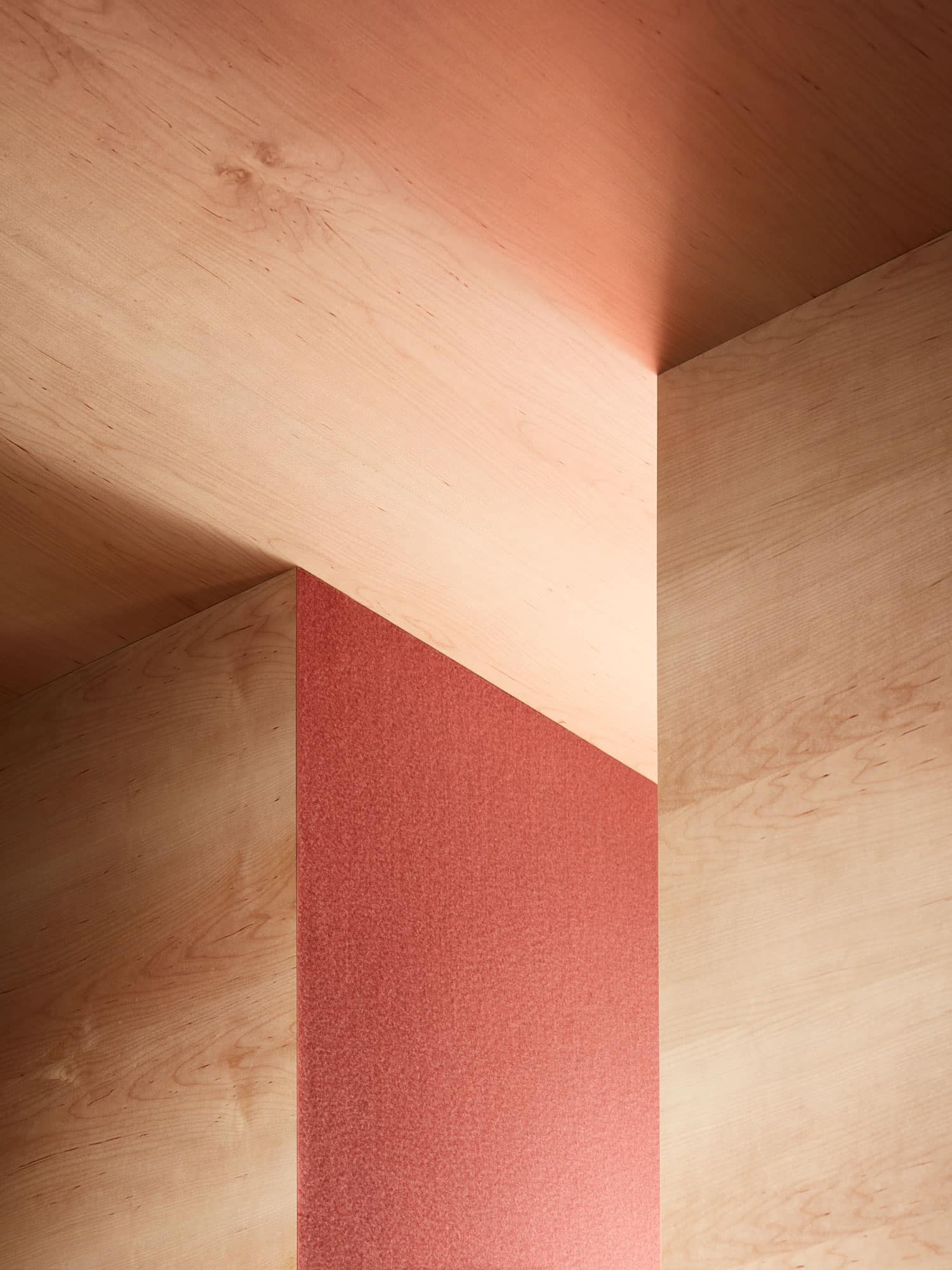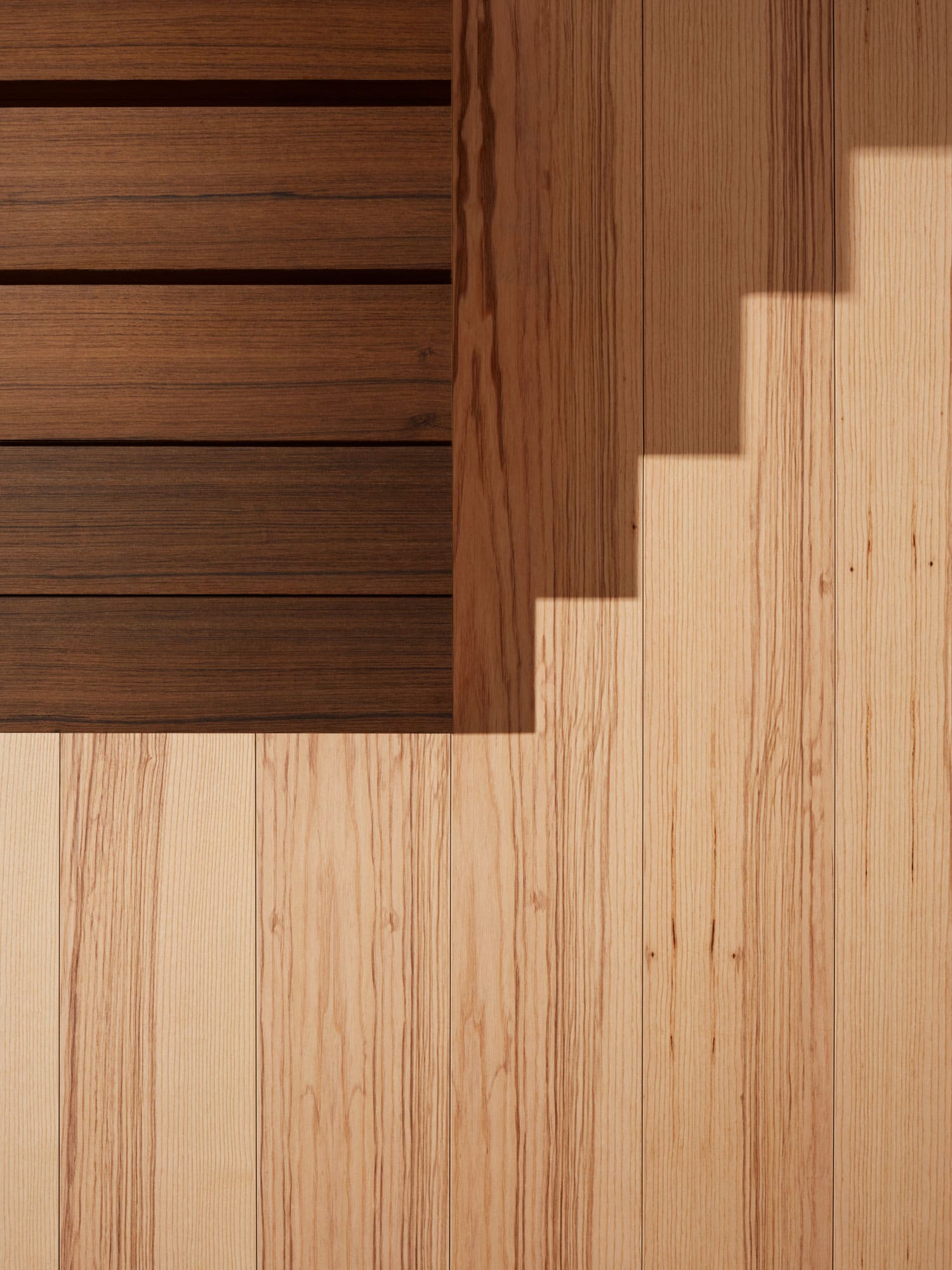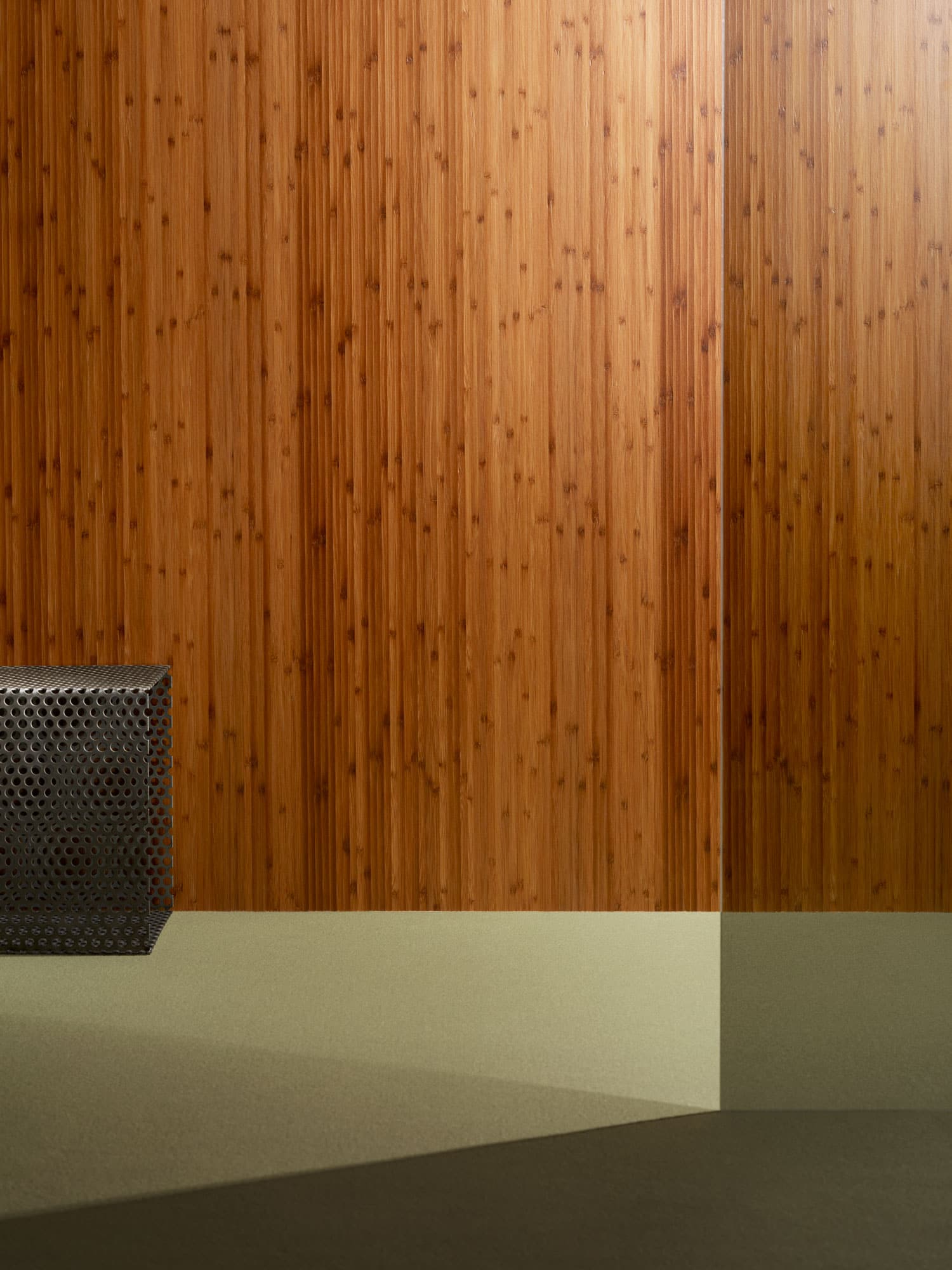
The aesthetic integration of natural wood elements in interior spaces is an architectural strategy that goes beyond mere decoration to create cohesive spatial experiences where floors, walls, and furniture establish a harmonious dialogue. This material continuity generates environments where wood serves as a unifying element, enhancing its sensory qualities and creating spaces with a distinct identity.
Effective coordination of natural wood coverings across different surfaces requires a deep understanding of the technical and expressive properties of each element, as well as their specific behavior depending on the application. Advanced covering systems allow for visual coherence even when the technical requirements of each surface differ significantly.
Material Coordination Strategies
Continuity of Species and Finishes
Selecting the same wood species for different applications creates a unified visual foundation, allowing for controlled variations. The catalogs of manufacturers like Parklex Prodema facilitate this strategy by offering the same finish across different products:
- NATURFLOOR-W for flooring
- NATURPANEL-W for walls
- NATURHARDPANEL-W for wet areas
This coordination is particularly effective in projects like the Casa Rural Landaburu Borda, where the Country Oak finish is consistently applied to floors, walls, and even shower cabins, creating a holistic spatial experience.

Controlled Variations
An alternative strategy involves introducing controlled variations within the same family of finishes. By using different tones of the same species or combining complementary species, dynamic spaces can be created that maintain material coherence while avoiding monotony.
Common combinations include:
- Chromatic gradations (light to dark) of the same species
- Complementary contrasts between visually similar species
- Variations in grain directionality to define functional zones
Geometry and Layout
The layout and orientation of wood elements allow for the creation of visual hierarchies and reinforce spatial configuration. Key geometric strategies include:
- Directional continuity between flooring and vertical surfaces
- Transitions through changes in format or dimension
- Specific layouts tailored to the geometry of the space
Integrated Applications by Spatial Typology
Residential Spaces
In homes, the integration of natural wood across different surfaces contributes to warm, personalized environments. Specific considerations include:
- Wear resistance for flooring (AC6 classification for NATURFLOOR-W)
- Durability in wet areas like kitchens and bathrooms
- Aesthetic coherence with carpentry and furniture elements
Commercial and Hospitality Spaces
In hotels, restaurants, and retail spaces, natural wood helps create memorable brand identities and distinctive sensory experiences for users. Material integration considers:
- Resistance to heavy foot traffic in public areas
- Durability against frequent cleaning cycles
- Contribution to the overall acoustic strategy
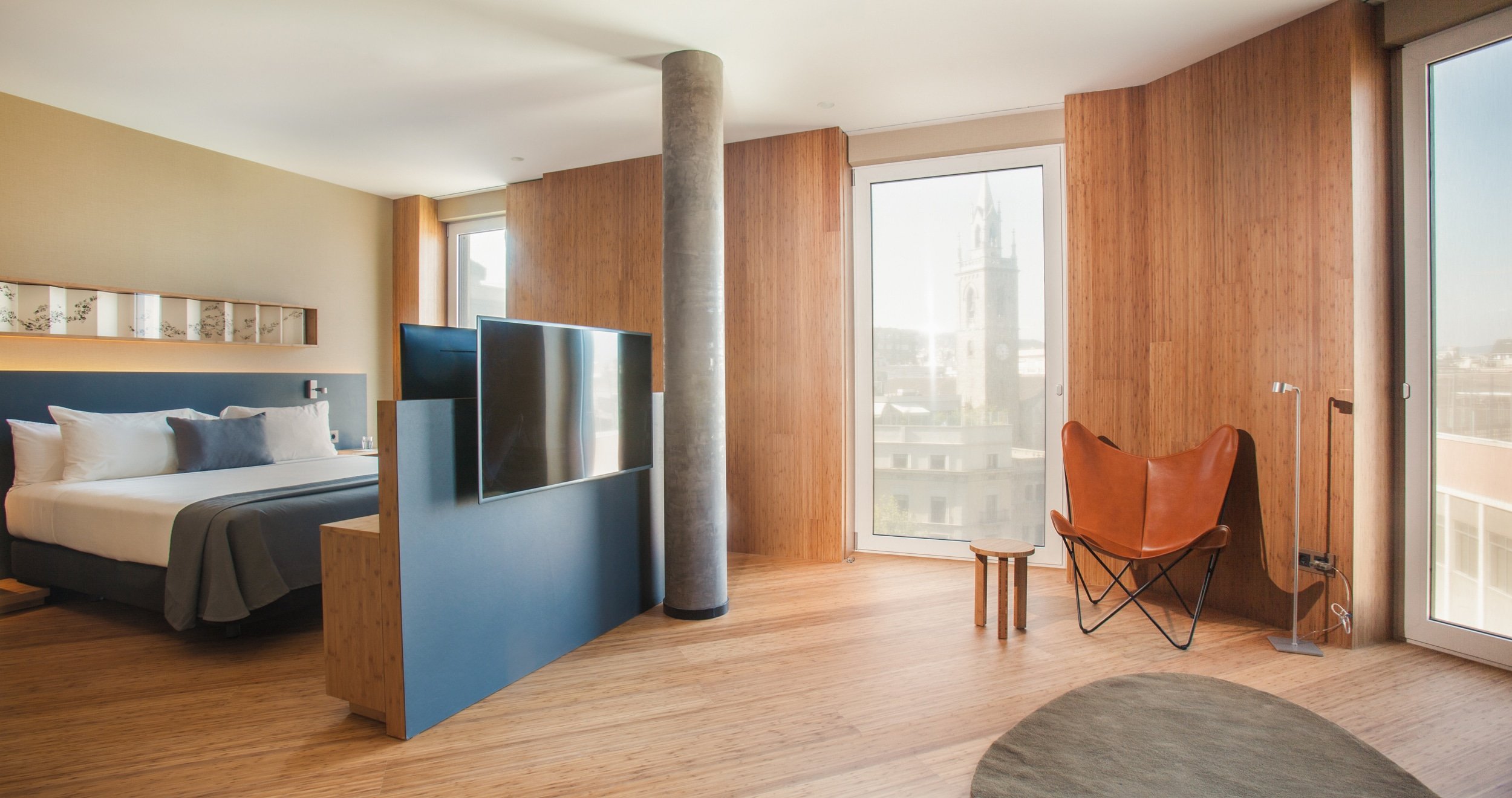
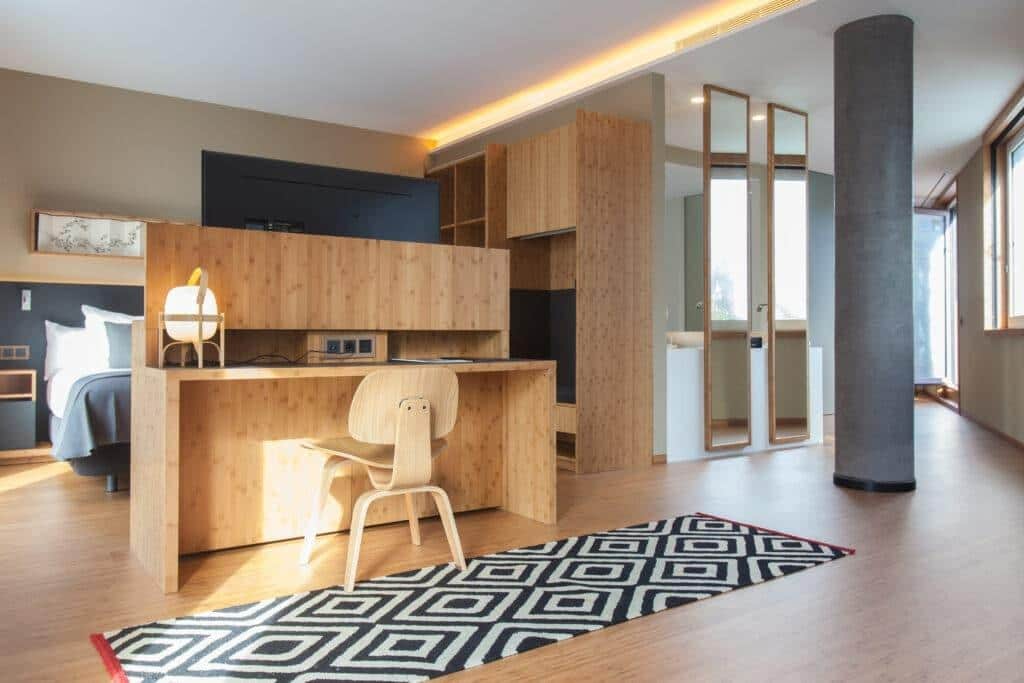
The Hotel OD Barcelona, designed by Víctor Rahola Aguadé, exemplifies this approach through the consistent use of the Caramel Bamboo finish, extending from vertical paneling to furnishings, creating a distinctive spatial experience.
Corporate Spaces
In work environments, material integration can support organizational culture and define functional areas. Common applications include:
- Vertical paneling for reception and representative areas
- Integrated acoustic solutions for meeting rooms
- Coordinated partition elements and furniture
Technical Considerations for Integration
The effective implementation of a material integration strategy requires attention to several technical aspects:
Compatibility with Construction Systems
Different covering systems must be constructively coordinated to ensure clean transitions and precise details. This involves:
- Planning total thicknesses, including fastening systems
- Resolving junctions between different systems
- Dimensional coordination for joint alignment
Differential Behavior by Application
While visually cohesive, coverings must meet the specific requirements of each surface:
- Higher abrasion resistance for flooring (e.g., Grade 4 per EN 438-2)
- Impact resistance in exposed areas
- Acoustic properties for ceilings and vertical surfaces
Integrated Maintenance
Selecting products from the same typology enables unified maintenance protocols, simplifying long-term upkeep. Parklex Prodema’s natural wood coverings offer the added advantage of requiring no periodic treatments, facilitating overall space maintenance.
The Role of Light in Integrated Perception
The interaction between natural wood and light—both natural and artificial—is critical to the final experience of an integrated space. Key considerations include:
- Differential light reflectance based on species and finish
- Color perception changes depending on the lighting’s color temperature
- Appearance evolution throughout the day in spaces with natural light
The planning of direct and indirect lighting must account for how light enhances or alters the perception of material continuity, considering that different surfaces (horizontal and vertical) reflect light differently, even with the same finish.
Need specific technical advice for your project? Contact our team with no obligation to address technical questions, analyze specific requirements, or develop customized solutions.